
Following Prabowo's Statement, PDIP Urges Thorough Investigation of Acid Terror Case
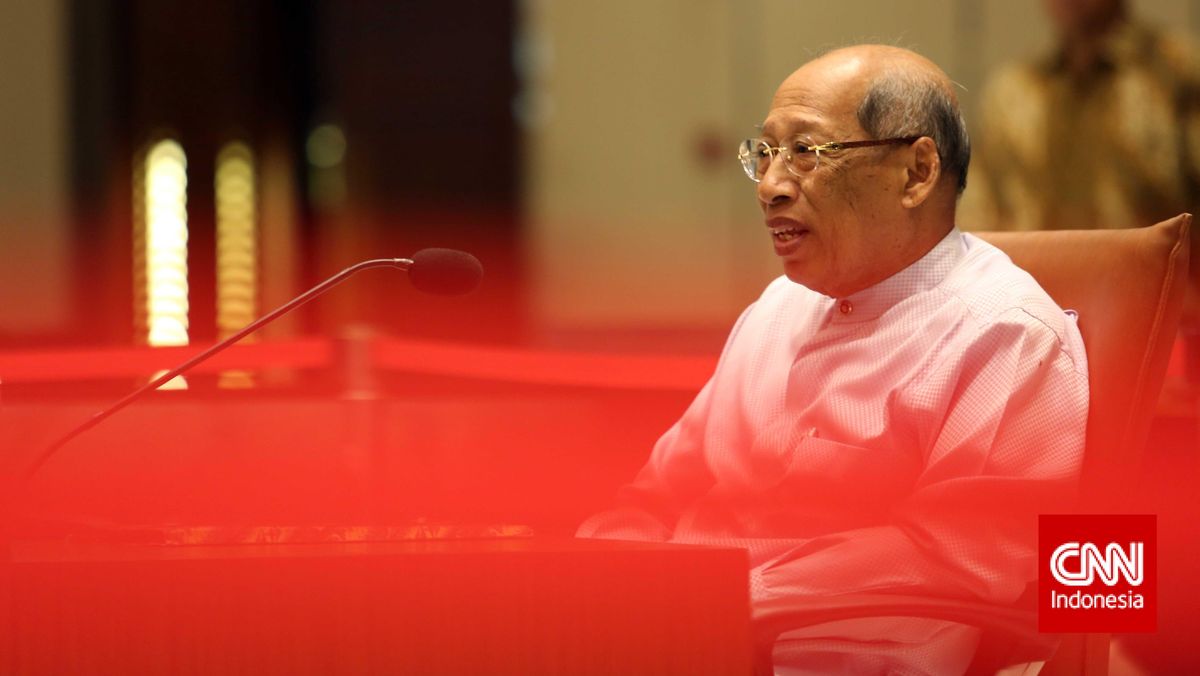
A section of the civil society coalition under the Advocacy Team for Democracy (TAUD) attended a public hearing (RDPU) with the House of Representatives Commission III regarding the acid terror attack on Deputy Coordinator of KontraS, Andrie Yunus, on Tuesday (31/3).
During the hearing, PDIP faction member of Commission III, Wayan Sudirta, suggested that civil society continue to demand President Prabowo Subianto’s statement—and use it as leverage against law enforcement—to ensure the acid terror case against activist Andrie Yunus is thoroughly investigated.
“This is a good opportunity because the president has made a statement. If we can be a bit cheeky, let’s ride on the president’s statement for all it’s worth,” Wayan said during the meeting with TAUD.
“When else would the President make such a straightforward statement in general criminal cases? So don’t miss this,” added the lawyer by background.
In the case, Wayan admitted he agrees that the acid attack terror against Andrie should be categorised as premeditated murder. The terror is suspected to involve four personnel from the TNI’s Strategic Intelligence Agency (BAIS), and the matter has now been transferred from Metro Jaya Police to the Military Police.
According to him, investigators, especially from the police, must not turn a blind eye to the possibility of applying the premeditated murder article in the case.
“Moreover, the police are conducting a thorough investigation, and I believe the police still have plans to seek additional evidence,” he said.
Therefore, Wayan said, the demand for the case to be investigated thoroughly, even up to the intellectual actors, is very necessary. Moreover, according to Wayan, similar cases keep recurring over time and do not create a deterrent effect.
“There is influence but no deterrent effect. This time the opportunity is good because the president has made a statement,” he said.
Previously, Prabowo emphasised that the acid attack case against activist Andrie Yunus is a serious criminal act classified as terrorism.
According to him, law enforcement must not stop at the field perpetrators. The apparatus, Prabowo said, must be able to uncover the intellectual actors behind the incident.
“Including who ordered it, who paid,” he said during a question-and-answer session with journalists in Jakarta on Thursday (19/3).
Terror against Andrie Yunus’s advocacy team
Meanwhile, the advocacy and legal support team for the acid attack case against KontraS Deputy Coordinator Andrie Yunus stated that they are now facing a serious escalation of threats.
They claim that the intimidation targets civil society organisations vocally demanding justice for the victim, including through attacks in the digital space.
“We assess that there are several potential threats directed at us as legal representatives or other human rights defenders when advocating for Andrie Yunus’s case,” said Head of the Impunity Monitoring Division of KontraS, Jane Rosalina, at the National Human Rights Commission (Komnas HAM) office in Central Jakarta on Tuesday afternoon.
“On social media, there are many anonymous accounts or buzzers with harsh tones whose tendency is to carry out terror threats and intimidation against accounts that are advocating for Andrie Yunus’s case today. For example, to KontraS, to YLBHI, or to other accounts,” she continued.
Terror targets families
Not only targeting institutions, the terror has also extended to personal realms and advocacy networks outside the area.
Jane revealed that several individuals supporting this case have experienced direct threats, from digital attacks on personal devices to physical intimidation against their family members in the field.
“For example, threats where their families are followed, terrorised, and so on. That has already happened,” Jane disclosed.
In response to the increasingly unsafe situation, the advocacy team believes state intervention to provide security guarantees is urgently needed.
“Friends in legal representation, human rights defenders, and the broader network should receive adequate witness and victim protection,” Jane said.
Moreover, Jane assessed that the lack of specific legal frameworks for human rights defenders in Indonesia makes legal supporters highly vulnerable to retaliatory attacks that endanger them.
“This also relates to the protection of human rights defenders, because we also see that today the protection for human rights defenders is very minimal, due to the absence of specific regulations governing human rights defenders,” Jane explained.
“This certainly requires state institutions to act in accordance with their mandate to carry out protection efforts,” she added.