
Following Prabowo's Directive, BRIN-Rosatom Strengthen Peaceful Nuclear Cooperation
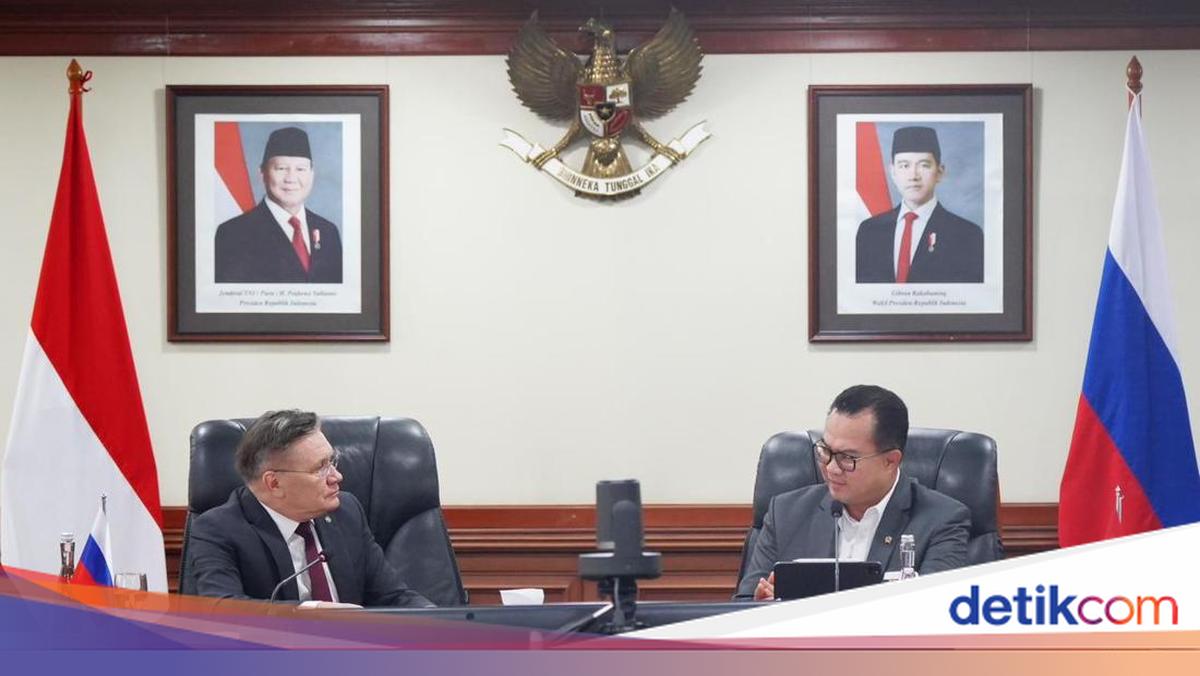
Arif explained that BRIN is indeed tasked with exploring cooperation in the development of nuclear technology. The groundwork for Indonesia’s collaboration with Rosatom began in 2006. “This represents a comprehensive effort to explore various advanced technology options for the future. BRIN is responsible for ensuring that every step in the exploration of nuclear technology is well-coordinated across agencies,” said Arif in his statement on Wednesday (13/5/2025). Arif stated that the main focus of the cooperation will be directed towards further strengthening the Joint Working Group for preparing the implementation of large-scale nuclear energy. The scope of this exploration includes developing a roadmap, site studies, reactor technology selection, and deepening aspects related to the nuclear fuel cycle. In addition to focusing on nuclear-based energy exploration, this strategic collaboration also targets several other fields. One of them is the revitalisation of research facilities and the modernisation of the GA Siwabessy research reactor facilities in the B.J. Habibie Science and Technology Area (KST) in Serpong. “This also encompasses the management of radioactive waste and the fabrication of reactor fuel elements,” said Arif. Then, the development of High Temperature Gas-Cooled Reactor (HTGR) technology. This type of reactor technology can be utilised for hydrogen production, water desalination, and other industrial needs, in addition to generating electricity. Furthermore, the development of radioisotopes for application in the medical and industrial sectors. There is also the development of irradiation technology and its utilisation in the food, medical, and industrial fields. “Human resource development: Strengthening cooperation in education and capacity building for human resources in the nuclear technology field. This effort will involve close coordination with the Ministry of Higher Education, Science, and Technology (Kemendiktisaintek),” Arif continued. Arif said that this technology exploration is progressing progressively. He gave a firm note that the success of adopting atomic energy in Indonesia does not solely depend on the sophistication of infrastructure. “Mastery of nuclear technology is essential, but the involvement of social sciences disciplines is crucial. This sociological approach is vital for mapping public acceptance levels, mitigating socio-economic impacts, and ensuring that every stage of nuclear energy exploration in Indonesia proceeds in a transparent, safe, and humane manner,” he emphasised. It is known that the technical partnership between Indonesia and Russia actually has a solid historical track record. Technical-level implementation has run successfully, including collaboration between BATAN and Rosatom in 2015, BAPETEN and Rostechnadzor in 2017, and the Nuclear Polytechnic (STTN) and Rosatom Technical Academy in 2020. “As a manifestation of real commitment, BRIN will continue and strengthen that cooperation,” he said.