
Following Bantargebang Landfill Collapse, Jakarta Plans Three Waste-to-Energy Plants
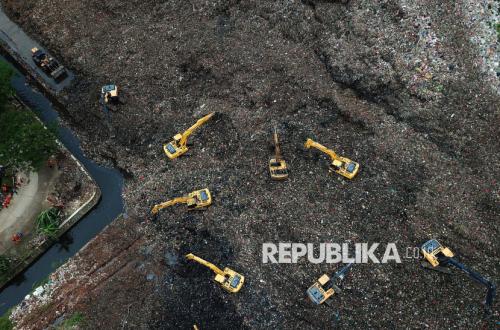
Jakarta Provincial Government has proposed the development of three waste-to-energy power plants (PLTSa) as a solution to tackle waste management problems in the capital. The proposal emerged following a waste landslide at Bantargebang Waste Disposal Site (TPST) on 8 March 2026 that claimed seven lives and highlighted the risks of open dumping at the landfill.
Governor Pramono Anung announced that the three PLTSa facilities are planned to be constructed in Bantargebang (Bekasi City), Tunjungan (North Jakarta), and Sunter (North Jakarta). These facilities are expected to reduce the volume of waste entering Bantargebang TPST.
“First, to address the Bantargebang problem, DKI Jakarta will formally propose three waste-to-energy power plants,” Pramono said in the Pasar Tanah Abang area on Thursday (12 March 2026).
The Bantargebang PLTSa is projected to handle 3,000 tonnes of waste per day, comprising 2,000 tonnes of new waste and 1,000 tonnes of existing waste stockpile. Meanwhile, the PLTSa facilities in Tunjungan and Sunter are each designed to process 2,000 tonnes of new waste daily.
“Thus, for Jakarta’s waste, if these PLTSa plants operate alongside Rorotan, approximately 6,500 to 7,000 tonnes of waste per day will be accommodated. Meanwhile, Bantargebang will be reduced by approximately 1,000 tonnes daily,” Pramono stated.
Additionally, the Refuse Derived Fuel (RDF) Plant Jakarta at Rorotan has a capacity of up to 2,500 tonnes per day, though this facility is not yet officially operational. Pramono expressed optimism that once all waste management facilities become functional, Jakarta’s waste problem can be significantly reduced, including at Bantargebang TPST.
The provincial government plans to pursue this proposal with the central government in May 2026. Construction of the PLTSa facilities is estimated to take 15-20 months following the signing of a second-phase cooperation agreement.
Environment Minister Hanif Faisol Nurofiq characterised the Bantargebang collapse as evidence of failed waste management that threatens public and worker safety. He emphasised that open dumping at Bantargebang TPST must be halted and serve as a lesson for strengthening waste management governance in accordance with Law Number 18 of 2008.
“This incident should not have occurred if waste management had been conducted according to regulations. Bantargebang TPST should serve as a lesson for all of us to immediately improve, for the sake of human safety and environmental preservation,” said Hanif.