
Focusing on Education in Disadvantaged, Frontier, and Outermost Regions
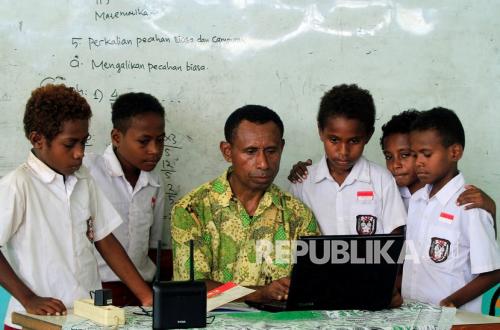
Education should serve as the primary bridge to social justice. However, in practice, not all Indonesian children have equal opportunities to learn. Educational disparities remain stark in disadvantaged, frontier, and outermost (3T) regions. In these areas, damaged schools, shortages of teachers, limited internet access, and long distances to school remain everyday realities.
Therefore, the government’s bias towards education in 3T regions is not merely a policy choice but a constitutional obligation. This policy is crucial because educational inequality is not just a matter of schooling but a concern for the future of national development. When the quality of education in 3T regions lags far behind urban areas, social and economic gaps will continue to widen.
Some Facts
Data shows that the challenges of education in 3T regions remain very significant. Reports from 2025 note that thousands of schools in 3T areas still face limitations in basic facilities. There are even reports that more than 33,000 schools in 3T regions face shortages of educational infrastructure. Additionally, around 17 percent of schools in 3T areas do not yet have adequate electricity or internet networks.
Another issue is the uneven distribution of teachers. Many quality teachers are concentrated in urban areas, while schools in remote regions lack teaching staff. Research on teacher equity in 2025 states that 3T regions remain the areas with the greatest challenges in the distribution and sustainability of educators. As a result, the quality of learning becomes unequal.
Children in big cities are already introduced to and familiar with artificial intelligence-based learning, whereas some children in 3T regions still study in damaged classrooms or without internet access. This disparity is actually the greatest threat to Indonesia’s demographic dividend.
The human capital theory by Theodore Schultz and Gary Becker (1979) explains that investment in education is the primary factor in increasing human productivity and economic growth. Associated with the Chicago School, they provide a strong intellectual foundation for investing in human resources as the main driver of economic growth. In their theory, a country that fails to provide equitable access to quality education will face stagnation in human development. In the Indonesian context, 3T regions serve as a real test of whether educational development is truly inclusive or only progresses in urban centres.
From the perspective of social justice, this situation is explained through John Rawls’ theory of justice as fairness (1958). He asserts that the state must give greater attention to the most disadvantaged groups. In the context of Indonesian education, 3T regions are the group that must receive greater policy affirmation compared to advanced regions.
Government Bias
The government, through the ministry handling basic and secondary education, recognises that focus must also be given to the development of education in 3T regions. In the last two years, particularly throughout 2025–2026, this ministry has shown a more affirmative policy direction towards regions that have long been left behind in educational services. Since the formation of this ministry at the end of 2024, the direction of basic and secondary education policy has placed equity as an important agenda.
The Minister of Basic and Secondary Education has repeatedly emphasised that quality education must be enjoyed by all Indonesian children, including those in the most remote areas. When inaugurating the revitalisation of educational units across Pati Regency in April, the Minister stated that “We are focusing the revitalisation of educational units on schools affected by disasters, 3T regions (Disadvantaged, Frontier, and Outermost), and schools with severe damage, as an effort to ensure all students can learn in a safe and decent environment.”
Evidence of this commitment is the realisation of PIP disbursement nationally in 2025, reaching 102.18 percent of the target volume, with a total budget absorbed of Rp13.4 trillion for 19 million pupils from elementary to vocational secondary levels. In 3T regions, this assistance reaches thousands of pupils in various areas. For example, in Kupang Regency, NTT, funds of Rp37.2 billion were disbursed to 52,716 pupils; in East Manggarai Regency, NTT, assistance worth Rp30.7 billion was given to 45,359 pupils; in Southwest Sumba Regency, NTT, Rp36.3 billion was disbursed for 48,989 pupils; and in West Seram Regency, Maluku, Rp18.6 billion was disbursed to 25,954 pupils.
The welfare of teachers in 3T regions is also a government priority. This is done through the disbursement of Various Non-Civil Servant Teacher Allowances. The realisation of Non-Civil Servant Teacher Professional Allowance (TPG) nationally reached 103.01 percent with a total budget of Rp12.1 trillion. The Teacher Professional Education Programme (PPG).
Another matter relates to the Affirmative Secondary Education Policy (ADEM) in the form of scholarships. The ADEM scholarship aims to realise equity and expansion of access to education, targeting secondary-level students (high school/vocational high school) from Papuan Indigenous People (OAP), Special Regions, and Children of Indonesian Migrant Workers in Malaysia and Saudi Arabia (repatriated). ADEM recipients have relatively increased year on year. This is done as an effort to support increased access to education for Papua regions, special regions, and repatriation areas.
Future Anticipations
In the context of public policy, the steps taken by the ministry handling basic and secondary education…