
Flooded with Chinese Imports, Local SMEs Struggle to Develop
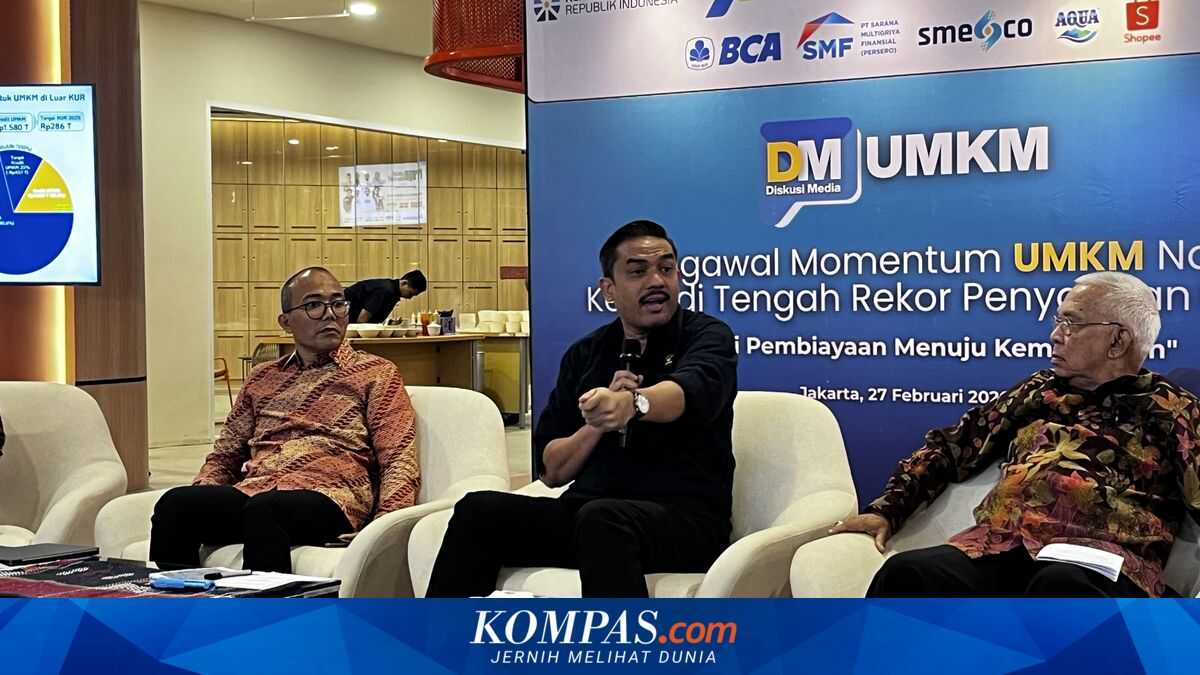
JAKARTA, KOMPAS.com - The Minister of Micro, Small, and Medium Enterprises (SMEs) Maman Abdurrahman has stated that SME quality remains suboptimal due to the market being flooded with imported products from China.
Maman said the challenge of SME development is not caused by access to financing, but rather by unfair market conditions that make it difficult for SME products to sell.
He revealed this information during a discussion on “Safeguarding SME Momentum to Advance to the Next Level Amid Record KUR Disbursement” held by the UMKM Press Forum.
“The Indonesian market is murky, dirty, and filthy. No matter how well we help them today so they can produce, they cannot sell their goods. Our market is filled with imported goods,” Maman said during a discussion at his office in Jakarta on Friday (27/2/2026).
A total of Rp 163.0 trillion, or more than half of the allocated funds, was channelled to the productive sector.
Meanwhile, in 2026, the SME Ministry is targeting KUR disbursement of Rp 295 trillion to 1.37 million new debtors.
Maman assured that the government has disbursed KUR to SME actors and has also provided mentoring support. However, in reality, local SMEs have not been able to advance to the next level.
After evaluation, it turned out that the Indonesian market was flooded with illegal products from China.
“The problem here is illegal imported goods that enter without being recorded,” Maman revealed.
Maman then presented data from the United Nations Trade and Development, which recorded export data from China to Indonesia and Indonesia’s imports from China since 2013 to 2024, spanning 12 years.
The results showed a marked data discrepancy between China’s textile export data to Indonesia and Indonesia’s recorded import data from China.
Furthermore, baby clothing exports from China reached 9.4 million US dollars, while Indonesia only recorded 3.1 million US dollars.
“This is what the President refers to as under-invoicing. The import data recorded at our borders shows imports of 100, but China’s recorded export data shows 900. That means there are 800 items that are not recorded,” Maman explained.
As a result of this practice, not only does the state lose revenue from import duties on these goods, local SMEs are also thrown into disarray.
Consumer behaviour has ultimately shifted to prefer cheaper imported products rather than locally produced factory or SME goods.
“So in essence, if asked by me, what is our main problem in the SME sector is that the SME Ministry must be able to protect the domestic market,” Maman concluded.