
Flaming Geopolitics Sparks Rally in Coal and CPO Stocks: A Real Boon?
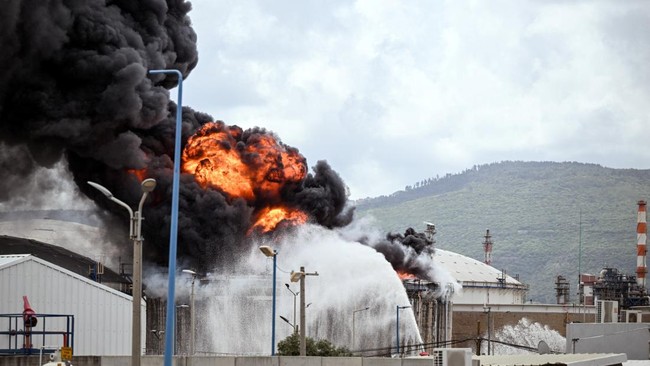
Escalating global geopolitics has once again brought the classic irony to the financial markets stage: when gunpowder explodes in one part of the world, profit accumulation opportunities open wide in another.
Turmoil in the Middle East, a region that has historically been the heart of the world’s energy, has triggered a domino effect that has lifted crude oil prices. However, for Indonesia, the main story is not just about oil, but the rally in prices of “black gold” (coal) and crude palm oil (CPO).
As a major exporter of both commodities, Indonesia seems to have received a windfall in the midst of the crisis. Yet, behind the green charts adorning exchange monitors, an existential question arises for investors: Is this a rational entry point?
Or is it a dangerous phase that demands extra caution? Does this “party” truly bring inclusive prosperity, including for the SME sector, or is it merely a fleeting anomaly that benefits only a handful of conglomerates?
The Dynamics of ‘Risk Premium’ and the Trap of Commodity Euphoria
Price increases in commodities due to armed conflicts are not anomalies, but measurable repetitions of history. The International Energy Agency (IEA) report in the World Energy Outlook 2025 affirms that energy is now at the epicentre of global political tensions.
IEA Executive Director, Fatih Birol, in his latest notes, states that the current conflict in the Middle East has the potential to trigger the largest supply disruption in the history of the global oil market if de-escalation does not occur soon.
When oil prices surge past psychological thresholds, the world automatically seeks more economical energy substitutes. Thermal coal remains the primary choice for power generation in developing countries, while palm-based biodiesel becomes a crucial alternative in the transportation sector.
Data from the World Bank (Commodity Markets Outlook, April 2025) shows that although commodity prices are projected to ease until 2026, geopolitical tensions remain the dominant upside risk (price increase risk). The World Bank notes that commodity price volatility in the 2020-2024 period reached the highest level in half a century, creating a highly unpredictable linear cycle.
This phenomenon is highly relevant to the commodity boom theory popularised by Jeffrey Frankel (2010). Frankel explains that price surges triggered by external factors often create instant price increase cycles but are vulnerable to sudden reversals (mean reversion).
In the stock market, Joseph Stiglitz (2024) reminds in his market efficiency analysis that financial markets tend to overreact to short-term information.
The greatest danger lurks when retail investors enter the market solely driven by FOMO (Fear of Missing Out) mentality. Often, when the “war brings profit” narrative peaks on social media, the “big players” are preparing to take profits.
Without in-depth fundamental analysis of issuers’ financial reports, retail investors risk becoming holders of assets at “peak” prices just before this sentiment bubble bursts.
Sustainable Profit Strategies: From Stock Portfolios to SME Hilirisasi
In facing extreme volatility driven by geopolitical sentiment, a rational investment approach is the only safety buoy. Michael Porter (1998) emphasises that competitive advantage must be based on production cost efficiency and a strong industry structure, not merely riding fluctuating global price trends.
This principle is reinforced by Warren Buffett’s strategy (2025), who remains faithful to the economic moat concept. Buffett reminds that in the commodity industry, companies without sustainable cost advantages (low-cost producers) are highly vulnerable to external shocks.
Investors must be astute in identifying issuers with healthy balance sheets and controlled debt ratios (Debt to Equity Ratio), so they can still distribute dividends even when commodity prices eventually ease.
However, the “profit” narrative from the commodity surge should not stop at the exchange floor or corporate financial reports of giants alone. To make its economic impact inclusive and sustainable, the Micro, Small, and Medium Enterprises (SME) sector must be encouraged to enter the supply chain ecosystem of those commodity issuers. The large profits from the CPO and energy surges can be enjoyed by SMEs through three strategic channels:
First, Hilirisasi of Derivative Products: SMEs can play a role in processing high value-added products, such as the soap, cosmetics, or household chemical industries based on palm oil, rather than just selling raw materials. Second, Mining Supply Chain Integration: Increased activities at coal mining sites open opportunities for local SMEs in logistics, catering, heavy equipment maintenance services, to industrial waste processing.
Third, Plasma Partnerships and Agrotechnology: Strengthening partnerships between CPO issuers and independent palm oil farmers (who are agricultural SMEs) must be enhanced. The use of precision technology to increase yield (harvest output) for independent farmers will ensure commodity profits flow to the lowest societal layers.
As noted by Peter Drucker (1993), an effective strategy not only determines when to start, but more importantly, how to create lasting added value. By integrating SMEs into the commodity ecosystem, Indonesia can mitigate the risk of the “resource curse” where prosperity is only concentrated