
Five provisions of the new Penal Code challenged before the Constitutional Court for being 'rubber'
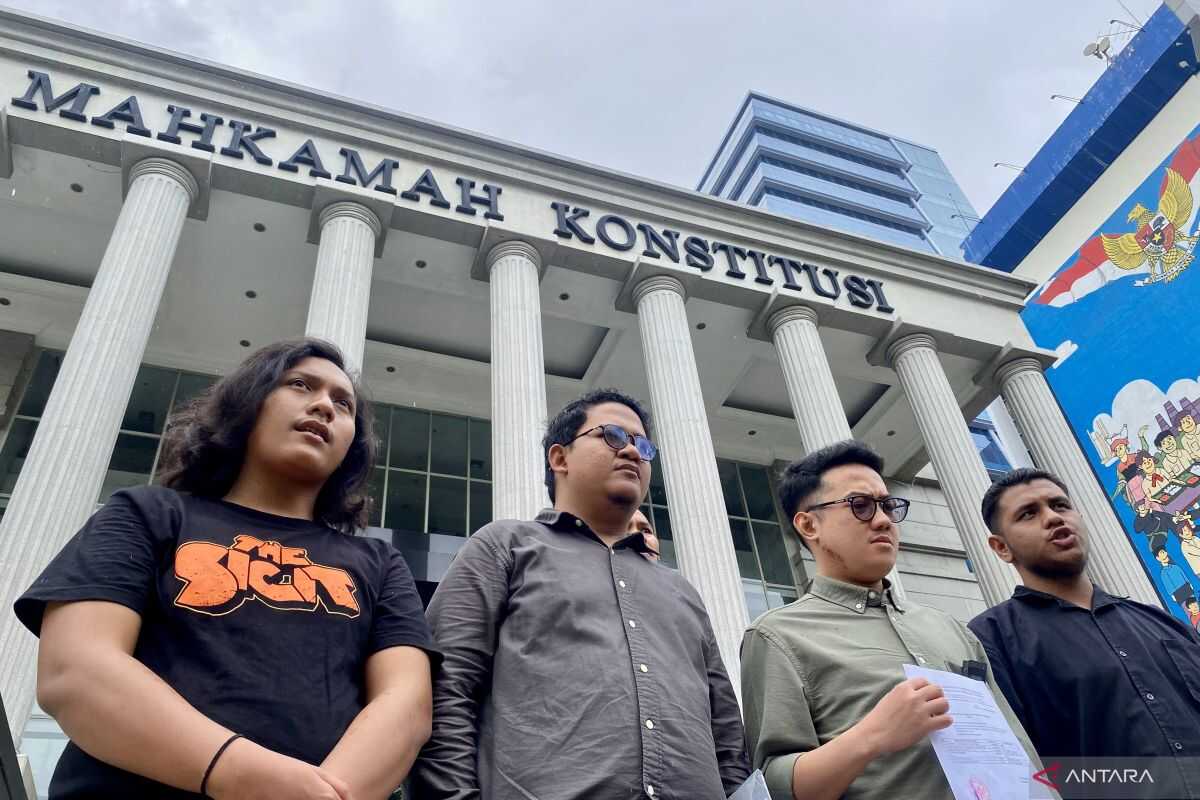
Jakarta (ANTARA) – The Constitutional Court (MK) continues to receive requests to test Law Number 1 of 2023 on the new Penal Code (the new KUHP) because some of its provisions are argued to be open to multiple interpretations, creating flexibility in application, or what is commonly known as ‘rubber provisions’. Most recently, activist and August 2025 protest defendant Delpedro Marhaen and Muzaffar Salim filed a request for judicial review of the incitement and spreading false information articles with the MK on Thursday (5/3). In addition to the incitement and spreading false information offenses, other articles in the KUHP have also been contested by citizens, including insults to the president and state institutions up to notices of demonstrations. Most of the petitions are or have been ongoing in the MK. Meanwhile, one has already been ruled. The legal considerations contained in the full decision can serve as guidelines in the application of those provisions. Here is a brief overview.
- Incitement (Pasal penghasutan)
Delpedro and Muzaffar, who are currently facing trial at the Central Jakarta District Court, are testing Article 246 of the new KUHP. The article states: “Punished by a maximum imprisonment of four years or a maximum fine of category V, anyone who publicly, by spoken word or writing: a. incites others to commit a criminal act; or b. incites others to oppose the general authorities by violence.”
According to the petitioners, the norm of that article is not aligned with MK’s legal considerations in decision No. 7/PUU-VII/2009. At that time, MK held that the offense of incitement in Article 160 of the old KUHP should be regarded as a material offense (delik materiil). A material offense is generally understood as an offense that is completed not at the moment of the act, but after the consequences have actually occurred. In other words, incitement can be punished only when its effects have truly materialized.
However, according to Delpedro and Muzaffar, the norm of Article 246 of the new KUHP conflicts with that prior consideration. There is no explanation of when incitement can be punished.
It is known that the two activists are charged with incitement related to the August 2025 demonstration regarding DPR members’ allowances. The demonstration began in Jakarta and spread to various regions across Indonesia.
Therefore, they request that the two provisions be interpreted in accordance with the interpretation contained in the previous MK decision.
- Spreading false information (Pasal penyebaran berita bohong)
The offense of spreading false information is regulated under Articles 263 and 264 of the new KUHP. Anyone who disseminates uncertain, excessive, or false information that leads to public unrest may be punished by up to two, four, or six years’ imprisonment.
However, as argued by Delpedro and Muzaffar in their petition, the offense of spreading false information under the old KUHP was effectively struck down by MK in Decision No. 78/PUU-XXI/2023. In that decision, MK granted Haris Azhar and Fatiah Maulidiyanty’s petitions related to testing of Articles 14 and 15 of the old KUHP. In its legal reasoning, MK held that the elements of falsehood and excessive news are ambiguous. The Court argued that there was no clear explanation in the old KUHP detailing the degree of accuracy of a piece of information or notice. This contradicts the lex scripta (written law), lex certa (clear), and lex stricta (strict) principles in formulating criminal norms. Consequently, the petitioners urge MK to strike down the spreading false information provision again in the new KUHP, as was decided in the testing of the old KUHP.
- Insulting the president (Pasal penghinaan presiden)
Thirteen students from the Open University’s Law Study Programme are testing Article 218 of the new KUHP, which provides criminal penalties for insulting the honour or dignity of the president and/or vice president. The article states that anyone who attacks the honour or dignity of the president and/or vice president shall be punished with a maximum prison term of three years, unless carried out for public interest or self-defence.
According to the petitioners, the existence of this article places them in a vulnerable position to criminalization. They fear Article 218 would create a chilling effect on citizens’ freedom of expression. They argue that the article lacks clear definitions and boundaries; the phrase “attacking the honour or dignity” has no concrete reference that can be measured objectively. The article is feared not to be in line with democracy’ s essence, as it could criminalize citizens, including when presenting academic material, scientific publications, or public discourse on evaluation and criticism of national leadership.
Additionally, they also test Articles 219 and 220, which remain in the same chapter. These articles provide further provisions related to insults against the president or vice president.
Therefore, the petitioners request Article 218, Article 219, and Article 220 of the new KUHP to be declared unconstitutional and without binding force. In other words, they seek the removal of these articles.
The hearings for petition No. 275/PUU-XXIII/2025 are still ongoing. The Court has scheduled a hearing to hear statements from the DPR and the government next Monday (9 March).
- Insulting state institutions (Pasal penghinaan lembaga negara)
Nine students from the Faculty of Law at Universitas Terbuka test Articles 240 and 241 of the new KUHP because they assess the boundary between criticism and insulting state institutions or the government to still be unclear. They argue that the lack of clarity between legitimate criticism and insult could expose the public to subjective interpretations by law enforcement. They fear criminalization if their criticisms are deemed insulting. The petitioners argue that the articles t