
Five New Facts on Trump's Volatile Tariffs: Rising Again by 15-50%, Indonesian Products Hit with 104%
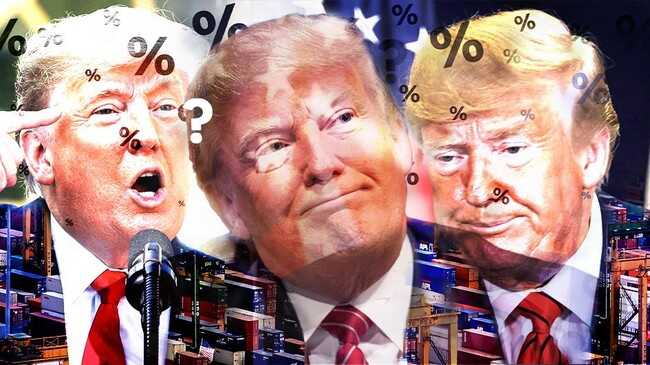
Jakarta, CNBC Indonesia - The reciprocal tariffs serving as “weapons” in US President Donald Trump’s trade arsenal, initially set at 10-50%, were cancelled by the US Supreme Court last week. The tariffs targeting countries with trade surpluses to the US were based on the International Emergency Economic Powers Act (IEEPA) of 1977.
The Supreme Court ruled that the emergency economic law exceeded Trump’s authority. The cancellation ultimately created global uncertainty.
Many countries have already concluded trade agreements with the US, including Indonesia (19%), one day before the Supreme Court announcement. However, immediately after the announcement, Trump reactively claimed the tariffs would remain in place and promised to implement a 10% rate, which he later said would increase to 15%.
Meanwhile, US Customs has halted tariff collection since Sunday following the Supreme Court decision. However, last Tuesday, citing Section 122 of the Trade Act of 1974, the US reintroduced a 10% tariff whilst claiming it remains compatible with existing trade agreements.
What is the actual update on these tariffs? Here are five key facts compiled by CNBC Indonesia on Friday (27 February 2026):
- Tariffs Set to Rise Again to 15%
The US is actually planning to increase tariffs for numerous countries from the newly implemented 10% level to 15% or even higher. This was stated by US Trade Representative (USTR) Jamieson Greer.
In several interviews, he confirmed the US would do this soon. Unfortunately, he did not provide details on the list of specific trading partners that would be affected by the increase.
At minimum, this was stated during the “Mornings with Maria” programme on Fox Business Network on Wednesday local time. Greer revealed that the tariff increase would be tailored to each country’s trade profile.
“Currently, we have a 10% tariff. That figure will rise to 15% for some countries and then perhaps even higher for others, and I think that will align with the type of tariffs we have seen over time,” Greer said in the programme, also cited by Reuters.
Speaking later on Bloomberg TV, Greer made the same statement. He added that the increase from 10% to 15% or higher applies to sectors deemed appropriate.
Nevertheless, the US will accommodate countries that already have trade agreements with the US. But once again, details regarding the mechanism have not been explained further.
The US administration also ensured that any tariff increase would follow applicable legal procedures. This cautious approach is being taken to anticipate potential legal challenges from those with economic interests abroad.
“Whenever we set tariffs, we will face foreign interests wanting to lower them. So, people will sue us,” said Greer.
Regarding the law to be applied, this will likely reference Section 301, concerning investigations into unfair trade practices under Section 301. These investigations will target countries that build excessive industrial capacity, employ “forced labour”, discriminate against US technology companies, or provide substantial subsidies on commodities such as rice and seafood products.
- Be Cautious: Indonesia’s Industrial Sector and Fishing Subsidies Under Scrutiny
Furthermore, Greer explained that Section 301 also functions as an enforcement mechanism for newly agreed trade agreements, including with Indonesia. For context, Indonesia previously agreed to accept US reciprocal tariffs of 19% and open its market to goods from Uncle Sam.
The USTR plans to open a Section 301 investigation into Indonesia’s trade practices to examine industrial capacity and fishing subsidies. These findings will subsequently be compared with the measures Indonesia has taken in fulfilling its commitments regarding US concerns.
“And then we will make a decision about what type of tariffs should be applied. We hope to maintain continuity in what we do with the trade agreement,” he explained.
- New Tariffs Up to 50%
Additionally, there are plans for the US to increase tariffs for “enemy” countries to 50%. This was further stated by Greer in his interview.
He referenced Section 338 of the Tariff Act of 1930, which permits tariff rates up to 50% for countries engaging in trade discrimination against the US. Nevertheless, he stated the US remains focused on country-based Section 301 and security-based Section 232.
- Secret Legal Framework to Retain Import Tariff Revenue
Meanwhile, the Trump administration is reportedly developing a secret legal strategy to retain billions of dollars from import tariff revenues. This step is being taken despite the US Supreme Court ruling that the tax collection was illegal.
Five sources familiar with internal discussions revealed to Politico on Thursday that officials across various departments are now scrambling to find loopholes so the government does not have to return the money to affected companies. Based on reports gathered, initial ideas include policies to discourage companies from filing refund claims, as well as technical efforts to prevent the government from paying back the funds to preserve the national treasury.
Two sources mentioned that one strategy being prepared is to claim that tariff payments over the past year remain valid under a new legal framework being prepared by the government. Additionally, there is an option for companies to “jump the queue” in a lengthy refund process if they agree to surrender a portion of their money to the government.
Tariff revenue itself is a key pillar of Trump’s economy. The White House previously projected tariff revenues of US$4 trillion (Rp67.52 trillion) over the next ten years.