
Fitch's Negative Outlook Signals Serious Concern for Industrial Investment Climate
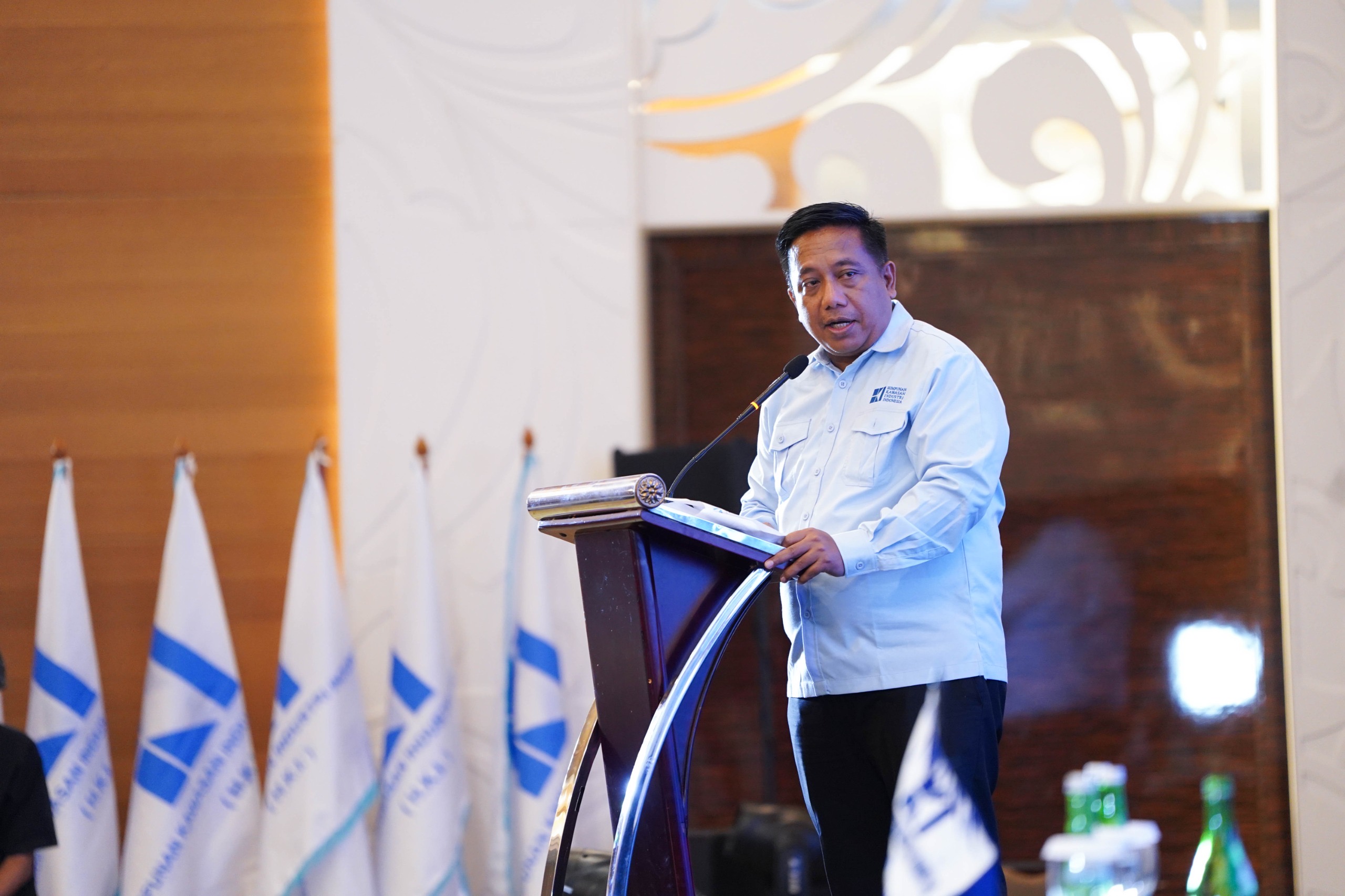
The Indonesian Industrial Estate Association (HKI) has assessed that the change in Indonesia’s credit rating outlook from stable to negative by Fitch Ratings represents a serious signal requiring immediate government response. Although Indonesia’s rating remains at investment-grade level BBB, the outlook shift reflects rising market concerns about the consistency of economic policy and the credibility of fiscal management going forward.
HKI General Chair Ahmad Ma’ruf Maulana stated that the signal from the global ratings agency must be read carefully, as perceptions of country risk will directly influence investment decisions.
“A negative outlook is not merely a technical assessment by a ratings agency. It is a warning that the global market is beginning to see increased policy uncertainty. If not immediately responded to with clear corrective measures, the impact could be directly felt in industrial investment, project financing costs, and investor confidence,” he said.
HKI assessed that Indonesia’s current industrialisation phase is at a critical juncture, particularly for strategic manufacturing sectors such as electronics, renewable energy, batteries, and natural resource downstream industries that require large-scale long-term investment.
According to Ma’ruf, fiscal policy stability, regulatory certainty, and the credibility of economic governance are key factors in attracting and retaining industrial investment. Changes in country risk perceptions could potentially increase capital costs for various industrial projects.
Global investors, he noted, tend to postpone or review expansion plans when macroeconomic policy uncertainty emerges. In the long term, such conditions could reduce Indonesia’s competitiveness in regional investment competition with countries like Vietnam, Thailand, and Malaysia, which are continuously strengthening policy certainty and investment governance.
HKI also assessed that the outlook change occurs amid an increasingly uncertain global economic situation due to escalating geopolitical tensions. Conflicts involving Iran, Israel, and the United States, as well as escalating tensions in the Middle East, raise concerns about global logistics route stability, particularly the Strait of Hormuz, one of the world’s most vital energy trade routes.
Disruptions to global energy logistics routes could trigger spikes in international energy and logistics costs, ultimately creating disruptions in world trade. In such conditions, many global investors tend to hold back new investment expansion and adopt a more cautious approach to long-term industrial projects.
“In a world facing geopolitical conflict and global logistics disruptions, international investment flows tend to slow. Therefore, the most realistic strategy for Indonesia is to ensure the acceleration of investment realisation from projects that already have commitments,” Ma’ruf said.
He assessed that the government must pursue breakthroughs in accelerating investment implementation, including through simplified licensing procedures, enhanced regulatory certainty, and strengthened cross-ministerial and local government coordination to prevent investment projects from being hindered at the implementation stage.
“Indonesia is not lacking potential. We have a large domestic market, abundant natural resources, and a strategic position in global supply chains. However, all of this will not be sufficient if investors begin to doubt the consistency of our economic policies. Policy stability is the primary foundation of industrialisation,” he stressed.
HKI has also urged the government to maintain fiscal discipline, strengthen consistency in macroeconomic policy, and increase transparency and regulatory certainty for the business world so that Indonesia remains a primary destination for industrial investment in Southeast Asia.
“Industrialisation cannot proceed amid uncertainty. Investors need assurance that Indonesia’s economic policies are stable and predictable in the long term. If this negative signal is not promptly addressed, Indonesia risks losing the industrialisation momentum currently being built,” Ma’ruf said.
According to HKI, maintaining global investor confidence must become a national priority. With credible economic policies, strong fiscal discipline, and transparent governance, Indonesia is believed capable of restoring market confidence and strengthening its position as a centre of new industrial growth in the Asian region.