
Fitch Revises Indonesia's Outlook to Negative, Purbaya's Aides: Stability Remains Maintained
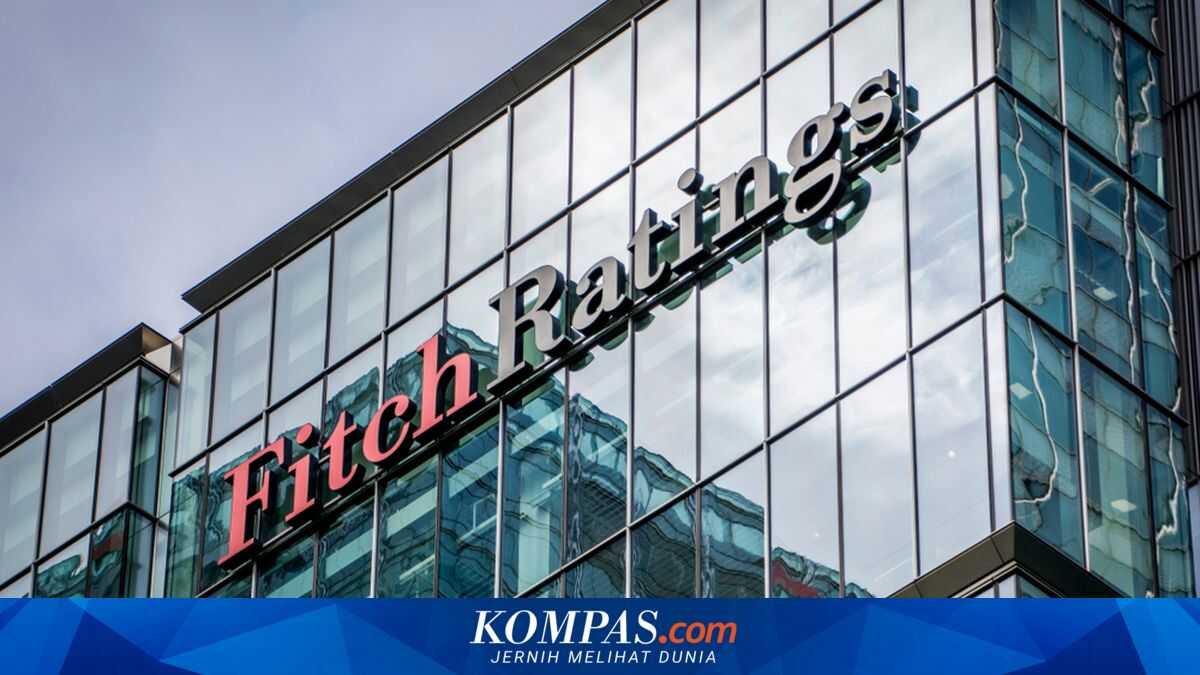
JAKARTA, KOMPAS.com – The international ratings agency Fitch Ratings has revised Indonesia’s credit rating outlook to negative from previously stable. Nevertheless, Fitch kept Indonesia’s Long-Term Foreign-Currency Issuer Default Rating (IDR) at BBB.
The change in outlook reflects rising policy uncertainty and concerns about the durability of Indonesia’s economic policy framework going forward.
Deni Surjantoro, Head of the Finance Ministry’s Communications and Information Services Bureau, said the decision to maintain the BBB rating shows the agency still regards Indonesia’s economic fundamentals as sufficiently strong.
‘This decision also reinforces Fitch’s confidence in Indonesia’s solid economic fundamentals and a stable medium-term outlook,’ Deni told a formal statement on Wednesday, 4 March 2026.
‘The Indonesian government reiterates its commitment to maintaining macroeconomic stability and continuing fiscal discipline,’ he added.
Fitch even gave a positive overlay on the macroeconomic aspect, via a Qualitative Overlay +1 notch, reflecting appreciation of policy credibility and resilience of the domestic financial sector.
In its projections, Fitch expects Indonesia’s economy to grow around 5 percent in 2026-2027, higher than the median for BBB-rated countries.
Deni added the government will continue to maintain economic stability through fiscal discipline as mandated by law, improve the business climate through deregulation and debottlenecking, and strengthen structural reforms to spur investment and growth.
In terms of current economic performance, Indonesia’s GDP grew by 5.39 percent in Q4 2025. Early indicators for 2026 also show improvement, such as consumer confidence index, Purchasing Managers’ Index (PMI), electricity consumption in the business and industrial sectors, and vehicle sales.
Tax revenues even jumped 30.7 percent year-on-year in January and 30.4 percent year-on-year in February. By contrast, government expenditure increased by 25.7 percent y/y in January and 41.9 percent y/y in February.
‘Accelerated spending and stimulus measures are being implemented in a measured way to maintain momentum of growth, while ensuring the state budget remains healthy and fiscal discipline is preserved,’ Deni said.
Furthermore, the government is continuing to strengthen coordination between fiscal and monetary policy to maintain market confidence. Collaboration with Danantara is also being promoted as a new growth engine through strategic investments outside the State Budget (APBN), while continuing to prioritise governance and risk management measures.
With the economy’s fundamentals still seen as strong, the government remains optimistic about sustaining resilience and stability in the face of global economic dynamics.
KOMPAS.com is committed to delivering clear, trustworthy, and balanced facts. Support continuous, transparent journalism and enjoy ad-free reading by joining KOMPAS.com Plus today.