
Fitch Revises Indonesia’s Outlook to Negative, OJK Says Financial Stability Is Maintained
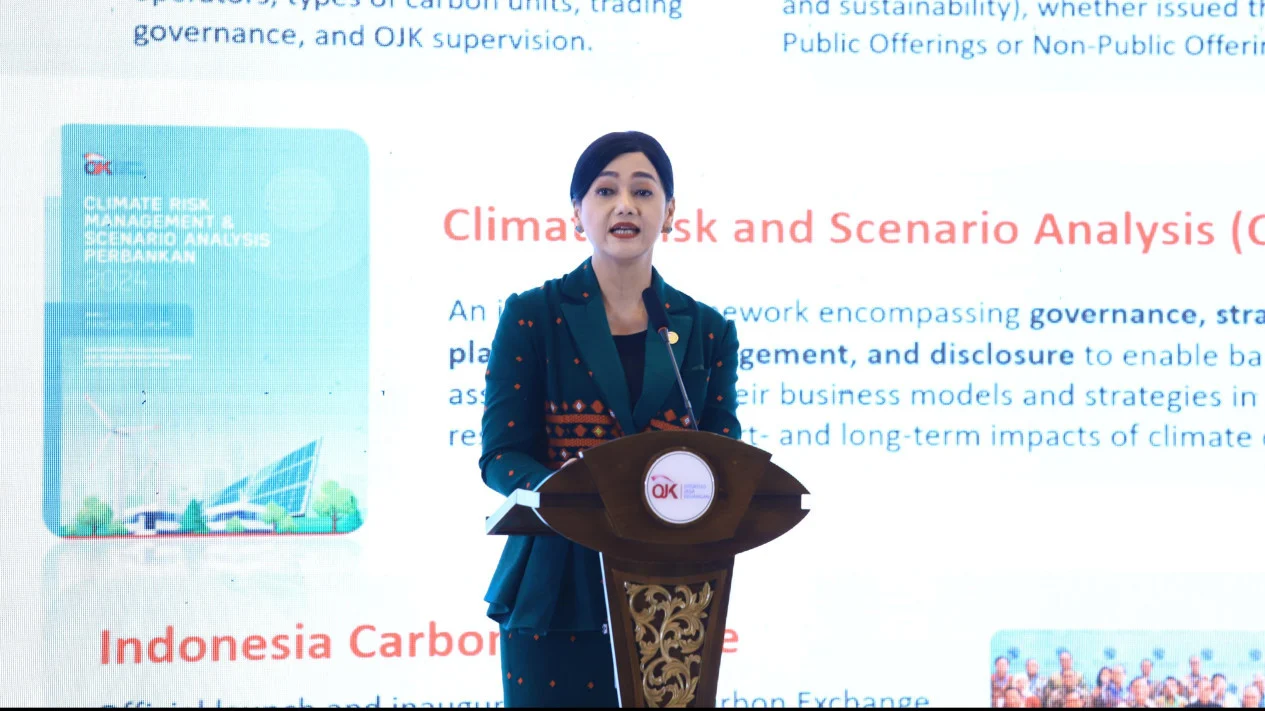
Jakarta, VIVA – The Financial Services Authority (OJK) has responded to Fitch Ratings’ decision to keep Indonesia’s sovereign credit rating at BBB, while revising the outlook from Stable to Negative.
Friderica Widyasari Dewi, Acting Chair of the OJK Board of Commissioners, said that they are currently examining Fitch Ratings’ outlook revision along with the various considerations underlying the assessment.
The OJK, together with the government and related authorities, is also said to continue strengthening policy coordination to keep financial sector conditions conducive so that economic growth can proceed in a stable and resilient manner.
“The Indonesian financial system is also supported by a strong supervisory framework, and we will continue structural reforms to enhance transparency, deepen the capital market, and strengthen investor confidence in the long term,” Friderica said, as quoted from the press release dated Thursday, 5 March 2026.
According to Fitch Ratings, the outlook revision reflects evolving external risks and dynamic policy considerations. However, the change does not represent a direct reassessment of Indonesia’s credit fundamentals or the resilience of the national financial system.
The reaffirmation of the BBB rating is also seen as Fitch acknowledging Indonesia’s track record in maintaining macroeconomic stability. In addition, the resilient growth prospects, a moderate government debt level, and generally strong economic fundamentals are among the supporting factors.
Friderica explained that the fundamentals of the national financial sector remain in strong condition. The capitalization of financial services institutions is said to be well above minimum requirements, liquidity is also deemed adequate, while the risk profile remains prudently managed.
Financial intermediation is also said to continue growing in line with the economic fundamentals. This condition is expected to continue supporting financing for productive sectors and long-term economic development.
On the other hand, the structural reforms set out in the 2023–2027 Capital Market Roadmap are also progressing with a number of advances. The reforms include improving ownership transparency, strengthening free float requirements, refining investor data classifications, and robust enforcement of laws to strengthen market governance and integrity.
The OJK also regards Fitch’s assessment that places Indonesia in a relatively better position than some peer countries as reflecting confidence in Indonesia’s policy capacity and institutional resilience.