
Fitch Flags MBG Fiscal Risk, Airlangga Stresses Long-Term Investment in Human Capital
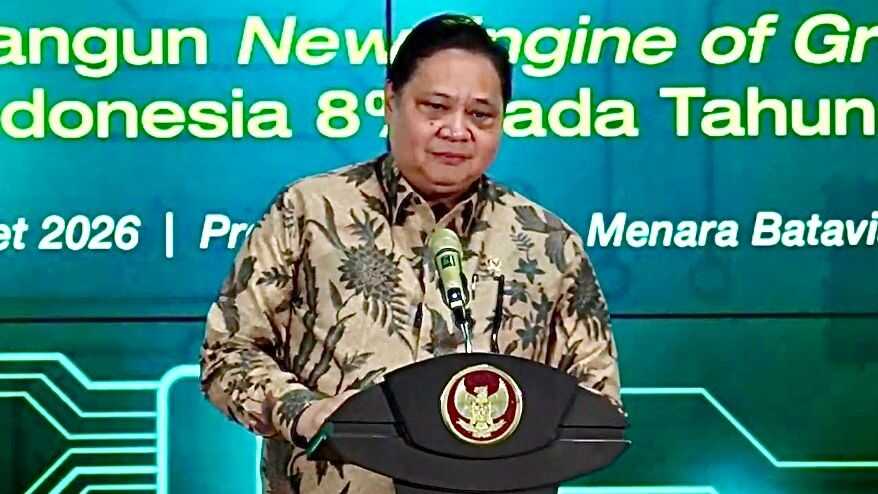
Jakarta, Aktual.com – Coordinating Minister for Economic Affairs (Minister for Economic Affairs) Airlangga Hartarto emphasised that the Free Nutritious Meal (MBG) programme is a long-term investment to improve the quality of human resources while also driving national economic growth.
The statement came after global rating agency Fitch Ratings drew attention to potential fiscal pressures from implementing the programme.
Airlangga said various international studies show that a child nutrition programme can have significant economic impacts if implemented widely and sustainably.
“Several studies from the World Bank and the Rockefeller Foundation show that with a massive and well-executed MBG, an investment of 1 dollar can yield 7 dollars,” Airlangga said after the National Semiconductor Talent Briefing 2026 at Menara Batavia, Jakarta, Thursday 5 March 2026.
He argued that those findings indicate that spending on nutrition programmes not only affects child health but also contributes to future economic productivity. Therefore, the government views MBG as a strategic step to strengthen Indonesia’s human resources.
Airlangga added that several countries have implemented similar policies to improve the quality of their younger generations.
“This is an investment. Many countries do it, even the United States is doing it. So this is a long- and medium-term challenge that cannot be eliminated purely by short-term considerations,” he said.
Regarding Fitch’s scrutiny of the programme, the government said it would not revise the MBG policy as its implementation is still in the early stages. The programme will be rolled out gradually while expanding the scope of beneficiaries.
“MBG is just getting started, so if it’s rolling out, we will continue to roll it out,” Airlangga said.
On the other hand, he viewed Fitch’s revised outlook as a reminder for the government to strengthen the economy’s fundamentals, especially from the revenue side. One of the steps urged is the implementation of the Coretax tax administration system at the Ministry of Finance to increase the tax-to-GDP ratio.
Earlier, Fitch revised Indonesia’s debt rating outlook to negative due to rising policy uncertainty and potential fiscal pressures, including from social expenditure such as MBG, estimated to reach around 1.3 percent of GDP in 2025–2029. Nevertheless, the rating agency kept Indonesia’s debt rating at BBB, still within the investment grade category.
(Nur Aida Nasution)
This article was written by:
Eka Permadhi