
Fitch and S&P Issue Warnings to Indonesia: What Do They Contain?
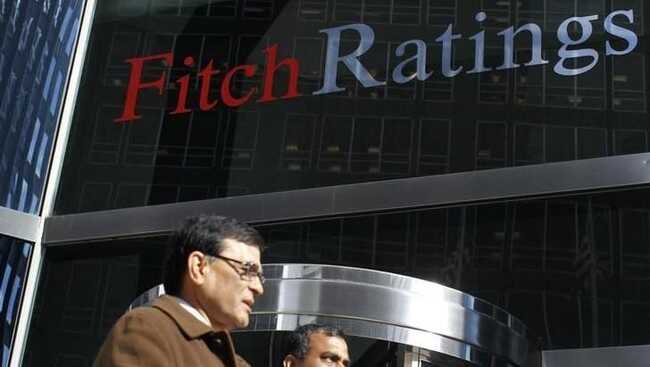
Jakarta – CNBC Indonesia. Global rating agencies are once again adjusting Indonesia’s financial markets. After earlier, a series of international institutions had previously signalled a negative view of Indonesia’s market, the latest move came on Wednesday, 4 March 2026, when Fitch Ratings cut the outlook on Indonesia’s debt to negative from stable, while keeping the rating at BBB, i.e., still within the investment-grade band.
In its latest assessment, Fitch said the changed outlook reflected rising policy uncertainty and diminished consistency and credibility of Indonesia’s policy mix. The note highlighted risks of policy loosening too aggressively amid high ambitions for economic growth, potential pressure on fiscal policy, investor sentiment, and external reserves.
Nevertheless Fitch still maintains Indonesia’s rating at BBB, meaning the country’s debt is still considered investment grade.
Fitch also pointed to several factors that could add pressure going forward, including concerns about the direction of fiscal policy, challenges in revenue collection, and risks to external stability.
At the same time, Fitch noted that Indonesia remains supported by relatively strong economic growth compared with many other countries in the same rating category, so its rating level has not been downgraded.
Fitch’s move extends the run of negative sentiment for Indonesia in recent times. Earlier, pressure had already come from global stock indices, investment bank views, and outlook revisions from other rating agencies. Thus the issue facing Indonesia is not only the stock market, but is also spreading to perceptions of policy credibility and governance.
MSCI
An initial alarm came from Morgan Stanley Capital International (MSCI) at the end of January 2026, after a decision that triggered market turmoil on Tuesday 28 January 2026. The global index provider flagged ongoing concerns among international investors about transparency in Indonesia’s share ownership structures, even though there has been only limited improvement in free float data.
MSCI noted that some market participants welcomed the use of additional data from KSEI, but many questioned the reliability of shareholding classifications used to assess free float and market accessibility.
In its temporary policy, MSCI froze the increases in Foreign Inclusion Factor (FIF) and Number of Shares, did not add Indonesian shares to MSCI Investable Market Indexes, and delayed transitions to higher market segments until the next review in May 2026. This step raises the risk that Indonesia could be reclassified from an Emerging Market to a Frontier Market if the required improvements are not deemed adequate.
Goldman Sachs
In response to MSCI’s release, Goldman Sachs downgraded Indonesian equities to underweight. The US-based investment bank projected continued passive selling by global investors, as MSCI judged the market to have structural issues, particularly regarding ownership and free float.
‘We expect continued passive selling and see this development as an overhang on market performance,’ wrote Goldman Sachs analysts, while trimming the Jakarta Composite Index (IHSG) outlook to underweight, reported by Business Times on 29 January 2026.
Moody’s
After pressure from stock indices and markets, sentiment then moved to the sovereign rating. On Thursday 5 February 2026, Moody’s lowered Indonesia’s outlook from stable to negative, while maintaining the rating at Baa2, still within the investment-grade bracket.
Moody’s cited reduced predictability in policymaking, increased risks to policy effectiveness, and signs of weakening governance. It warned that if fiscal and external pressures widen, the negative outlook could open the door to a downgrade.
Commentary from S&P Global
Meanwhile, global rating agency S&P Global also began to flag rising risk in Indonesia. In a comment published on Thursday 6 February 2026, S&P said Indonesia’s stock price volatility at that time had not materially altered its view of the sovereign rating for RI.
However, S&P’s cautions grew sharper towards the end of February 2026, as markets shifted focus to fiscal pressures and the rise in debt service costs relative to revenue.
To date, S&P has kept Indonesia’s rating at BBB with a stable outlook, but its remarks show markets are now watching Indonesia not only from the equity angle, but also in terms of fiscal resilience and policy credibility.
What Will It Mean for Indonesia?
The sequence of adjustments by global agencies could have tangible consequences for Indonesia’s financial markets and economy. The pressure could be felt from the stock market, foreign capital inflows/outflows, the rupiah, and government borrowing costs as global investors become warier about allocating funds in Indonesia.
Greater pressure on the stock market
Increased risk of capital outflows
The rupiah more vulnerable to depreciation
Government borrowing costs could rise
Fiscal space could tighten further