
FISIP UI Research Examines Impact of MBG Programme on Household Economic Dynamics
With good nutrition, children can grow and develop optimally so that in the future they are able to contribute positively to development and help improve the family’s economic conditions.
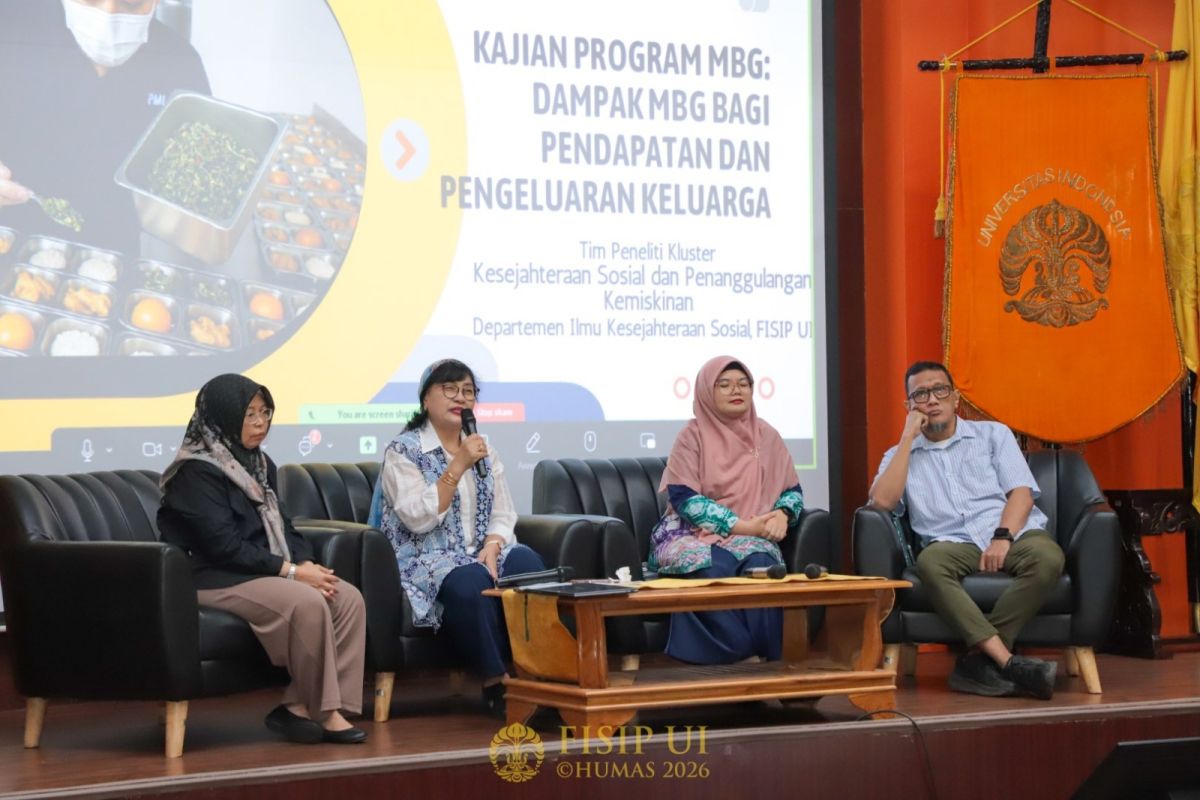
Depok — Researchers from the Department of Social Welfare at the Faculty of Social and Political Sciences (FISIP) of the University of Indonesia (UI) have presented research findings indicating that the School Meal Programme (MBG) increases income and reduces public expenditure.
The research was led by Prof. Fentiny Nugroho, Professor of Social Welfare at FISIP UI, with a research team comprising Dr. Annisah, Dr. Anna Sakreti Nawangsari, Dr. Arif Wibowo, and Shinta Tris Irawati M.Kesos.
Prof. Fentiny, speaking at the UI Depok campus on Wednesday, stated that the research critically examined the influence of the MBG Programme on household economic dynamics, ranging from changes in income structure to family expenditure patterns.
“The Nutritional Service Unit (SPPG) is able to mobilise funds of IDR 10–12 billion per year. Eighty-five per cent of the budget is used to purchase raw materials from local farmers. Each SPPG employs approximately 50 people and involves dozens of farmers and suppliers,” he explained.
He added that volunteers involved in SPPG activities now earn daily income of approximately IDR 100,000 to IDR 125,000 per person. This income is considered quite significant, particularly for those who previously had no stable source of income.
In addition to increasing the income of some members of the community, the research also found a reduction in household expenditure for families benefiting from the MBG Programme, particularly for food needs. This impact was most felt by poor and vulnerable poor families.
However, some parents stated they did not experience significant changes in expenditure as they continued to cook food as usual at home.
Prof. Fentiny explained that in the short term, the MBG Programme has the potential to meet basic community needs, particularly regarding access to nutritious food.
The programme also provides economic impact through labour absorption in SPPG and partner micro and small enterprises (UMKM), increased income for volunteers and UMKM workers, and reduced family expenditure.
In the long term, the programme is also deemed to have the potential to improve the quality of human resources. Good nutritional intake is believed to be able to support optimal child growth and development, including physical growth, cognitive development, health, and educational participation.
Despite this, the research also provided a number of recommendations for strengthening the MBG Programme going forward, including the need for a needs assessment of menu types for beneficiaries, consideration of children’s aspirations in menu selection, and prioritisation of areas with high poverty rates as programme targets.
Additionally, the improvement of eating facilities that are of quality and hygienic is also deemed important. The research also recommends that school canteens affected by the programme be supported in becoming business units that supply raw materials for SPPG.
With these various findings and recommendations, the MBG Programme is expected not only to have an impact on meeting the nutritional needs of the community but also to drive local economic strengthening and sustainable poverty reduction.
The research used a qualitative approach through in-depth interviews, focus group discussions (FGD), observation, and document study. The research was conducted in three areas: East Jakarta, Depok, and South Tangerang.