
Fishermen, Take Note! BRIN Delivers Good News for Indonesia's Seas During the Dry Season
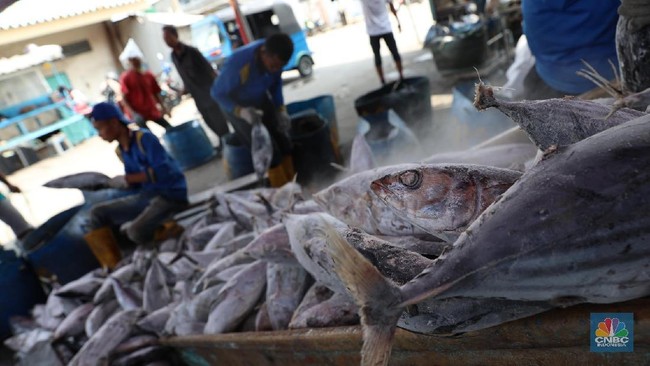
Several oceanography researchers have highlighted the dry season expected to arrive earlier in April 2026. While this phenomenon is often associated with drought on land, in the maritime sector it is utilised as an opportunity to increase marine fertility through upwelling.
BRIN’s Principal Expert Researcher Widodo Pranowo stated that the strong movement of Easterly winds explains the onset of the dry season. Surface seawater masses are then pushed offshore by these winds, allowing cold, nutrient-rich water from deeper layers to rise and replace them.
“The uplifted water mass brings ‘natural fertiliser’ in the form of nitrates and phosphates. When it reaches the sunlit surface, massive photosynthesis occurs by phytoplankton. This forms the basis for increasing our marine primary productivity,” Widodo said, quoted from an official statement on Saturday (21/3/2026).
The upwelling phenomenon south of Java has been studied by Widodo Pranowo in research published in the Indo-Maritime Magazine in 2014. In that study, a unique characteristic known as RATU (Semi-permanent Java Coastal Upwelling) was identified as a distinctive feature of the region.
Seasonal dynamics and global climate variability are known to greatly influence the intensity of RATU. Real-time temperature and salinity profile data were successfully recorded using Argo Float technology, an automatic diving robot operated to depths of 2,000 metres.
The thermocline layer uplifted during the upwelling process serves as the main indicator in mapping fishing areas. The waters south of Java to Nusa Tenggara have been identified as important habitats for the migration and spawning of economically valuable fish such as tuna and skipjack.
Increased upwelling intensity can be triggered by the synergy between Easterly winds and the El Niño phenomenon. As a result, stocks of pelagic fish are reported to experience significant increases.
Phytoplankton development is expected to begin in April to May 2026, then increase in June, peaking in July to August. The abundance of small pelagic fish like anchovy in the Bali Strait is also predicted to be boosted by these conditions.
Climate variability is said to greatly influence marine dynamics, including the potential strengthening of upwelling. If El Niño occurs in 2026, this phenomenon is expected not only to intensify south of Java but also to extend to other Indonesian waters.
The risk of prolonged drought due to El Niño is assessed as threatening food security from the land sector. However, marine food sources are seen as having the potential to serve as an alternative replacement under those conditions.
Strategic steps to maintain national food sovereignty continue to be taken by BRIN through ongoing monitoring of marine and atmospheric dynamics. These efforts are hoped to optimise the potential of the maritime sector amid climate change.