
Fiscal discipline and sustainable economic stability
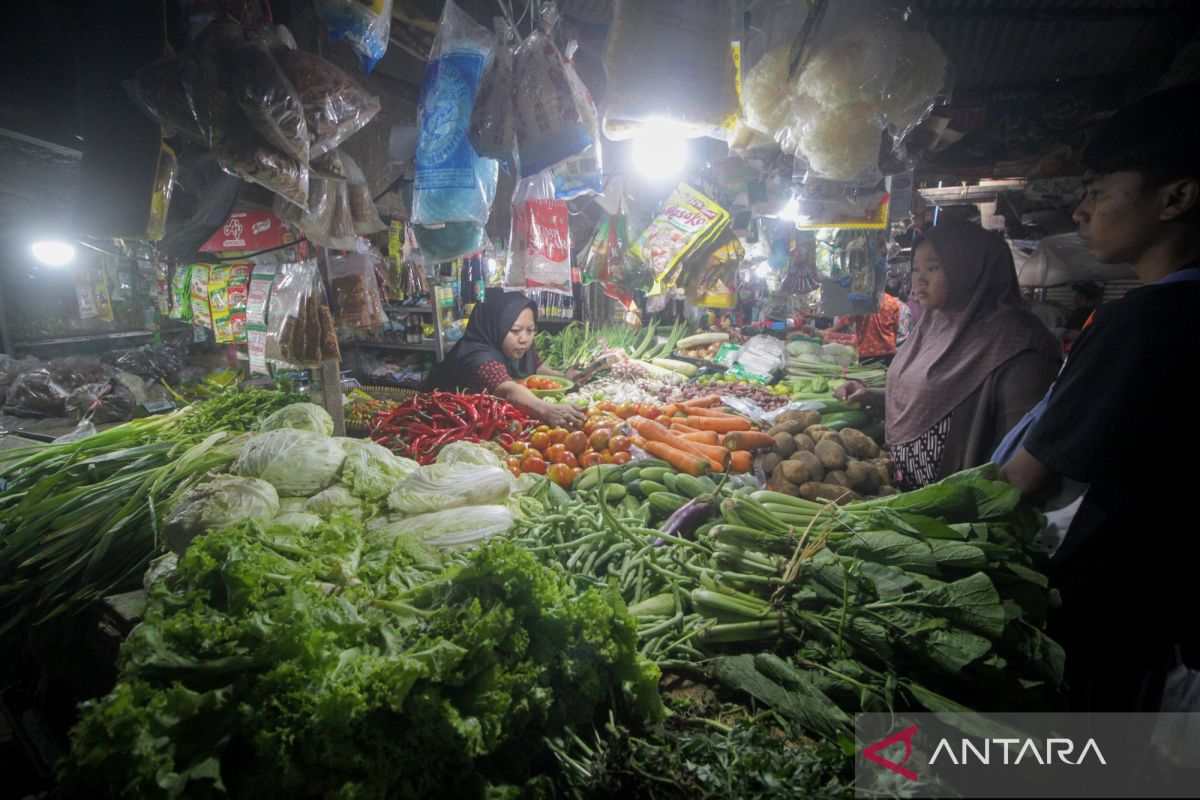
Governments must be able to provide certainty so that prices are kept in check, supply chains are safe and smooth, and state revenue remains liquid without sacrificing long-term budget health.
Jakarta (ANTARA) - In a world still not fully recovered from uncertainty, conflicts in the Middle East region have again become a source of anxiety for global markets. The escalation of tensions between Iran and the United States is not merely a diplomatic issue, but could directly affect economic stability through the energy channel. About 20 percent of global oil trade, or around 20 million barrels per day, passes through the Strait of Hormuz. When this route is threatened, markets react quickly, and global energy prices swing.
Global crude oil prices, which at the start of 2026 hovered around $80 per barrel, could rise above $100 per barrel if there are significant distribution disruptions, and could even reach $120 per barrel in extreme scenarios.
For Indonesia, which still imports around 800 thousand to 1 million barrels of oil per day, such a spike would directly affect the burden of subsidies and energy compensation in the APBN.
The government has set an ICP assumption of around $82 per barrel; every $1 increase could add trillions of rupiah in fiscal burden per year. This is where fiscal discipline is tested: maintaining domestic price stability without compromising the health of the state budget.
The good news is that the national fuel stock (BBM) reserves are managed through a buffer stock system that on average covers 20–30 days of national consumption. Diversification of supply, scheduled imports, and strengthening the energy mix such as biodiesel are tools to dampen imported inflation. The stability of energy distribution is not only a logistics issue but a foundation for fiscal sustainability. Distribution disruptions that trigger market panic are often far more expensive than price increases alone.
In the context of the 2026 fiscal policy, Indonesia still maintains the APBN deficit below the safe threshold of 3 percent of GDP (2.68 percent) with a value around Rp689.1 trillion, as well as a debt-to-GDP ratio target that remains stable below 40 percent. This target demonstrates a commitment to cautious economic recovery after the pressures of the pandemic and global dynamics, while also creating room in the budget to face external shocks such as energy price spikes.
Economic growth in Q4-2025 was robust at 5.39 percent (year-on-year), the highest since the pandemic, also proving domestic resilience that remains adaptive despite ongoing global pressures. Indicators such as inflation contained at 3.55 percent (yoy) in January 2026 and the uptick in the labour force thus far demonstrate macro stability that underpins price resilience without losing growth momentum.
Meanwhile, the disbursement of the Eid bonus (THR) for civil servants, retirees, and private-sector workers, as well as Eid assistance programmes for informal workers such as online ride-hailing drivers, are designed to maintain purchasing power without generating excessive demand that would accelerate inflation.
Furthermore, sustainable fiscal policy requires synergy with strengthening the national economic structure to stay responsive to global volatility, as well as maintaining balance between growth, price stability, and the purchasing power of the people. Thus, fiscal discipline is not merely a deficit figure under control, but a commitment to building sustainable and inclusive economic stability for all Indonesians in facing global and domestic dynamics.