
First Day of Primary School Academic Ability Test Participated in by 1.6 Million Students, What Are the Results For?
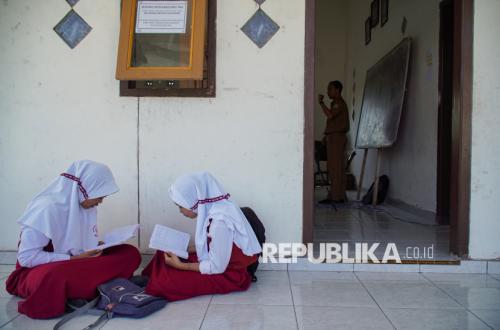
The Ministry of Basic and Secondary Education (Kemendikdasmen) claims that the implementation of the first day of the Academic Ability Test (TKA) for primary school/MI/equivalent levels proceeded smoothly. Based on preliminary data, Kemendikdasmen recorded 1,607,830 participants who took the TKA on the first day across Indonesia.
Kemendikdasmen emphasises that attention to the TKA no longer stops at the aspect of implementation alone, such as technical readiness, process smoothness, and the integrity of the event. Moving forward, Kemendikdasmen is expanding its focus on how the TKA results are optimally utilised.
“So far, we have tended to focus on how the TKA is carried out in the regions. In the future, no less important is how the results are truly utilised as a basis for data-based decision-making,” said the Head of the Basic and Secondary Education Policy Agency of Kemendikdasmen, Toni Toharudin, on Tuesday (21/4/2026).
Toni views the TKA as the basis for education policy-making at the educational unit, local government, and central levels. According to him, this is important so that the TKA becomes an instrument for measurement as well as a tool that has a real impact on improving the quality of learning.
“The data from the TKA must serve as a reference in improving learning, formulating policies, and ensuring that every educational intervention is more on target,” said Toni.
Toni hopes that the utilisation of TKA results can strengthen various aspects, from improving the learning process in the classroom, formulating more targeted interventions, to planning data-based education programmes. To support this, the public, educational units, and local governments can start accessing and utilising the TKA results through the official page at tka.kemendikdasmen.go.id/hasiltka.
“This serves as a reference for data-based decision-making,” Toni stated.
Through the utilisation of that page, Toni says the TKA becomes part of a continuous cycle of improving education quality. Toni believes the assessment results are used actively to drive a more adaptive, responsive education transformation oriented towards the needs of learners.
“We want to ensure that the TKA does not stop as an annual activity that is only discussed during implementation, but becomes part of the ecosystem for improving education quality. When the results are optimally utilised by schools and local governments, the impact will be directly felt by the learners,” Toni said.
Therefore, Toni states that the optimal utilisation of TKA results is key to ensuring that every effort to improve education quality runs more directed, data-based, and sustainable.
“This also strengthens synergy between the central government, regions, and educational units so that every policy and intervention carried out truly has a real impact on improving learning quality and learner achievements,” Toni added.
It is known that the test took place simultaneously from 07:00 to 15:30 WIB. The activity was divided into four sessions for most regions in Indonesia. Meanwhile, for eastern Indonesia, it was held in three sessions adjusted to local conditions.
The first TKA session was participated in by 701,137 participants, the second session by 632,505 participants, the third session by 233,848 participants, and the fourth session by 40,340 participants. This shows widespread participation from learners in various regions.