
First Day of March 2026: Prices of Basic Commodities in Batam City Remain High at Three Traditional Markets
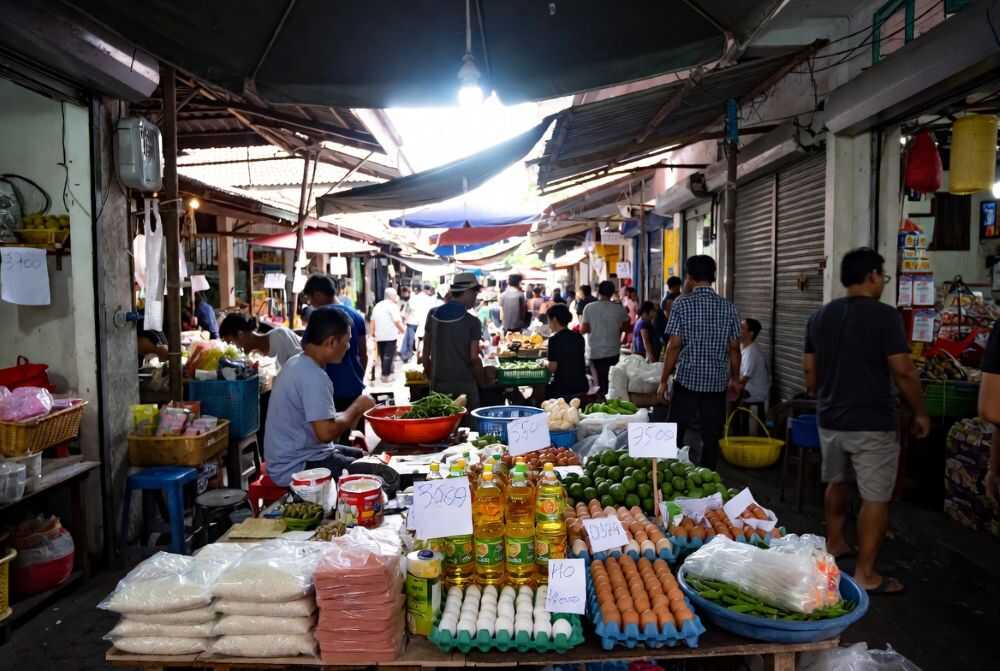
As of the first day of March 2026, prices of several basic commodities in Batam City remain persistently high. Monitoring at three traditional markets—Pasar Tiban Center, Pasar Mitra Raya, and Pasar Sagulung—reveals no significant decline since the price surge that occurred in late 2025.
At Pasar Tiban Center, the price of rice in 5-kilogram packets remains around Rp85,000, 10-kilogram packets Rp155,000, and 25-kilogram packets range around Rp350,000. Rice traders report that the price increase has persisted for several months and remains unchanged to date.
“This price increase has been going on for quite some time. Many customers complain, but they still buy because rice is a basic necessity,” said a rice trader on Sunday (1 March).
Similar conditions are also evident at Pasar Mitra Raya. Several buyers opt to purchase rice in smaller quantities to economise. Besides rice, sugar continues to hold at around Rp17,000 per kilogram.
Meanwhile, at Pasar Sagulung, the price of imported beef remains above Rp120,000 per kilogram. Chicken meat, which previously surged, is now selling at nearly Rp50,000 per kilogram. Nevertheless, chicken egg and red chilli prices remain relatively stable.
The surge in basic commodity prices is also felt by micro-business operators, including food stall owners. They report being in a difficult position as they face rising raw material costs whilst adjusting selling prices cannot be done easily.
“If we raise food prices, we worry customers will decline. However, if we do not raise them, our profits become increasingly thin,” said a food trader in the Sagulung area.
Regarding this situation, Barelang Police Chief Anggoro Prasetyo previously stated that his office, together with the Food Task Force and Bulog, continues to monitor prices in the field. He also urged the public not to engage in panic buying.
The government is expected to promptly take concrete steps to stabilise prices, so that public purchasing power is not continuously pressured amid an economic condition that has not fully recovered.