
Finding Family Resilience at the Breaking of Fast Table
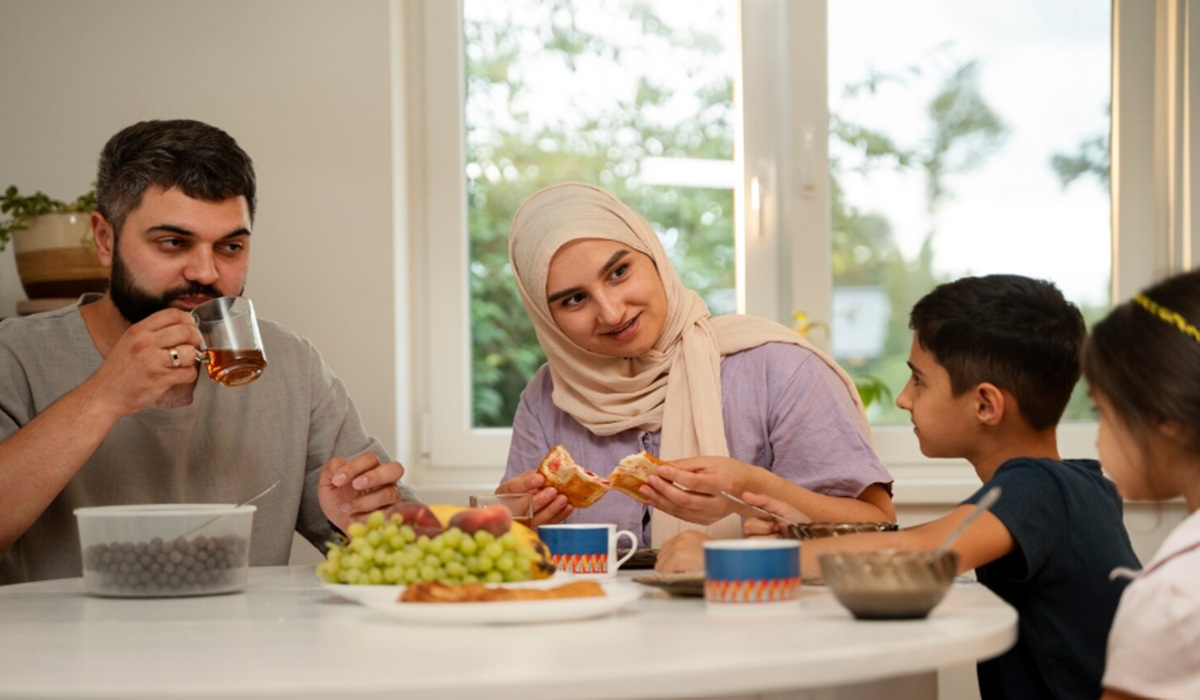
The Breaking of Fast and Family Connection
Breaking the fast together with family holds far deeper social and psychological significance than eating on ordinary days. Behind the food served lies a strategic space to strengthen relationships and emotional resilience among family members.
According to Professor Euis Sunarti, Chair of Family and Consumer Science at IPB University, the moment of breaking fast represents the pinnacle of happiness after a day of fasting. It is when families gather, converse, and pray together at a time believed to be particularly auspicious.
From a family science perspective, interaction at the iftar table becomes a vehicle for building cohesion and bonding. Prof. Euis explains that this moment significantly contributes to strengthening the family’s expressive function, from religious aspects to affection.
“In family science, moments like this become a vehicle for building regenerative, resilient, rhythmic, and traditionalist family typologies. Families increase cohesion and bonding, strengthen togetherness through family time and routine, whilst giving deeper meaning to time and routines,” she states.
The atmosphere of togetherness whilst waiting for the Maghrib call to prayer—such as reminding one another of prayer times and sharing light stories—becomes a key factor in building emotional attachment. This situation, filled with gratitude, automatically increases the family’s socio-psychological resilience.
Many do not realise that casual conversation whilst waiting for the breaking of fast is a form of long-term investment. Prof. Euis emphasises that such dialogue helps each family member feel accepted and understood.
“Even light conversation whilst waiting for the time to break fast plays an important role. Such interaction can increase mutual understanding and acceptance, build positive self-concept, and become an investment in the components of family resilience,” she explains.
Through this habit, values such as mutual concern, sharing, and respect for one another are reinforced. Ramadan serves as a reminder that family is an institution where each individual is bound together and interdependent.
The main challenge in breaking fast together is not the menu served, but the quality of presence. Prof. Euis advises that each family member be present wholly—not just in body, but in spirit.
For families constrained by work commitments, the frequency of meetings may indeed be a challenge. However, this can be compensated by increasing the quality of communication when the moment of breaking fast finally arrives.
“What matters most is not merely the frequency of meetings, but the quality of communication and the meaning of togetherness,” concludes Prof. Euis.
With proper meaning-making, the moment of breaking fast will become a solid foundation for family resilience in the future.