
Finance Ministry: Indonesia Has Strong Resilience with Good Economic Buffers!
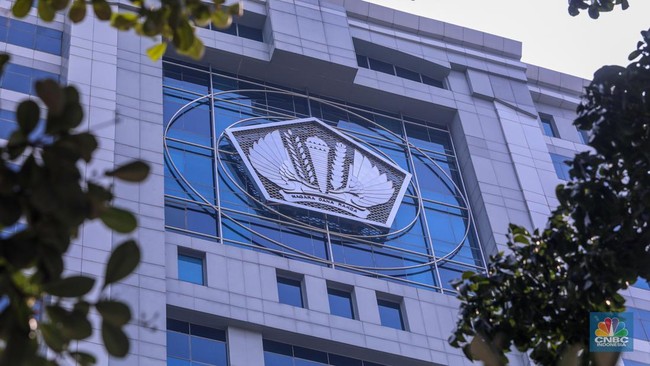
Jakarta, CNBC Indonesia - The Ministry of Finance (Kemenkeu) assures that Indonesia continues to possess strong resilience with relatively good economic buffers compared to other countries, amid projections of a weakening global economy accompanied by increasing inflationary pressures that are narrowing the room for manoeuvre in the world economy.
“This resilience is reflected in the sustained trade balance surplus as well as solid export performance, while the increase in imports dominated by raw materials and capital goods indicates that domestic production and investment activities remain expansive,” said the Head of the Bureau of Communication and Information Services, Deni Surjantoro, in the APBN KITA release on Thursday (30/4/2026).
Furthermore, Deni assured that the government continues to maintain the APBN as a shock absorber, while the manufacturing sector remains in the expansion zone both globally and domestically, signalling that the economy continues to run even if it slows.
Although there are signs of slowing, Kemenkeu remains confident that first-quarter economic growth is projected to reach a strong 5.5%, supported by resilient household consumption, acceleration of strategic projects and housing investments, and the dominance of the manufacturing sector based on downstreaming.
Inflation is well-controlled at a temporary level of 3.48%, while the resilience of the financial sector remains maintained despite global pressures.
Deni emphasised that the government continues to actively maintain the stability of the Rupiah, SBN yields, and market confidence, accompanied by efforts to optimise oil prices and oil and gas lifting to strengthen national fiscal resilience going forward.
“Overall, this positive momentum opens up great opportunities for sustainable and inclusive economic growth,” he said.
Further, Kemenkeu views the SBN market as showing resilience amid global geopolitical turmoil. SBN yields, which previously experienced global risk-off sentiment, have now eased - the SBN yield spread against US Treasury is at a competitive level of 229 basis points as of mid-April 2026.
Deni explained that Indonesia’s spread position, which is lower compared to other emerging market countries, as well as the correction in Indonesia’s CDS, reflects the resilience of the SBN market and the continued safeguarding of investor confidence in domestic economic fundamentals.
“The government, together with BI and OJK, will continue to monitor global dynamics to ensure that financial market stability remains maintained, thereby supporting the economic growth momentum,” he said.
Deni assured that with prudent fiscal management and solid policy coordination, the Government is optimistic that the 2026 APBN will continue to be the main driver of inclusive and sustainable economic growth.