
Finance Minister Puzzled by Slow Local Government Spending Despite Increased Regional Transfer Budget
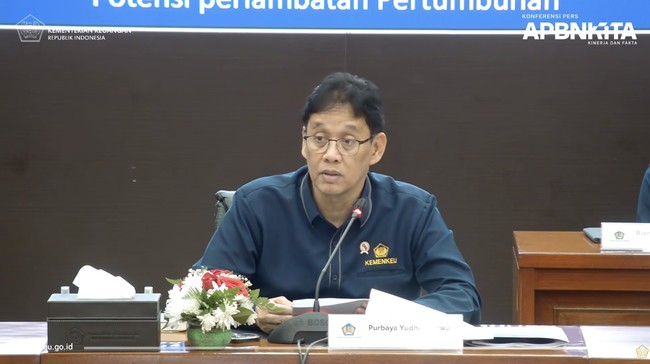
Jakarta — Finance Minister Purbaya Yudhi Sadewa expressed puzzlement at local governments’ continued slow spending despite the government’s decision to increase the regional transfer allocation (TKD) in the 2026 budget.
The TKD allocation in the 2026 state budget was initially planned at Rp 650 trillion but increased to Rp 693 trillion following the passage of the 2026 budget law.
“The funding has increased significantly, so it shouldn’t be slow. We’re even transferring twice as much to the regions compared to last year,” Purbaya said at his Jakarta office on Friday, 13 March 2026.
Consequently, he plans to conduct direct inspections of local government spending performance. Purbaya suspects that local governments may be deliberately slowing their spending to find additional funding elsewhere.
“I will check again. But they have the money. So they must be looking for other sources,” Purbaya stated firmly.
The sluggish local government spending was revealed in the budget performance realisation figures for February 2026 presented by the Director General of Financial Balance, Askolani.
The decline in local government spending was driven by slowdowns in goods spending, capital expenditure, and other spending categories. In contrast, employee spending actually increased 0.6 per cent compared to the same period last year.
“The preliminary figures show that realisation reached Rp 68 trillion, which is down 18 per cent compared to the same month in 2025,” Askolani said.
Meanwhile, on the revenue side, local government financial performance data reported by 514 regional governments out of Indonesia’s total of 546 actually showed improvement.
“From the 541 local governments that reported, regional budget revenue realisation reached Rp 178 trillion, which is up 1.5 per cent from 2025,” he stated.
Askolani noted that the improved regional revenue performance was driven by higher realisation of TKD disbursements from the central government compared to last year, whilst locally generated revenue (PAD) remained minimal.
“The revenue increase was primarily driven by higher TKD realisation, with February 2026 TKD realisation 8 per cent higher than 2025. Meanwhile, PAD growth remained relatively small,” Askolani said.