
Finance Minister Purbaya Reveals Central Government Spending of IDR 346 Trillion in Two Months
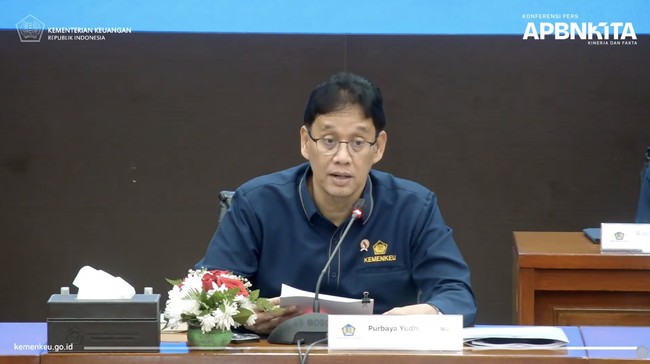
Jakarta — Finance Minister Purbaya Yudhi Sadewa has revealed that the government is updating its spending scheme by accelerating disbursements at the beginning of the year, shifting away from the previous pattern of concentrating spending at the end of the fiscal year.
This policy adjustment has resulted in central government spending reaching IDR 346.1 trillion by end of February 2026, a significant increase of 63.7% compared to IDR 211.5 trillion recorded in the same period last year. This central government spending accounts for the majority of total state spending in the first two months of this year, which has reached IDR 358 trillion.
“We are indeed accelerating spending this year so that the economy is driven from the fiscal side from the beginning to the end of the year more evenly compared with previous years,” the finance minister, who has held office since 8 September 2025, said during a state budget performance press conference at his office on 12 March 2026.
The spending breakdown reveals where these substantial funds have been allocated:
Ministerial and Institutional Budgets (K/L): IDR 155 trillion in spending by government ministries and agencies, representing a sharp increase of 85.5% compared to IDR 83.6 trillion in the corresponding period last year.
Non-K/L Spending: IDR 191 trillion has been realised, an increase of 49.4% from IDR 127.9 trillion in the same period last year.
Transfers to Regions (TKD): Transfers to regional governments have grown 8.1% from IDR 136.6 trillion to IDR 147.7 trillion, primarily driven by the allocation of general allocation funds (DAU), special allocation funds (DAK) for non-physical projects, and relief funding for disaster-affected regions in Sumatra.
Commodity and Goods Spending: This category represents the largest component of K/L spending during the first two months, totalling IDR 67.6 trillion, a dramatic 269.4% increase compared to last year. Key allocations include:
Credit guarantee distribution (MBG): IDR 39 trillion
School operational assistance (BOS): IDR 4.8 trillion
Biodiesel incentives: IDR 2.2 trillion
Health services for government institutions: IDR 1.7 trillion
Food stabilisation programmes: IDR 900 billion
Employee and Personnel Expenditure: IDR 45.1 trillion, an increase of 24.2%, has been spent on civil service salaries and benefits, influenced by the recruitment of 355,000 new civil servants and the acceleration of non-PNS support staff allowances from quarterly to monthly payments. This includes holiday allowances of IDR 24.7 trillion (45% of the IDR 55 trillion allocation) as of 10 March, targeting 6.0 million recipients including central and regional civil servants, military and police personnel, and pensioners. Pension payments have reached IDR 36.6 trillion (20.6% of the budget allocation) for 3.7 million recipients.
Social Assistance (Bansos): IDR 27 trillion has been allocated, an increase of 4.3% from February 2025. This includes:
Health insurance premiums for low-income citizens (PBI JKN): IDR 7.7 trillion for 96.7 million participants
Family Hope Programme (PKH): IDR 7.0 trillion for 9.4 million poor households
Food card programme (Kartu Sembako): IDR 10.0 trillion for 16.7 million poor households
Student assistance (KIP Kuliah): IDR 2.0 trillion for 175,800 students
Capital Expenditure: IDR 15.3 trillion has been allocated to capital spending, representing a remarkable 400.5% increase from the same period last year. This is directed at supporting economic growth through infrastructure projects, including allocations of IDR 3.0 trillion for the Public Works Ministry, IDR 8.5 trillion for the Police, IDR 1.8 trillion for the Prosecution Service, and IDR 800 billion for the Defence Ministry, covering roads, irrigation systems, networks, and equipment and machinery.