
Finance Minister Overhauls Palm Oil Revenue Sharing Rules with Regional Governments
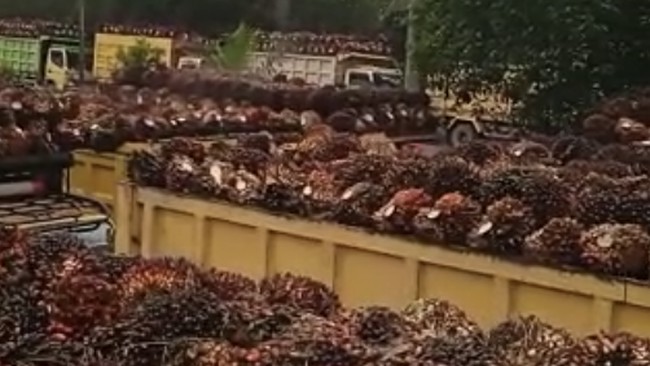
Jakarta, CNBC Indonesia - Finance Minister Purbaya Yudhi Sadewa has officially revised regulations governing revenue-sharing funds (DBH) for palm oil plantations with regional governments through Ministerial Regulation (PMK) No. 10/2026, which supersedes the previous provisions in PMK 91/2023.
Under PMK 10/2026, which came into effect on 6 March 2026, the revision is intended to improve the management of palm oil plantation revenue-sharing funds with greater accountability and encourage optimal, targeted deployment by regional authorities.
“Ministerial Regulation No. 91 of 2023 on the Management of Palm Oil Plantation Revenue-Sharing Funds needs to be aligned with developments in regulation and state financial governance, necessitating replacement,” stated in PMK 10/2026, signed by Purbaya on 3 March 2026.
The revision begins with Article 9, concerning the data used as reference for calculating the allocation of palm oil DBH to provincial and district/city governments. Previously, such data was limited to export duties and export levies or estimated realisations through the end of the financial year. The new regulation also considers the most recent data reported in the preceding year.
“The palm oil DBH allocation ceiling as described in Article 9 shall be used to calculate the detailed allocation of palm oil DBH distributed to provinces/districts/cities under the following provisions: a. 50% of the palm oil DBH allocation is distributed based on the area of palm oil plantation land; and b. 50% of the palm oil DBH allocation is distributed based on palm oil land productivity,” as stated in the latest regulation.
The allocation proportions remain unchanged: the relevant province receives 20%; producing districts/cities receive 60%. Finally, bordering districts/cities directly adjacent to producing districts/cities receive 20%. However, the new regulation includes special provisions for distribution under certain conditions.
For instance, where a district/city is both a producing district/city and directly borders other producing districts/cities, the allocation for such a district/city comprises: a. palm oil DBH allocation for the producing district/city of 60%; and b. accumulated palm oil DBH allocation from other producing districts/cities with which it directly borders.
However, the distribution of percentage allocations of palm oil DBH to districts/cities that directly border producing districts/cities shall be determined based on the level of negative externality experienced by each region. Should negative externality calculations not yet be available, the percentage allocation of palm oil DBH shall be distributed equally among all districts/cities directly bordering producing districts/cities.
Additionally, provisions regarding palm oil DBH allocation based on regional government performance (10% of palm oil DBH allocation per province and relevant district/city, whether producing or bordering a producing region) include new provisions specifically for producing regions that directly border other producing regions.
The new provision standardises performance allocation calculation indicators relating to poverty reduction rates and the availability of regional sustainable palm oil action plans, each weighted equally at 50%, expanding the scope from previously applying only to the relevant province and districts/cities directly bordering producing regions.
Surplus from performance allocation calculations now receives new provisions for alternative uses determined by the Finance Minister, broadening usage beyond previous limitations to DBH reallocation, settlement of shortfall DBH payments, and establishment of minimum palm oil DBH allocations.
Regarding the use of palm oil plantation revenue-sharing funds, changes have also been made, particularly concerning bridge management, which now eliminates the obligation to construct new bridges, restricting use to periodic bridge maintenance and bridge replacement. Road management provisions remain the same, including structural improvements, periodic maintenance, and routine maintenance.
Additionally, other eligible activities using palm oil DBH funds now include plantation business evaluation; coordination of palm oil DBH management; and the preparation, socialisation, and monitoring and evaluation of regional sustainable palm oil action plans.
Previously, activities were limited to data collection on smallholder palm oil plantations; capacity building and assistance for Indonesian Sustainable Palm Oil certification; forest and land rehabilitation; and social protection for unregistered palm oil plantation workers who are not participants in social security programmes. This has been expanded to include community members designated by regional governments, prioritising palm oil plantation workers.
“Including supporting activities comprising: a. procurement of services from consultant supervisors for contractual activities; b. official travel to and/or from activity locations for purposes of planning, control, and supervision; and/or c. coordination meetings in connection with activity implementation,” as stated in PMK 10/2026.
There is also strengthened regulation concerning the implementation mechanisms of activities financed through palm oil DBH. For instance, regional heads are required to appoint a coordinator to oversee coordination and synchronisation of activities financed through palm oil DBH within their respective territories, including: a. development of palm oil DBH implementation plans; b. implementation of palm oil DBH utilisation; c. preparation and submission of palm oil DBH utilisation reports; and d. monitoring and evaluation of palm oil DBH utilisation.
This strengthened regulation also extends to the process of design and budgeting for palm oil plantation revenue-sharing funds activities, representing an expansion from previous procedures.