
Finance Minister Cuts Budget by Rp 12.7 Trillion, Public Works Minister Accepts It Graciously
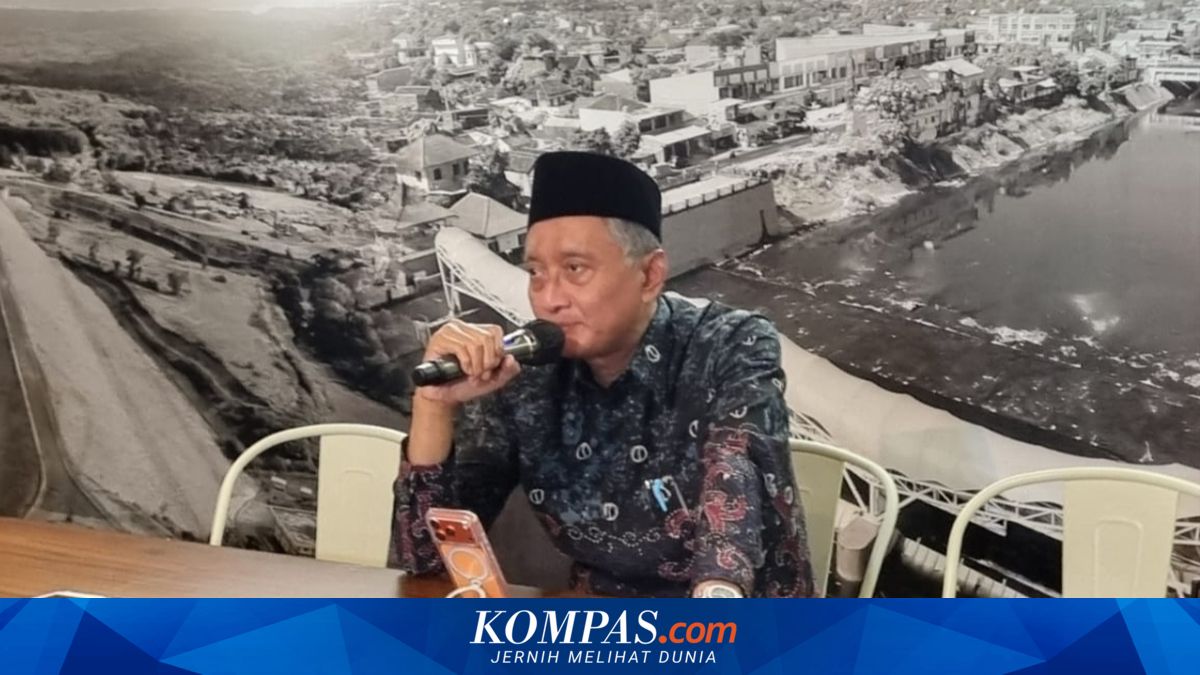
JAKARTA - Public Works Minister Dody Hanggodo has expressed acceptance of the Rp 12.7 trillion budget cut to the Ministry of Public Works.
Dody also stated that he did not negotiate with Finance Minister Purbaya Yudhi Sadewa regarding the matter.
“I have no plans to negotiate with Mr Purbaya. We already have experience (with budget efficiency) in 2025, it’s fine,” Dody said during a media gathering at his office in South Jakarta on Friday (10/02/2026).
Before the cut, the Ministry of Public Works’ budget for 2026 was Rp 118.89 trillion. After efficiency measures, the remaining budget is Rp 106.18 trillion.
“As a general assistant, if I’m told to work but I don’t have the money, I’ll ask for it, that’s all, and the 2025 experience tells me it can be done easily,” he explained.
On the other hand, Dody assured that the labour-intensive programme through Community-Based Infrastructure (IBM) in 2026 will absorb up to 1 million workers across Indonesia. The programme will cover 15,364 locations.
Dody conveyed that the IBM budget allocation for 2026 has increased from the initial cap of Rp 4.84 trillion to Rp 5.48 trillion.
“The IBM programme has a significant multiplier effect. In addition to producing infrastructure, it also provides direct income to the community through the labour-intensive scheme, thereby stimulating the local economy,” Dody said during a working meeting with Commission V of the House of Representatives (DPR RI) in Senayan, Jakarta, on Tuesday (7/4/2026).
This budget strengthening is the result of reallocation amid fiscal efficiency policies, while also demonstrating the government’s commitment to programmes that directly reach the people.
Of the total 15,364 locations, most activities are in the Water Resources sector through the Accelerated Improvement of Irrigation Water Management Programme (P3TGAI), implemented in 12,000 locations with an allocation of around Rp 2.7 trillion, also becoming the largest contributor to workforce absorption.
Meanwhile, in the settlements sector, the IBM programme covers various activities oriented towards improving community quality of life, including the Regional Social Economic Infrastructure Development Programme (PISEW) in 808 locations and the Community-Based Drinking Water and Sanitation Programme (PAMSIMAS) in 906 locations.
In addition, the Community-Based Sanitation Programme (SANIMAS) is implemented in 823 locations, Sanitation for Religious Education Institutions (Sanimas LPK) in 653 locations, and Reduce, Reuse, Recycle Waste Processing Sites (TPS3R) in 56 locations.
According to Dody, the community-based development approach makes the programme more targeted, efficient, and sustainable because the community has a sense of ownership over the development outcomes.
“We ensure that the Community-Based Infrastructure programme remains a priority, even amid budget adjustments. This is a form of the state’s presence in maintaining people’s purchasing power and creating jobs,” Dody emphasised.