
FHUI Research Cluster Examination: Kerry Riza's Verdict Results from Unfair Trial
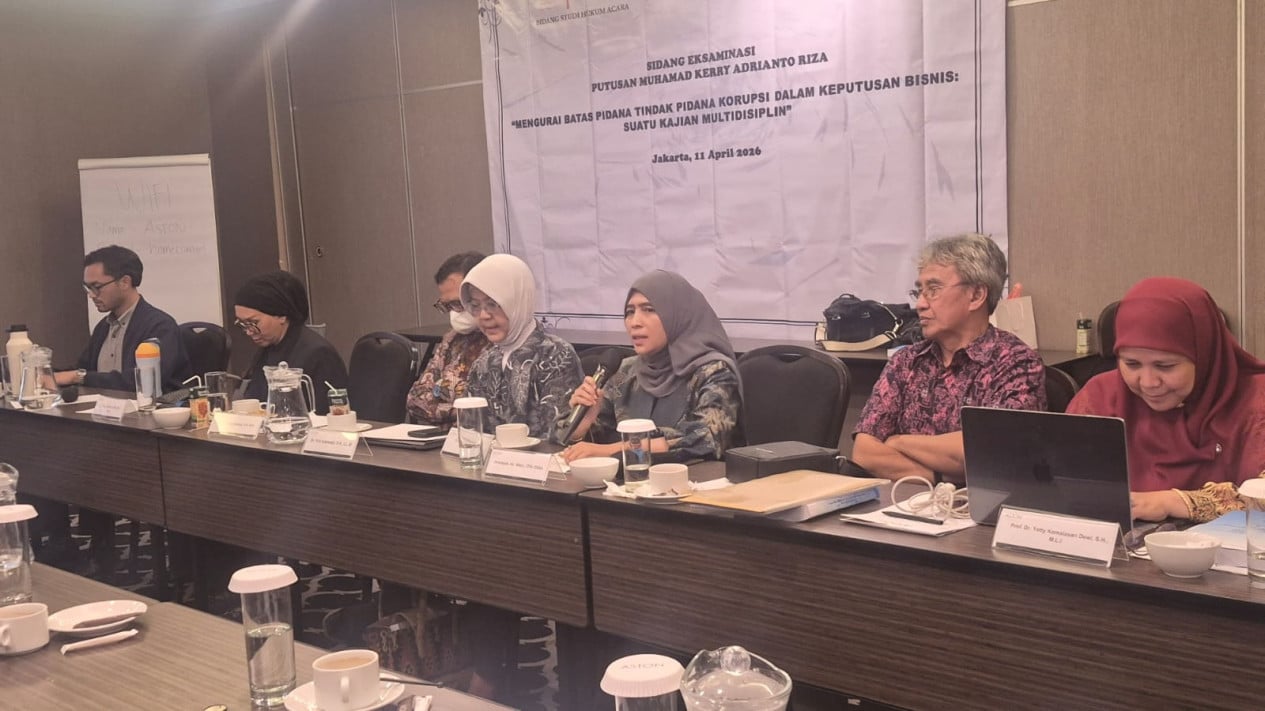
Jakarta – The Research Cluster on Criminal Procedure Law and Judicial Systems of the Faculty of Law, University of Indonesia (FHUI Criminal Procedure Research Cluster) assesses that Muhamad Kerry Adrianto Riza underwent an unfair trial or unjust court process in the trial concerning alleged corruption in the management of crude oil and refinery products at PT Pertamina.
This is one of the conclusions from the FHUI Criminal Procedure Research Cluster’s examination of the verdict from the Jakarta Corruption Court in the alleged corruption case of crude oil and refinery product management at PT Pertamina, under Verdict Number 102 Pid.Sus-TPK/2025/PN. Jkt against the defendant Muhamad Kerry Adrianto Riza.
The examination involved nine legal experts from the University of Indonesia (UI) and one from Gadjah Mada University (UGM). It focused on several legal issues grouped into clusters: criminal law and criminal procedure law, civil law, company law, and public finance law.
The experts serving as examiners were Dr Febby Mutiara Nelson, Prof Rosa Agustina, Dr Sri Laksmi Aninditas, Prof Yetty Komalasari Dewi, Irmansyah, Dr Hendry Julian Noor, Dr Yuli Indrawati, Prof Topo Santoso, Dr Flora Dianti, and Choky Risda Ramadhan.
“Does this verdict reflect fair trial, due process of law, and proportionality in the criminal justice system? From what we heard earlier on civil law, state financial crimes, material criminal law, and procedure, all indicate that this verdict contains an unfair trial,” stated the Head of the Examination Team, Dr Febby Mutiara Nelson SH, MH, during a press conference following the examination hearing in Jakarta on Saturday, 11 April 2026.
The Head of the Examination Team explained that this unfair trial or unjust adjudication is evident, among other things, in the limited time given to the defendant to prepare his defence.
This is deemed to violate criminal procedure law, as well as the principles of the International Covenant on Civil and Political Rights (ICCPR) and conventions on defendants’ rights that Indonesia has ratified.
“Secondly, the unfair trial is apparent in the efficiency of the case timeline. The panel of judges continued to emphasise the time constraints of the trial, stating that it must be completed as a target, as the defendant’s detention period would expire. If the detention expires, he would be released by law. This was conveyed by the judge and incorporated into the considerations,” said Febby.