
Ferries Now a Primary Mode of Transport for the Public, ASDP Provides Evidence
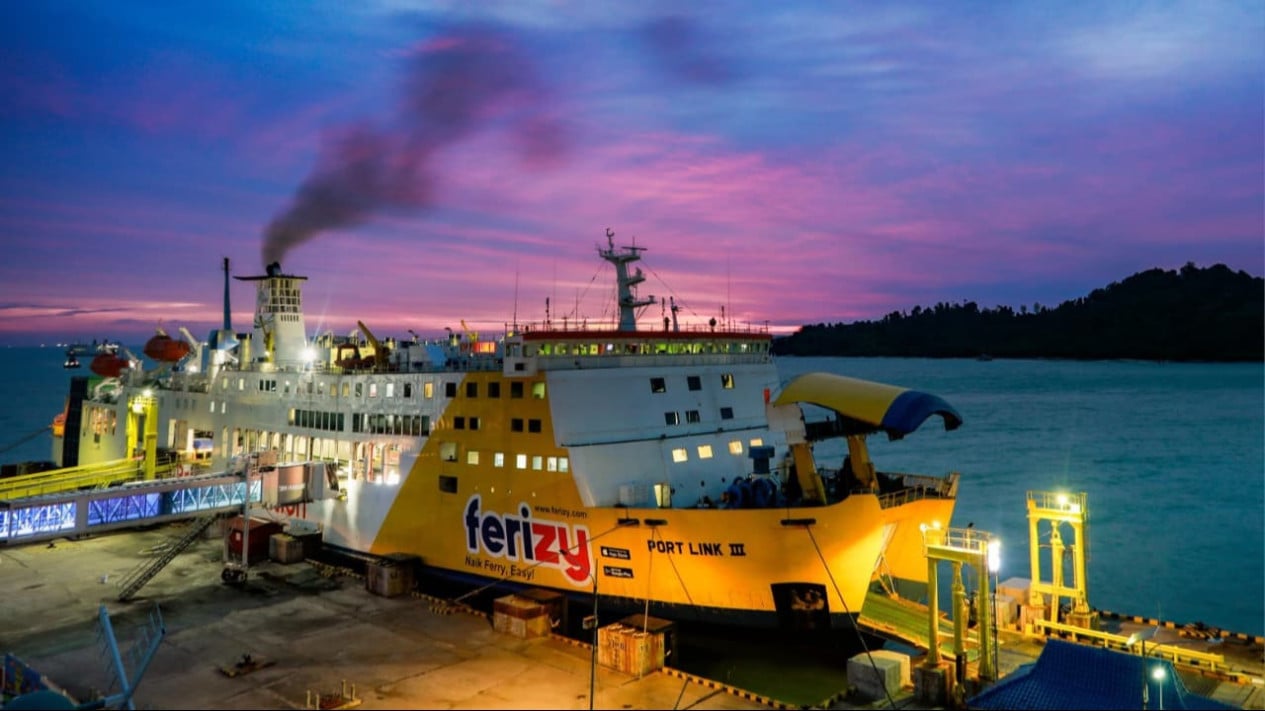
Ferry transport is no longer seen as just an alternative mode of transport, but has become a primary choice for people to travel between islands practically, safely and comfortably. This is reflected in the increasing number of users of this mode of transport during the long Ascension Day weekend, especially on the Java-Sumatra and Bali routes.
President Director of PT ASDP Indonesia Ferry (Persero) Heru Widodo said that the long holiday momentum reflects increased public confidence in increasingly modern, orderly and integrated crossing services.
“The transformation of services carried out by ASDP in recent years has encouraged changes in people’s behaviour when travelling. Ferries are now an important part of people’s travel style because they offer flexibility, efficiency, and a more comfortable and safe travel experience,” said Heru, quoted from his statement, Sunday, May 17, 2026.
Based on data for the period Wednesday (May 13) to Sunday (May 17) at 14.00 WIB, the Merak-Bakauheni route served 133,248 passengers and 36,647 vehicles. Meanwhile, on the return flow of Bakauheni-Merak, ASDP served 118,383 passengers and 32,994 vehicles.
The highest traffic peak occurred on Thursday (May 14), with an increase of 60.7% for passengers and 41.5% for vehicles on the Merak-Bakauheni route. Conversely, on the return flow of Bakauheni-Merak, passenger traffic increased by 19.5% and vehicle traffic increased by 18.3%.
High mobility also occurred on the Ketapang-Gilimanuk route. ASDP served 96,858 passengers and 26,258 vehicles, an increase of 47.1% for passengers and 25.1% for vehicles on Thursday (May 14). Meanwhile, on the return flow of Gilimanuk-Ketapang, as many as 90,759 passengers and 26,317 vehicles were served well, with an increase in passenger traffic reaching 33.2% and vehicle traffic reaching 11.4%.
Corporate Secretary of ASDP Windy Andale explained that the company continues to strengthen service excellence through optimizing fleets, preparing personnel, strengthening security systems, and consistently implementing safety standards at ports and on ships.
“We ensure that all services run optimally by prioritizing the safety, security and comfort of users. Operational improvements are carried out comprehensively through intensive coordination with regulators, ship operators, security forces and all related stakeholders,” he said.
In addition, ASDP continues to improve the quality of service facilities at ports such as air-conditioned waiting rooms, charging stations, massage chairs, children’s play areas, places of worship, to food and beverage tenants.