
‘Feels more intense’: Malaysians and Indonesians grapple with heatwave as experts warn of worsening spells
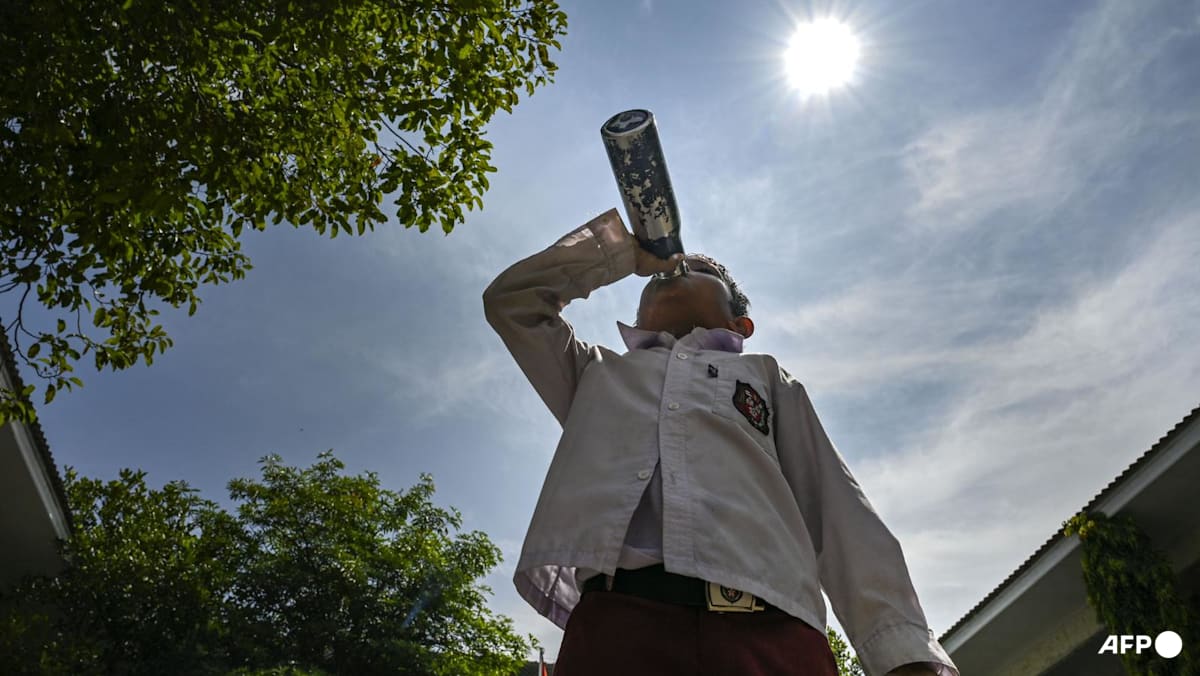
‘Feels more intense’: Malaysians and Indonesians grapple with heatwave as experts warn of worsening spells
Fewer food deliveries, less focus in class. People in Southeast Asia have to find ways to adjust as the ongoing heatwave becomes harder to bear.
SINGAPORE: The recent hot weather has become increasingly harder for Malaysian delivery rider Mohd Safarin Jaafar to ignore.
“It isn’t like normal days,” the 47-year-old Klang Valley resident told CNA over the phone.
“This heat feels even more intense, especially from midday to (late) afternoon.”
To cope with the heat, he tries to work during cooler periods, such as in the early morning or at night, but he still has been forced to cut back on the total hours and number of daily delivery orders.
“One of my main challenges is getting tired more quickly. I (often) feel dehydrated and need to take more frequent breaks to avoid health risks like dizziness or fainting,” Safarin said.
“I could usually take on between 20 and 25 orders a day but, now, I can only manage around 15 to 18,” he said, adding that the heat may also make food turn bad more easily.
Malaysia is currently experiencing a heatwave, with temperatures soaring to above 37 degrees Celsius in states like Perlis, Perak and Kedah.
The capital Kuala Lumpur was placed under a Level 1 heatwave alert by the Malaysian Meteorological Department (MetMalaysia) last Monday (Mar 23).
The alert is issued when daily maximum temperatures range between 35 and 37 degrees Celsius for at least three consecutive days.
In a statement on Mar 25, the Malaysian health ministry urged the public to avoid being out during the peak heat hours between 11am and 4pm, and to plan outdoor activities carefully to reduce the risk of heat-related illnesses.
Heat-related illnesses range from mild fatigue and headaches to more severe conditions like heatstroke, dehydration and even comas, it said.
MetMalaysia’s director-general Mohd Hisham Mohd Anip said the heatwave is expected to persist until June, with temperatures peaking between mid-March and mid-April and reaching 38 degrees Celsius, especially in the northern states.
The heatwave has also been straining water resources. Ten dams including the Muda dam, the second-largest reservoir in Kedah, have fallen to “cautionary” levels of below 70 per cent capacity, reported news outlet Malay Mail on Friday.
Malaysia is not alone: other countries in the region are also bracing for hotter-than-usual weather.
Temperatures across much of maritime and mainland Southeast Asia are expected to be “above normal” between March and May, according to the ASEAN Specialised Meteorological Centre (ASMC).
Singapore has been grappling with drier than usual weather over the past week, which has also resulted in higher temperatures, said Meteorological Service Singapore (MSS).
Thailand and Vietnam both experienced intense heat last week, with Thailand recording temperatures of up to 40 degrees Celsius across its northern, northeastern and central regions, while northern and central Vietnam saw highs of up to 38 degrees Celsius.
Vietnam’s National Center for Hydro-Meteorological Forecasting added that temperatures could rise further in early April.
Malaysia and Indonesia are more likely to see above-normal temperatures over the next three months, according to ASMC.
Temperatures in Jakarta reached 35.6 degrees Celsius during the recent Hari Raya holiday week, according to Indonesia’s Meteorology, Climatology and Geophysics Agency (BMKG).
Ultraviolet (UV) radiation levels were also listed as dangerous on Mar 17, said BMKG, which urged the public to limit outdoor activities to reduce the risk of direct sun exposure.
Surging temperatures had been reported earlier in regions like Tasikmalaya city in West Java, which reached 37.2 degrees on Mar 13, according to a Tempo news report.
Rainfall has also resumed in many parts of the country and temperatures are returning to normal, BMKG’s director for climate change Fachri Radjab told CNA on Mar 26, describing normal daily temperatures in the country to be between 28 and 32 degrees Celsius during March to May.
However, he noted that some regions will enter the dry season in April, with peaks expected in August and September.
“During this period, skies are generally clearer with fewer clouds, allowing maximum solar radiation, which can make the weather feel hotter and more humid,” Fachri said.
TOO HOT TO FUNCTION
The hotter-than-usual weather is already reshaping daily routines, with more people avoiding outdoor activities and seeking relief in air-conditioned spaces.
Yee Ann Jee, 21, a university student in Kuala Lumpur, told CNA that she finds it increasingly harder to stay focused during classes and has developed heat rash on her neck and arms because of the “harsher” weather.
“I find myself sweating even in an air-conditioned classroom,” Yee said, adding that the heat has also made her more lethargic.
To keep cool, she enjoys going to the gym, which she said helps her stay active while avoiding the heat.
In Jakarta, Nisa Ulfikriah, who works as a museum staff at Taman Mini Indonesia Indah, a local cultural park, has noticed fewer customers and visitors.
“I’ve also avoided being outdoors and if I do have to go outside, I make sure to bring a small portable fan and stay hydrated,” she told CNA.
Another Jakarta resident, Sharida Shahnaz Parayeel, 25, has taken to wearing a special jacket that offers protection against ultraviolet rays and applies sunscreen when she goes out.
“It’s hotter than usual, it feels really dry and is affecting my daily routine,” she said.
More people have “fallen sick with sore throat or cold” in the past week, especially in the lead-up to Hari Raya Aidilfitri, she added.
WHAT’S DRIVING THE EXTREME HEAT
Extreme heat in parts of Southeast Asia is being driven by a combination of factors, with El Nino playing a key role, experts told CNA.
Occurring every two to seven years, the natural climate pattern is linked to warming ocean s