
February Inflation Rises, BI Strengthens Price-Control Synergy in Kepri
Consumer Price Index (CPI) for the Riau Islands Province in February 2026 rose by 0.44% month-on-month. This reverses January 2026, which recorded a deflation of 0.09% m/m. Year-on-year inflation in Kepri stood at 3.5%, higher than the previous month’s 2.94% (yoy). Although it rose, the figure remains below the national inflation rate of 4.76% (yoy).
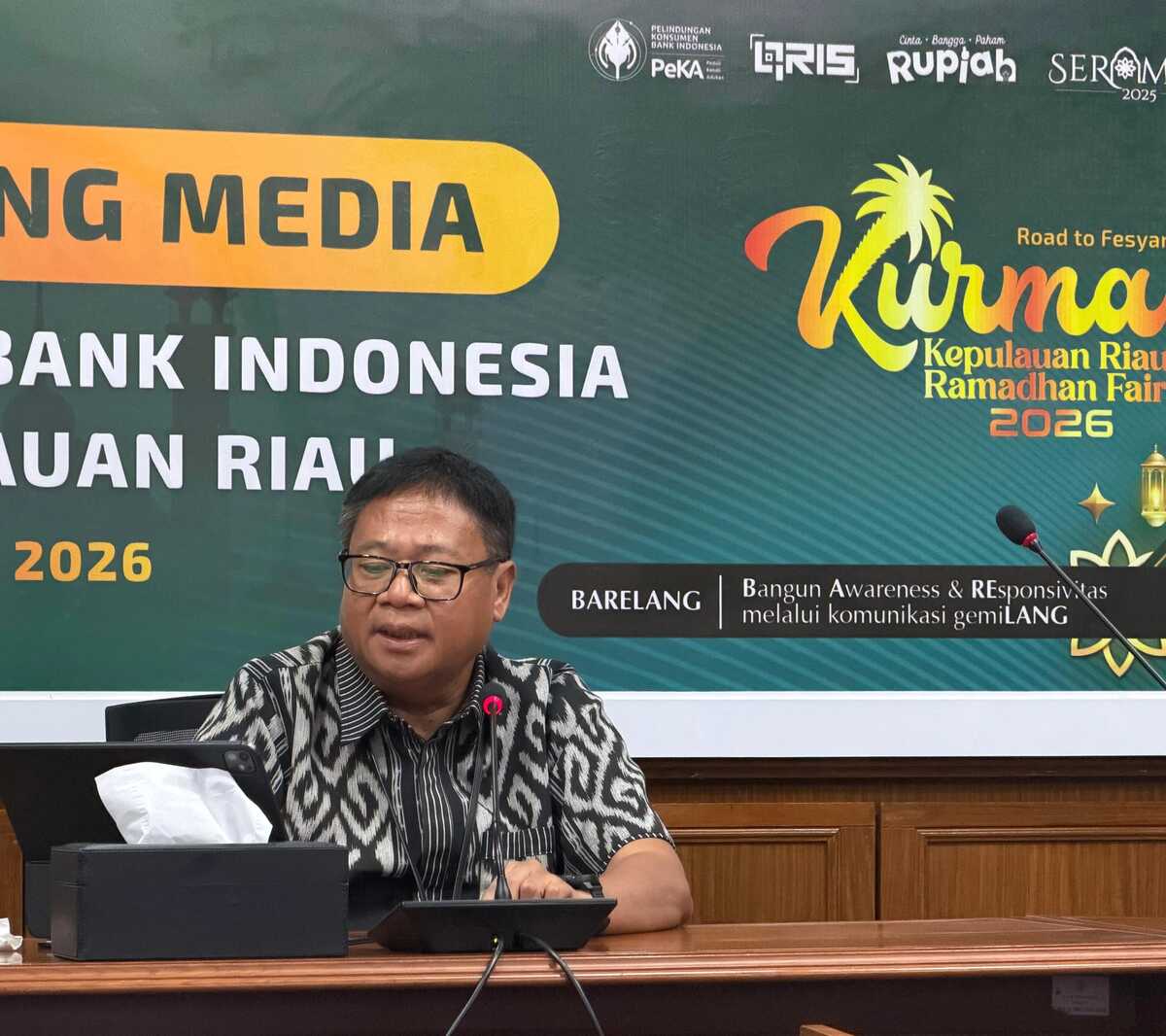
The Head of BI Representative Office for Kepri Province, Rony Widijarto P., said that inflationary pressure in February was also recorded in the three IHK calculation areas in the Kepri region. “Month-on-month, inflation in Batam stood at 0.40% or 3.13% year-on-year. Meanwhile, Tanjungpinang experienced inflation of 0.99% (mtm) or 5.83% (yoy), and Karimun 0.01% (mtm) or 4.13% (yoy),” he said on Thursday (5/3).
He explained that, by expenditure group, February inflation was primarily driven by the household products and other services group, which rose 2.10% (mtm) with a 0.16 percentage-point contribution. This rise was sparked by higher gold prices amid ongoing global geopolitical uncertainty. In addition, the food and beverage/restaurants group recorded inflation of 0.87% (mtm) with a 0.08 percentage-point contribution. The rise in rice with side dishes, in line with rising food raw material prices, was a major factor.
The food, beverages, and tobacco group also experienced inflation of 0.40% (mtm) with a 0.11 percentage-point contribution. The increase in rice and red chilies, particularly ahead of the National Religious Holidays (HBKN), also pushed price pressures.
In response to rising inflationary pressures, Bank Indonesia (BI) together with the Regional Inflation Control Team (TPID) at provincial to regency/city levels intensified coordination in price-control efforts. “BI continues to strengthen collaboration with TPID across Kepri through the Movement for Inflation and Prosperous Food Control (GPIPS) to ensure price stability remains intact and food supply remains safe,” he said.
GPIPS is presented as a response to increasingly complex food-security challenges. The programme emphasises upstream sector strengthening to ensure supply availability, more integrated short-term inflation control, and increased synergy between the central and regional governments to support national priority programmes.
During February 2026, stabilisation efforts included High Level Meetings (HLM) TPID in Lingga and Bintan Regencies, dissemination of public service advertisements to manage inflation expectations, public education through outreach, and market operations or cheap markets held concurrently across Kepri.
Looking into March 2026, BI mapped several potential inflation triggers, such as global gold price trends and rising demand for food and air transport ahead of Ramadan and Eid al-Fitr.
On the other hand, factors that could dampen inflation pressures include the harvest season for horticultural commodities such as red chilies, bird’s eye chilies, and shallots, as well as the potential increase in seafood supply as the northerly wind season subsides.
“Going forward, BI together with TPID will continue to strengthen coordination so that inflation remains within the 2.5±1% target throughout 2026,” he added. (HK/E-4)