
Fasting Schedule for Kupang and the NTT Region Today, February 24, 2026
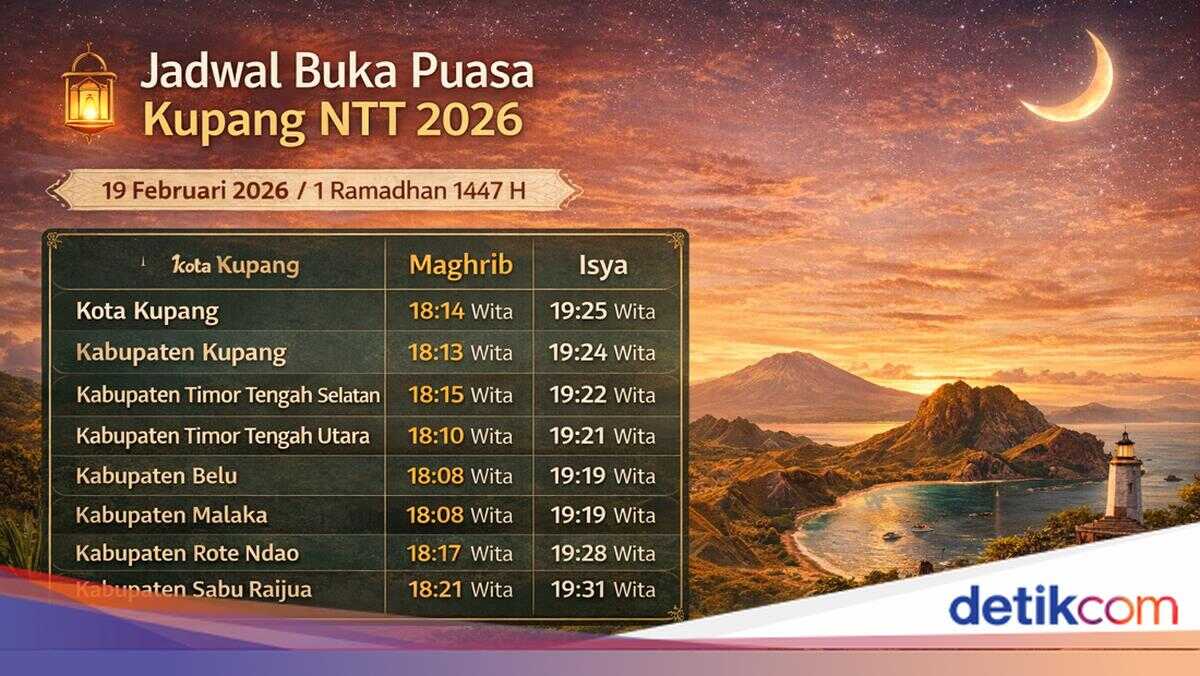
The month of Ramadan is a moment eagerly anticipated by Muslims around the world, including in NTT. Every day, Muslims perform the obligatory fast from dawn until sunset, abstaining from eating, drinking, and other things that invalidate the fast.
To help the community carry out worship in a more organised manner, here is the fasting schedule for Monday, February 24, 2026/6 Ramadan 1447 H, specifically for the NTT region.
Fasting Schedule for Kupang and the NTT Region February 24, 2026/6 Ramadan 1447 H
Kupang City
• Maghrib 18:12 WITA
• Isha 19:23 WITA
Kupang Regency
• Maghrib 18:11 WITA
• Isha 19:22 WITA
South Central Timor Regency
• Maghrib 18:13 WITA
• Isha 19:20 WITA
North Central Timor Regency
• Maghrib 18:08 WITA
• Isha 19:19 WITA
Belu Regency
• Maghrib 18:06 WITA
• Isha 19:16 WITA
Malaka Regency
• Maghrib 18:07 WITA
• Isha 19:17 WITA
Rote Ndao Regency
• Maghrib 18:15 WITA
• Isha 19:25 WITA
Sabu Raijua Regency
• Maghrib 18:19 WITA
• Isha 19:30 WITA
The Prayer for Breaking the Fast
The time to break the fast is not only about relieving hunger and thirst, but also a time when prayers are answered very strongly.
Therefore, it is recommended that Muslims increase their prayers when breaking the fast. One of the prayers that can be recited is the prayer that is often recited when breaking the fast.
Quoted from detikBali based on the explanation of Ustaz Adi Hidayat in the video “About the Prayer for Breaking the Fast (Part 2)” which was uploaded to his official YouTube channel, you can practice the following two prayers when breaking the fast:
First Version
ذَهَبَ الظَّمَـأُ، وابْــتَلَّتِ العُرُوقُ، وثَــبَتَ الأَجْرُ إِن شَاءَ اللهُ
Dzahabaz zhama’u wabtallatil ’uruqu wa tsabatal ajru, insyaallah
Meaning: “Thirst has gone, the veins have become moist, and the reward has been established, if Allah wills.” (HR Abu Daud)
Second Version
اَللّٰهُمَّ لَكَ صُمْتُ وَبِكَ آمَنْتُ وَعَلَى رِزْقِكَ أَفْطَرْتُ بِرَحْمَتِكَ يَا اَرْحَمَ الرَّحِمِيْنَ
Allaahumma lakasumtu wabika aamantu wa’alaa rizqika afthortu birahmatika yaa arhamar-roohimiina.
Meaning: “O Allah, for You I fast, with You I believe, and upon Your sustenance I break my fast, with Your mercy, O Most Merciful.” (HR Bukhari and Muslim)
According to Ustaz Adi Hidayat, the way to practice the above prayer for breaking the fast is by combining them. So, the prayer Dzahabazh zhoma’u is read as an opening, followed by the prayer Allahumma laka shumtu.
When is the right time to recite the prayer for breaking the fast? As reported by Almanhaj, the Prophet Muhammad usually recited the prayer Dzahabazh zhoma’u after he broke his fast.
This is also in accordance with the meaning of the reading of the prayer for breaking the fast, namely “Thirst has gone and the veins have become moist …”