
Fasting: A Critique of Secularism
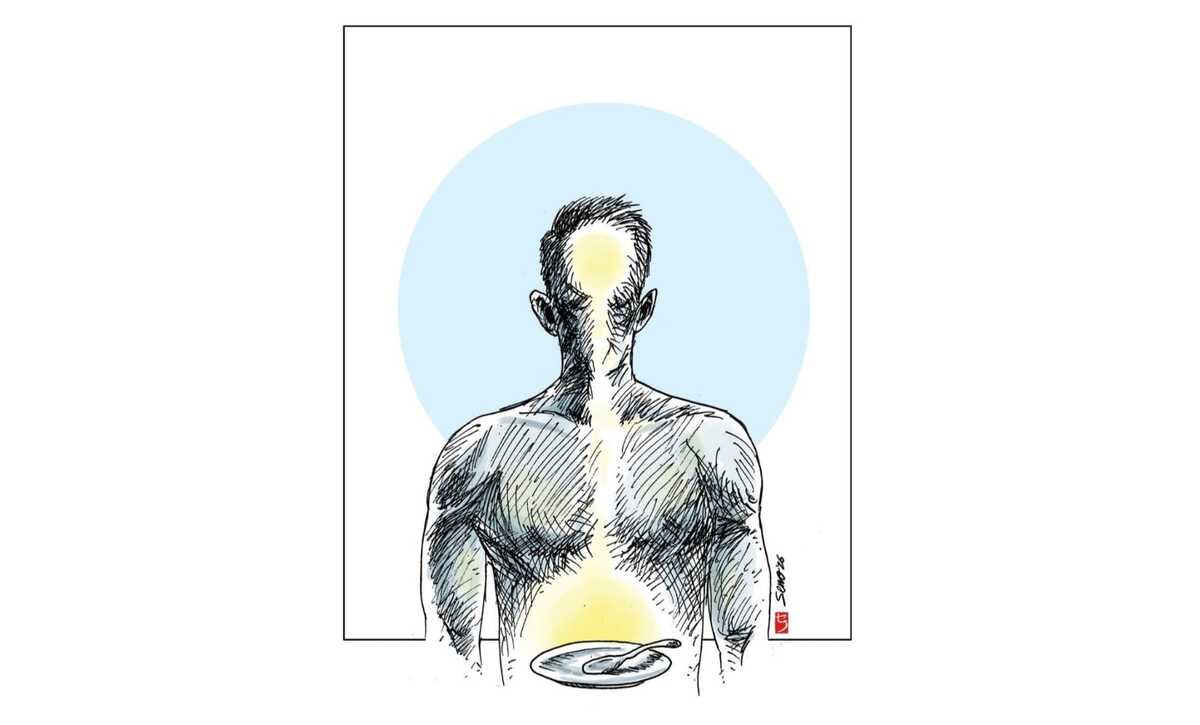
Among the issues shaking the Islamic world from Morocco in the west to Indonesia in the east is secularism, both political and cultural. Secularism is a product of modern Western society, in its sociological context, where religious and secular groups face each other, even warring, as seen in the French Revolution and the rise of communism. In the early days of the birth of science, when the Church was in power with its theocratic state, many scientists were imprisoned, such as Galileo Galilei, and the rational Protestant religious movement was punished. Religious wars also occurred in Germany, the Netherlands, Belgium, England, and France, although in France, the Catholics won. The Islamic world has since been politically divided into two: some adopt a secular state, while others adopt a theocratic (Islamic state). Therefore, this issue is important to discuss, especially in relation to the upcoming Ramadan.
POLITICAL SECULARISM
In the theory of political secularism, there are two tendencies: absolute political secularism as freedom from religion, which is allergic to religion, and moderate political secularism as freedom of religion, which provides religious freedom. In the first sense, secularism is practiced in France. The transition to an absolute republic/secularism during the French Revolution swept away religion from the public sphere. Secularism in France even began with the seizure, humiliation, and marginalization of the Catholic (Church). The most extreme form, which completely opposes religion, is practiced in the communist/Soviet Union/Russia and China.
Secularism in the sense of freedom of religion is indeed not allergic to religion, because religion is a private matter, not a state that can oppress. Religious adherents are also given freedom as part of human rights. However, this means the development of agnosticism (believing in the existence of God, but not formally religious) and also individual atheism. Religion is considered inferior, irrational, and not in accordance with empirical science, as practiced in Western Europe, which has caused some churches to become dilapidated and abandoned.
However, Habermas later introduced another moderate secularism, a multicultural public/state model, which accepts religious aspirations without having to be blocked. In this way, public/state policy becomes more legitimate because it involves all parties, without silencing religious aspirations. However, these religious aspirations must be debated rationally; they must not violate the human rights of minority groups; each party (secular, religious majority/minority) must listen to each other; and the state must be neutral.
In the Islamic world, absolute secularism was once practiced in Turkey during the time of Kemal Pasha Ataturk (1881-1939), who did not allow the call to prayer in Arabic and forbade Islamic symbols from being in the public/political sphere. This secularism was enforced literally by the military as its gatekeeper. They often staged coups against elected civilian governments that brought Islam into politics. In Algeria, Habib Bourguiba (in power 1956-1987) once forbade workers from fasting during Ramadan because he considered it to have a negative impact on productivity. He even closed Zaytouna, a center for Islamic studies. Meanwhile, the moderate secularism version of Habermas above is practiced in Indonesia, Turkey during the Erdogan period, and Tunisia.
Ramadan fasting/Islam rejects the claims of absolute secularism and also the moderate version of secularism in the form of agnosticism, let alone atheism that is anti-God. In Ramadan fasting/Islam, according to the values of fasting, it is in the middle between two extreme opposing views; Sayyid Qutub and al-Maududi who are theocratic, and Ali Abd al-Raziq who is secular. Islam is in the middle, and in Islam there are political principles contained in the Medina Charter of the Prophet Muhammad, namely multiculturalism, minimal citizenship, tolerance, recognition of the equality of all residents, and justice as the goal of the state.
However, the Prophet’s political practice is different from absolute theocratic/spiritualism, as is the case in modern Iran, Saudi Arabia, and Sudan, which have problems in religious freedom and are anti-criticism. This is because the Prophet himself gave space for differences, especially in non-revelation/non-worship matters. The locations of the battles of Badr, Uhud, and the Trench, which occurred during Ramadan, were suggestions from his companions. The Prophet was even heavily criticized when he was about to make the Treaty of Hudaibiyah, and the Prophet respected the right to life and other human rights by forgiving enemies who insulted and fought him. Even his greatest enemy’s son, Ikrimah bin Abu Jahl, became his friend. Meanwhile, non-Muslims are protected by being given the right to religious freedom and political rights according to the Medina Charter.
Ramadan fasting seems to adopt moderate/mixed/secular-theocratic secularism. The secularism that means worldliness in fasting is seen from the obligation to break the fast at sunset, the recommendation to have a pre-dawn meal, wearing new clothes on Eid al-Fitr, giving food to others during the breaking of the fast, the obligation to pay zakat al-fitr, the permissibility of sexual fulfillment at night, and the maximum sunnah fast in the form of the fast of Prophet David (one day fasting, one day not). All of this shows moderation (wasathiyyah), that Islam is between secularism and theocracy/clericalism. Between the view of spiritualism that sees life as purely spiritual and materialism that sees life as material/secular. In Ramadan fasting, there is also a side of checks and balances, such as reminding the Tarawih imam who is wrong; meritocracy that the one who is entitled to be an imam is the one who reads fluently, and often the verses read during Tarawih are verses of social diversity. Even non-Muslims at the end of Ramadan can receive zakat al-fitr/charity if they are poor and do not fight.
CULTURAL SECULARISM
As for cultural secularism, it is secularism in