
Fashion and Craft Key Drivers of Creative Economy Exports
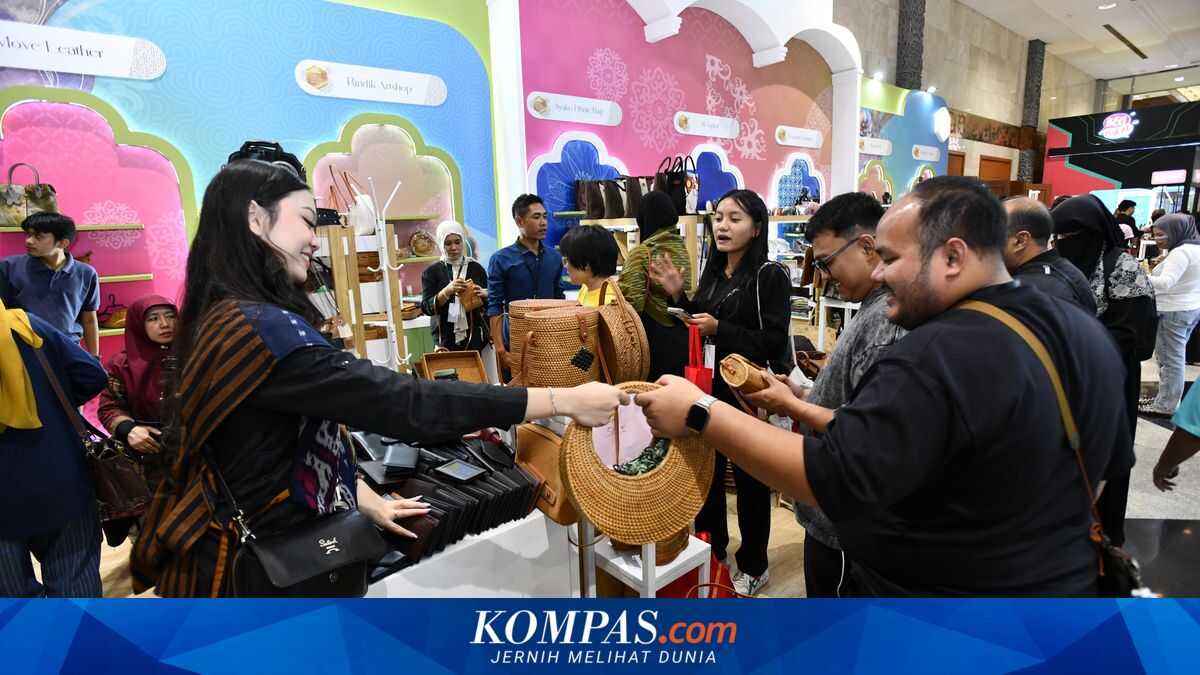
JAKARTA — The Minister of Creative Economy, Teuku Riefky Harsya, noted that the fashion and craft subsectors remain the mainstays of the creative economy’s exports. Data from Badan Pusat Statistik (Statistics Indonesia) shows that the export value of these two subsectors reached 28.4 billion US dollars, or around Rp 476.3 trillion, from January to November 2025. Fashion contributed 16.37 billion US dollars, while crafts accounted for 12.03 billion.
“These figures affirm the strategic position of fashion and craft as the driving force behind the country’s creative trade,” Harsya said at the opening of INACRAFT 2026 at the Jakarta International Convention Center.
Fashion products recorded Rp 14.48 billion (15.4 percent). Jewelry and accessories reached Rp 13.35 billion (14.2 percent). Weaving contributed Rp 8.65 billion (9.2 percent). Leather products noted Rp 6.01 billion (6.4 percent). Songket posted Rp 5.26 billion (5.6 percent). Gift items Rp 4.13 billion (4.4 percent). Other crafts Rp 2.63 billion (2.8 percent). Household and houseware Rp 2.53 billion (2.7 percent). Decorative items Rp 1.78 billion (1.9 percent). Other textiles contributed around Rp 376 million (0.4 percent).
The international pavilion recorded digital transactions of Rp 439.6 million from eight stalls from 4 to 8 February 2026.
The Indonesian Handicraft Exporters and Producers Association (ASEPHI) is preparing market expansion into Central Asia in collaboration with the Asia Pacific Crafts Alliance. A delegation is planned to visit Uzbekistan, Kazakhstan, and Tajikistan.
“The visit is not only about handicrafts but also about learning how people there live and how crafts are part of daily life,” said ASEPHI Vice Chairman II Baby Jurmawati.
“There it’s not only an exhibition; there is culture, cuisine, and even art performances. It truly becomes a complete cultural celebration,” Baby added.
ASEPHI sees opportunities to strengthen promotion and expand markets in Southeast Asia and East Asia, as those regions are considered more stable.
ASEPHI Chairman Muchsin Ridjan referred to collaboration with PT Bank Mandiri in Livin’ Fest Heritage Raya 2026 as a strategic move to target the premium segment. “This is a good creation because it is premium. So not only the middle-to-lower market, but also the upper segment. We see this as a good start for developing similar exhibitions in various places,” he said.
The festival will feature around eight brands, mostly from the textile sector. The products showcased include traditional fabrics and derivatives such as woven bags and local-material-based accessories.
ASEPHI hopes stronger promotion and market expansion can boost export value while reinforcing the creative industry’s position as a growth engine.