
Farmers' Sugar Prices Under Pressure, Amran Calls for Stricter Import Bans and Restrictions
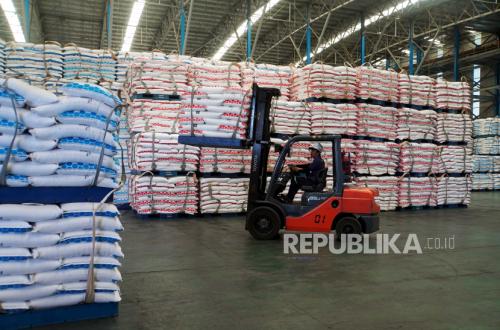
Agriculture Minister Andi Amran Sulaiman is pushing for the tightening of import bans and restrictions to safeguard the national sugar industry. This policy is deemed urgent amid market anomalies where domestic production is difficult to absorb despite ongoing supply shortages.
Amran assesses that the sugar issue extends beyond production deficits to include weaknesses in trade practices that open pathways for refined sugar to enter the consumer market. This situation is pressuring farmers’ sugar and molasses amid high national demand.
“Moving forward, we are indeed advocating for lartas, because this is not just happening with sugar, Ma’am. It is occurring with milk and then with soybeans,” said the Agriculture Minister during a hearing with Commission VI of the House of Representatives at the Parliamentary Complex in Senayan, Jakarta, on Wednesday (8/4/2026).
The current national sugar requirement stands at 6.7 million tonnes, comprising 3.9 million tonnes for industry and 2.8 million tonnes for household consumption. Meanwhile, white crystal sugar production is only around 2.67 million tonnes, leaving a supply shortfall of more than 4 million tonnes.
Amran stated that this condition should serve as a momentum to strengthen the national sugarcane sector from upstream to downstream. Sugar holds a strategic position, both as a household necessity and an industrial raw material.
Amran also spotlighted the low domestic sugarcane productivity, driven by the dominance of old, unproductive ratoons.
“The main problem in the sugar sector is the ratoons, Ma’am. It’s 80 per cent ratoons of 10 or even 7 years old, meaning their age is 7 years, 10, or even 20,” said Amran.
He noted that around 70 to 80 per cent of ratoons are in damaged condition, thus keeping national sugarcane productivity low. Currently, productivity is only about 4.9 tonnes per hectare, far below the approximately 14 tonnes achieved in the 1930s era.
To address this, the government is preparing a programme to dismantle ratoons across 100,000 hectares per year. For 2025, a budget of Rp 1.7 trillion has been allocated through the state budget as grants for farmers.
“We have budgeted Rp 1.7 trillion for 2025, and that is a state budget grant for ratoon dismantling for the community. We are confident that if this is consistent, insya Allah, by 2027 we will achieve self-sufficiency in white sugar,” said Amran.
On the other hand, Amran admitted to receiving many reports regarding alleged leaks of refined sugar into the consumer market. This is seen as one of the causes of domestic sugar and molasses being hard to absorb.
“On one side, our production is insufficient, but the sugar cannot be sold. So our production is short, but molasses cannot be sold. What is happening in the field, Ma’am, let’s be open, refined sugar is flooding,” he said.
According to Amran, this situation ultimately pressures prices at the farmer level. Therefore, tightening lartas is considered important to maintain market balance while protecting the competitiveness of national agricultural commodities.
The government is also preparing downstream measures through ethanol development to absorb molasses. These efforts are currently being discussed with state-owned enterprises and PTPN as a medium-term solution.