
Farmers Gear Up, Urge Government to Prepare for Godzilla El Niño
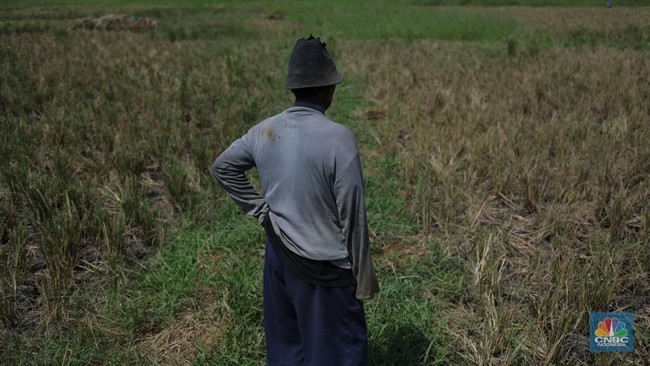
Farmers are gearing up and urging the government to prepare for the Godzilla El Niño. Jakarta, CNBC Indonesia - The threat of an extreme El Niño phenomenon dubbed “Godzilla” is being addressed by farmers through various anticipatory measures. In the field, unpredictable weather pattern changes are already being felt, raising concerns about potential declines in food production. Chairman of the Indonesian Farmers’ Union (SPI) Agroecology and Seed Assessment and Application Agency, Kusnan, stated that this situation is a serious concern for farmers. “This is indeed a crucial issue that is receiving serious attention from us at the Indonesian Farmers’ Union (SPI),” Kusnan told CNBC Indonesia on Friday (27/3/2026). Kusnan explained that weather anomalies are already visible in several production centres, particularly in East Java and parts of Central Java. Unpredictable rainfall patterns have become the main challenge in planting management. “Farmers in several regions, especially in rice centres like East Java and parts of Central Java, are already feeling the anomalies. The rain cycle has become unpredictable; some areas are experiencing early drought, while others are still hit by high-intensity rain that disrupts planting patterns. This uncertainty is the first threat to our planting management,” he said. He stated that the most worrying impact for farmers is mass crop failure or puso. This risk increases with the potential for extreme drought triggered by El Niño. “The impact we are most concerned about is mass crop failure or puso. If this El Niño is as strong as predicted, the risk of permanent drought on rain-fed land is very high. In addition, pest attacks usually increase during extreme hot weather, which will add to the burden of pesticide costs,” he explained. Facing these conditions, farmers are beginning to take several adaptation measures. One of them is accelerating the planting period so that harvesting can be done before the peak of the dry season. “(We are doing) acceleration of planting for those who still have water availability; we are encouraging accelerated planting so that harvesting can be done before the peak of the dry season,” said Kusnan. In addition, farmers are also starting to shift some land to more drought-resistant crops. “We are also diversifying. There are instructions to switch from rice to secondary crops like corn, soybeans, or tubers that are more water-efficient in the second or third planting season this year,” he clarified. From the seed side, the SPI is promoting the use of local varieties that are considered more adaptive to climate change. “We continue to encourage the use of local seeds that are genetically more adaptive to environmental stress (drought). Seeds resulting from farmers’ own breeding are often more resilient to weather anomalies than factory hybrid seeds that heavily depend on high water and chemical fertiliser inputs,” he said. Nevertheless, major challenges still loom, particularly regarding irrigation infrastructure. Kusnan mentioned that water distribution to the farmer level is not yet optimal. “Currently, the water discharge in major reservoirs is still monitored to be sufficient, but its distribution to secondary and tertiary channels at the farmer level is often problematic. Sectoral egos in irrigation water sharing often leave small farmers at the downstream end without water,” he explained. He also assessed that the government’s role needs to be strengthened with concrete steps, not just exhortations. “So far, there has been socialisation, but farmers need concrete steps, not just exhortations. We urge the government to ensure the availability of water pumps at vulnerable points, accelerate repairs to damaged irrigation infrastructure, and guarantee the availability of fertilisers and agricultural inputs so that farmers do not become even more destitute when production declines,” said Kusnan. On the other hand, limited capital is the main obstacle for small farmers in adapting to extreme climate change. “The biggest constraint is capital. Small farmers are very vulnerable because they do not have reserve funds to build deep wells or buy pumps themselves. This is where the inequality lies; large-scale farmers have capital for mitigation technology, while small farmers can only surrender to nature without state intervention,” he stated. “If there are no extraordinary mitigation measures, the potential decline in harvest yields could reach 20% to 30% nationally,” he added. He also warned that rising production costs are not always matched by profitable selling prices for farmers. “Our biggest concern is the swelling production costs due to water pump and pesticide expenses, not proportional to the selling price at the farmer level. Often, when harvests decrease, prices rise in the market, but at the farmer level, prices are suppressed by imports. This is what the government must safeguard,” Kusnan concluded. Previously, BRIN predicted that Indonesia would face a strong intensity El Niño phenomenon, often dubbed “Godzilla,” this year. This condition has the potential to make the dry season longer and drier, especially in western and southern Indonesia. El Niño itself is a phenomenon of warming sea surface temperatures in the equatorial Pacific Ocean that impacts reduced rainfall in Indonesia. In its strong phase, this phenomenon is called “Godzilla” because it can trigger significant climate anomalies. “El Niño is a phenomenon of warming sea surface temperatures in the equatorial Pacific Ocean. The El Niño phenomenon, including the potential strong ‘Godzilla’ variation, causes the dry season in Indonesia to become longer and drier,” wrote Researcher from the BRIN Center for Climate and Atmospheric Research, Erma Yulihastin, quoted from the official Instagram post @/brin_indonesia, Saturday (21/3/2026).