
Family Drama Behind the Battle for Samsung's Power
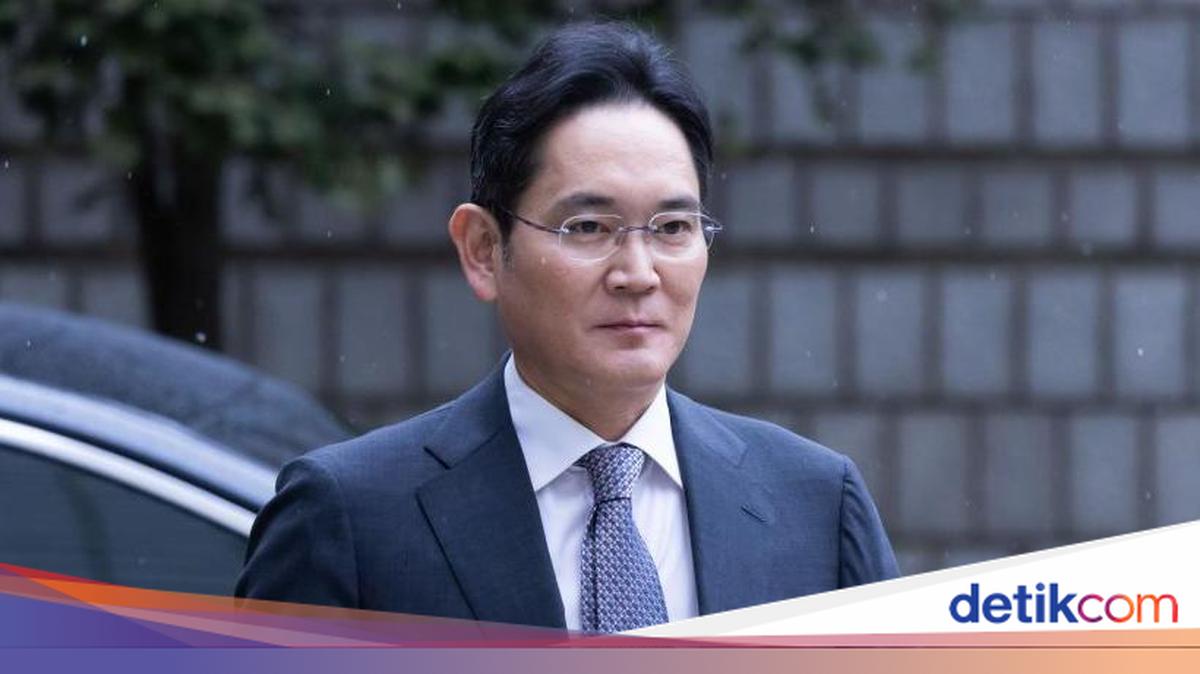
When there is a shift in power at the top of the world’s largest companies, most people do not notice it. Not so with the South Korean technology giant, Samsung. If its products function well and services run smoothly, then who is in the company’s boardroom does not become headline news. Samsung is different. The founding family dynasty is so complicated and its role so crucial to South Korea’s economy. Therefore, every change becomes front-page news. This also happened in 2017, when the long-prepared heir to Samsung, Lee Jae-yong, also known as JY Lee, was imprisoned for his role in a corruption scandal that also brought down the country’s president. This 57-year-old man is the grandson of Samsung’s founder. Geoffrey Cain, author of the book Samsung Rising, calls him “one of the most powerful people in the history of technology”. However, in 2015, when his father, Lee Kun-hee, Samsung’s leader, was hospitalised due to a heart attack, Lee’s position was not yet fully secure. He was accused of donating money to a foundation managed by Choi Soon-sil, a close friend and confidante of former South Korean President Park Geun-hye, in exchange for political support for a merger that would strengthen his grip on the conglomerate. Samsung is South Korea’s largest chaebol, or family-owned business. (Bloomberg via Getty Images) He was also accused of using stock manipulation and accounting tricks in the merger between one Samsung subsidiary, Samsung C&T, and another part of the business empire, Cheil Industries. Prosecutors said the move was done so that he could control the largest portion of the merged entity. Thus, he could take over control of Samsung Electronics: the crown jewel of the business kingdom, as well as the main source of power and influence. Lee Jae-yong has always denied the fraud charges, but was found guilty of bribery in 2017. Why was this deal so crucial? Since Samsung was founded as a grocery store in the late 1930s, the company has been in the hands of the Lee family. According to Geoffrey Cain, this family is “equivalent to nobility” in South Korea. They developed the business into a global force, encompassing insurance, memory chips, and construction, as well as everyday technology products. However, to keep the company in family hands, the conglomerate had to go through a series of complicated mergers, acquisitions, and power transfers. It was these manoeuvres that eventually landed Lee Jae-yong in prison. He has held de facto control of Samsung since 2014, when his father, Lee Kun-hee, then Samsung’s leader, suffered a heart attack. At that time, his father had grown Samsung from a successful South Korean business into a global conglomerate. As preparation for taking over, Lee Jae-yong held a series of top positions. Lee Kun-hee, Lee Jae-yong’s father, who has passed away. (Getty Images) However, when he became acting interim leader of Samsung, he faced a difficult situation: the complicated process to ensure full family control over Samsung was not yet complete. At that time, the business empire had become extremely complex: consisting of dozens of companies, from Samsung Electronics to retail; construction to chemicals. All interconnected in a complex web of cross-ownership. Another problem was that the family faced a massive inheritance tax bill, more than US$10 billion (£7.4 billion). If they started selling shares in those companies to pay it, the Lee family risked losing control. Succession risks As the only son, Lee Jae-yong was chosen to lead Samsung when his father died. However, even though he had been prepared for three decades to take over, for some, he was not a convincing choice to manage South Korea’s largest company, as well as a nation’s economic hope. According to Jaeyeon Lee, a reporter for South Korean newspaper Hankyoreh, “he is really different. While his father was seen as very aggressive and very goal-oriented. [Lee Jae-yong] is seen as more shy, quiet, and cautious.” Some say his sisters are more capable, and he has been criticised for not being ruthless enough. Questions also arose about his abilities when his pet project, e-Samsung, collapsed in the dotcom crash. There was a dispute between Lee Kun-hee and his eldest brother, Lee Maeng-hee (Lee Jae-yong’s uncle), who traditionally should have inherited the leadership. According to one version of the story, when Lee Maeng-hee was given the chance to run the company, he was considered incapable. He himself says he ran the company for seven years. However, whatever the truth, Lee Kun-hee’s youngest son was eventually appointed heir in 1976. This is a decision whose echoes have been felt for decades. The empty chair After an uncertain start, Lee Kun-hee saw a period of success for the Samsung group, which lasted through the 1980s and 1990s. But another challenge emerged. In 2008, both Lee Jae-yong and his father resigned after a former Samsung lawyer turned whistleblower claimed to know about slush funds used for bribery and political payments. As explained by Jaeyeon Lee from Hankyoreh, “[the lawyer] said he could no longer tolerate the corruption. According to him, Samsung was so rotten that it made his job unbearable.” AFP via Getty Images Samsung Electronics is one of the world’s largest smartphone manufacturers This raised questions about what would happen to the company and to South Korea’s economy. Especially because Lee Jae-yong was the figure touted to become Samsung’s next leader. Suddenly, the comp