
Fadli Zon Pushes Indonesian Cultural Talent into the Global Arena
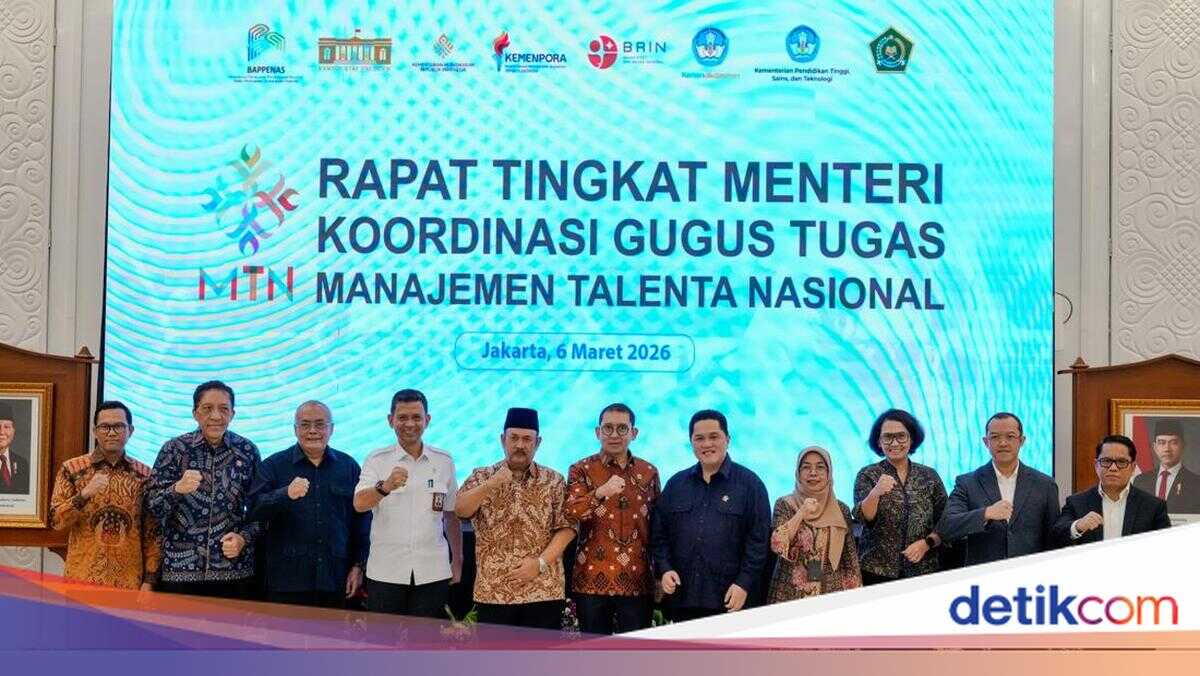
The Indonesian government continues to strengthen cross-ministry and agency coordination in delivering the National Talent Management, established through Presidential Regulation Number 108 of 2024 on the National Talent Management Master Plan. MTN is designed as an integrated system that guarantees the sustainability of mapping, development, and strengthening of national talent in line with the needs across sectors of development.
Culture Minister Fadli Zon outlined the 2025 performance achievements of the National Talent Management in the field of arts and culture, and the direction of development for the national cultural talent ecosystem. The Ministry of Culture noted that the development of cultural talent has a strong constitutional footing, namely Article 32(1) of the 1945 Constitution, as well as Presidential Regulation Number 108 of 2024, Asta Cita No. 4, and Law Number 5 of 2017 on the Promotion of Culture.
He revealed this at the Ministerial-level Meeting of the Coordinating Task Force for the National Talent Management (MTN), held together with the signing of a Cooperation Agreement and a Non-Disclosure Agreement relating to the integration of the Integrated Database of the National Talent Management, at the Bappenas Office, Jakarta, on Friday 6 March 2026.
“Through the National Talent Management, we are aiming to present a talent management system that is inclusive, sustainable, and integrated with the national and global cultural ecosystems,” said Fadli Zon in a written statement, Saturday 7 March 2026.
He explained that the strategy to strengthen MTN arts and culture is through developing a comprehensive talent data system, creating measurable and sustainable talent development trajectories, and developing methods to enhance talent capacity in line with global needs. The programme also empowers various public initiatives as centres for cultural talent education.
In his presentation, he explained that the MTN arts and culture ecosystem comprises five main areas: visual arts, music, film, literature, and performing arts. By 2025, almost 37,000 cultural talents were registered, with more than 5,700 talents entering advanced development trajectories.
In addition, he noted that there were 208 programmes implemented with partners, activities in 58 regencies/cities, and cooperation with global institutions in 19 countries with 116 international recognitions.
“At present, the share of the national film market in Indonesia has reached around 67 percent, an achievement that has only occurred in the last one to two years. Indonesian films are also increasingly active in international festivals such as Rotterdam, Berlinale, Udine, and Busan. In addition, 5,700 talents are involved in various development and international collaboration programmes,” he said.
In the field of literature, Fadli explained that the MTN programme has involved thousands of talents through dozens of development programmes, including increasing the translation of Indonesian literary works and the acquisition of works by foreign publishers.
In the field of music, he added, nearly 19,000 talents have been involved in the production of works and talent development programmes.
“Meanwhile, in visual arts there are thousands of talents participating in dozens of programmes with various international recognitions,” he explained.
Fadli said that Indonesia will also participate again in the Venice Biennale, one of the world’s most important fine arts exhibitions, which will run for six months and will involve talents from MTN programmes. In the performing arts sector, hundreds of talents are involved in dozens of development programmes with a number of international recognitions.
“These achievements show that Indonesian arts and culture talents are increasingly present, more visible, and more active within the global cultural ecosystem,” he said.
In the field of arts and culture, the achievements also indicate significant progress. There are 28 programmes that have been presented in 19 countries, with 116 of them receiving international recognitions.
Furthermore, through strengthened cross-sector coordination and the development of an integrated talent management system, the government hopes that the National Talent Management can become a key foundation in building excellent human resources in the fields of research, arts and culture, and sports, while also strengthening Indonesia’s position globally.
“The MTN programme in this area has also trained more than 5,700 outstanding talents in the cultural field,” he concluded.
At the same occasion, the signing of a Cooperation Agreement and a Non-Disclosure Agreement for the integration of the Integrated Database of the National Talent Management was also conducted. The data system is the mandate of Presidential Regulation 108/2024 which charges Bappenas as the chair of the task force to coordinate the operation of the MTN data system as the main instrument for registration and integration of talents across ministries and agencies.
Attendees included the Minister for National Development Planning/Head of Bappenas, Ahmad Pambudi; Deputy Head of the National Research and Innovation Agency (BRIN), Amarullah Oktavian; and other officials from the ministries and agencies. Attending with the Minister of Culture were, among others, the Secretary-General, Bambang Wibawarta; Director-General for Development, Utilisation, and Cultivation of Culture, Ahmad Mahendra; and Director of Human Resource Development, Institutions, and Cultural Pranata, Irini Dewi Wanti.