
Fadli Zon: Our Culture Is Not Only Rich but Also Ancient
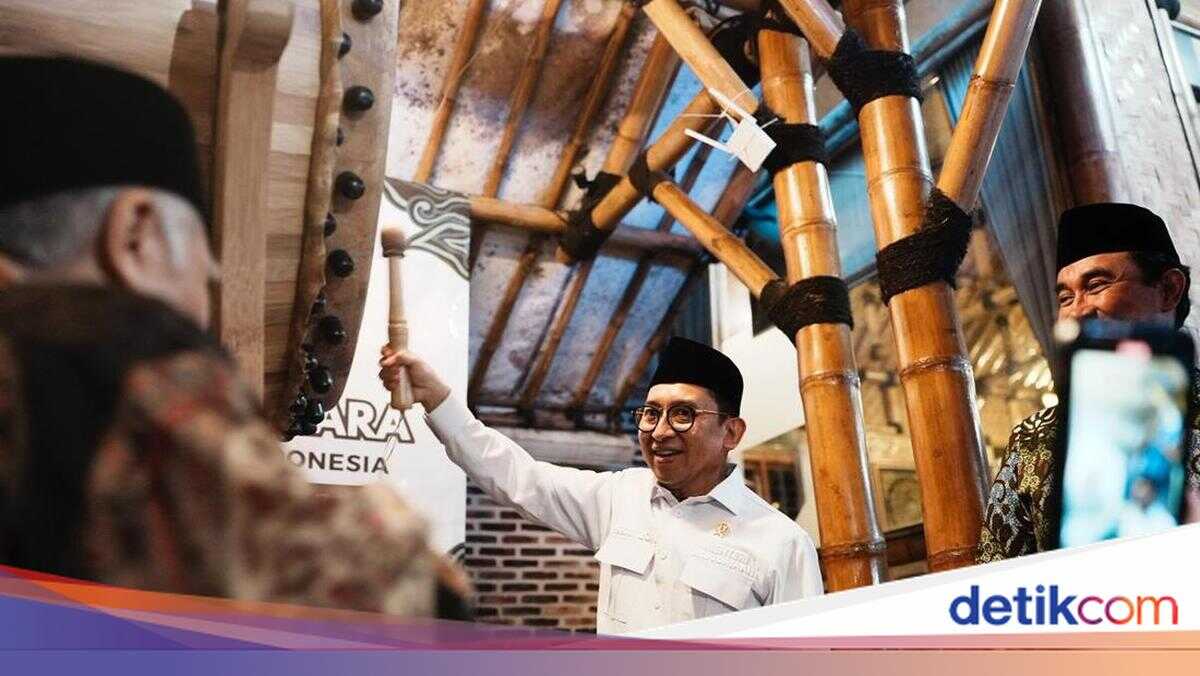
Indonesia’s Culture Minister Fadli Zon has emphasised that Indonesia is a nation with extraordinary cultural wealth, both in quantity and historical depth. He noted that Indonesia currently has 2,727 registered Intangible Cultural Properties (WBTb), with potential tens of thousands more undergoing registration and verification processes.
“We possess intangible cultural heritage and cultural properties spread from Sabang to Merauke, from Miangas to Rote Island. Our culture is not only rich, but also ancient,” he stated in a written statement on Monday (2 March 2026).
Zon made these remarks as keynote speaker at the Nusantara Cultural Seminar titled ‘Pancasila Culture as the Vital Force of the Nation Towards Sustainable Nusantara Civilisation’, organised by Yayasan Bambu Indonesia in Cibinong, Bogor, on Sunday (1 March).
Zon highlighted a recent discovery reinforcing Indonesia’s status as a long-civilised nation: a publication in the journal Nature on 21 January 2026 announcing the discovery of the world’s oldest known cave paintings, dating back 67,800 years, located in Muna, Southeast Sulawesi.
This discovery, he stated, confirms that Nusantara civilisation emerged tens of thousands of years ago.
“Therefore, Indonesia should not be called merely a nation-state, but also a civilisational state, namely a state of civilisation,” he emphasised.
Zon stressed that culture must become Indonesia’s present and future. Advanced nations, he noted, do not merely protect culture but develop it into a strategic force through the cultural and creative industries (CCI) and intellectual property-based economies.
“Culture is a strategic resource and diplomatic soft power. In the cultural sphere, we possess an extremely solid foundation,” he stated.
In the context of nationhood, Zon emphasised that Pancasila represents the crystallisation of the nation’s cultural values, discovered by the nation’s founders. He asserted that Pancasila is not merely five principles but the result of profound contemplation on Indonesia’s long civilisational history.
During the seminar, East Kalimantan Deputy Governor Seno Aji, one of the speakers, noted that the East Kalimantan Provincial Government continues to position culture as a unifier in its development vision through the tagline ‘East Kalimantan Success Towards the Golden Generation’.
He stated that East Kalimantan has established a Cultural Park utilised by all ethnic groups as a space for cultural expression and interaction.
Seno Aji also affirmed the traces of ancient civilisation in his region through the existence of the fourth-century Kutai Kingdom, evidenced by the Yupa Inscription in Muara Kaman, and its historical continuity from Kutai Martadipura to the Sultanate of Kutai Kartanegara Ing Martadipura.
Currently, 56 cultural heritage sites in East Kalimantan have been designated by the Culture Ministry, both tangible and intangible, including recognition of regional culinary specialities.
He expressed hope that this seminar would develop into a nationally-scaled cultural forum strengthening inter-regional synergy in advancing Indonesian culture.
West Java Provincial Regional Secretary Herman Suryatman, also a speaker, expressed appreciation for the Culture Ministry’s support for cultural development in West Java, including facilitation of the designation of the manuscript Sang Hyang Siksa Kandang Karesian as UNESCO’s Memory of the World in April of the previous year.
He affirmed that cultural development in West Java is a top priority through two main focuses: strengthening the character of young people based on ancestral philosophical values, including the concept of the Pancawaluya generation—courageous, strong, honest, intelligent, and virtuous—and environmental preservation through controlling land conversion.
The Nusantara Cultural Seminar underscored the importance of synergy between central and regional governments, academics, cultural figures, and all societal elements in making culture a mainstream driver of national development.
Through strengthening Pancasila values, protecting and developing cultural heritage, and nurturing strategic resources and diplomatic strength, the Culture Ministry is committed to promoting the realisation of a sustainable Nusantara civilisation.
The spirit of collaboration fostered in this forum is expected to serve as collective energy to ensure culture remains alive, relevant, and serves as the vital force of the Indonesian nation.
The Nusantara Cultural Seminar was also attended by the former Minister for Bureaucratic Reform and State Apparatus Empowerment (2014-2016) Yuddy Chrisnandi; former Trade Minister (2019-2020) Agus Suparmanto; Bogor Mayor Deddy Rahim; Director General of Civil Aviation Lukman F. Laisa; UNAS Rector El Amry Bermawi Putera; Presidential Aide-de-camp Anton Palaguna; West Java Police Cyber Division Deputy Director AKBP Mujianto; National Narcotics Board Head Komjen. Pol. Suyudi Ario Seto; religious figures including Ubaidila Anwar; cultural figure Jatmika Nagamiharja; as well as artists, cultural figures, and community leaders.
Accompanying the Culture Minister were the Director General of Cultural Protection and Traditions Restu Gunawan; Secretary of the Directorate General of Cultural Protection and Traditions Wawan Yogaswara; and Director of Faith in the Almighty and Indigenous Community Development Syamsul Hadi.