
Fadli Zon Encourages Bung Karno's Former Residence to Become an Educational Space
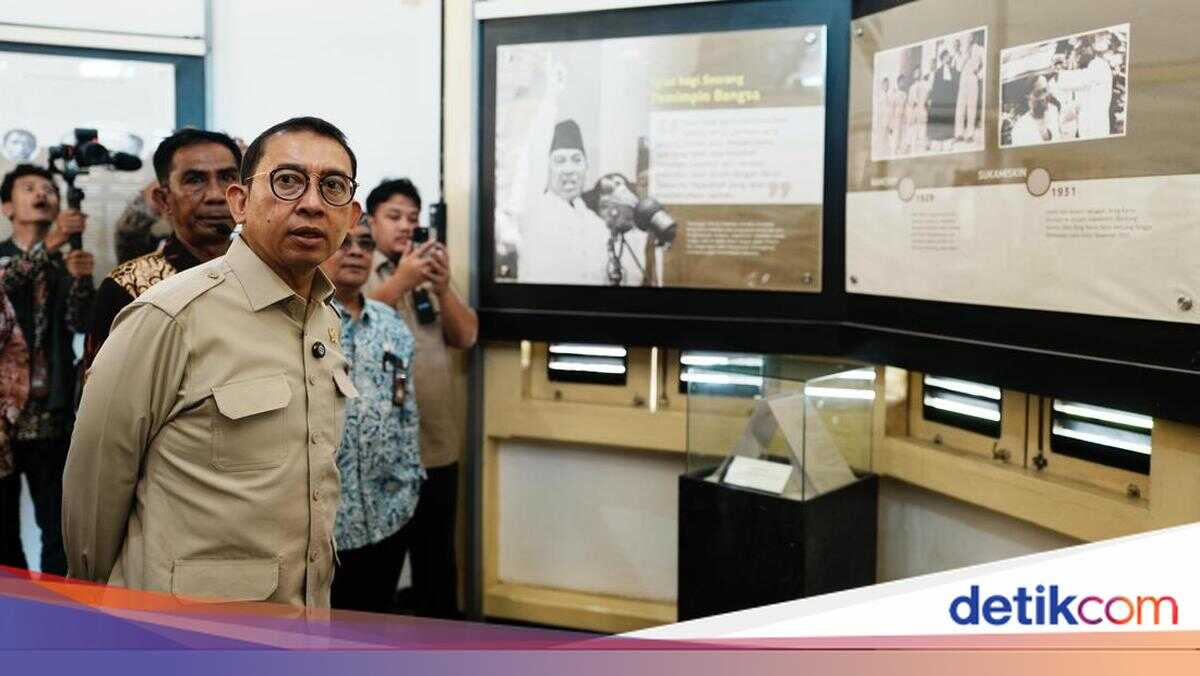
Minister of Culture Fadli Zon visited Bung Karno’s former residence in Bengkulu to strengthen the site’s function as an educational space and cultural hub. He encouraged the site to be continuously revitalised through activities relevant to the public, especially young people.
Fadli explained that Bung Karno was exiled by the Dutch colonial government to Bengkulu from 1938 to 1942, after previously being exiled in Ende from 1934 to 1938. He stated that the traces of the exile of the nation’s founders are spread throughout various regions and are an important part of the history of the struggle.
He also explained that the nation’s founders had experienced periods of exile in various regions. For example, Bung Hatta and Bung Syahrir were exiled from Digul to Banda Naira, with Syahrir later transferred to Sukabumi.
“These places are living witnesses to their struggle in fighting for Indonesian independence,” Fadli said in a written statement on Wednesday (February 25, 2026).
While in Bengkulu, Bung Karno not only underwent isolation but also actively discussed with local religious figures, community leaders, and cultural figures. His intellectual activities are reflected in the collections at the former residence, including the script for the Monte Carlo play and various readings.
Fadli emphasised that Bung Karno’s former residence, which has been designated as a National Cultural Heritage Site, has the potential to be developed as an information and learning centre, as well as an educational and cultural recreation destination.
He also mentioned Bengkulu’s position in national history, including the meeting between Bung Karno and Fatmawati, who later sewed the Merah Putih (Red and White) national flag.
“We hope that more young people will come and learn from this place. This site has been well-maintained, and in the future, it needs to be continuously revitalised through cultural activities,” he said.
Fadli said that the revitalisation of the space could be filled with art, poetry, music, cultural discussions, and even a reading room or mini-library. Support such as Bengkulu’s special coffee and traditional cuisine would also add to the attraction, especially for young people and tourists from outside the region.
The Ministry of Culture hopes that Bung Karno’s former residence will not only be a place of commemoration but will also develop as a living educational and cultural space. This site is expected to inspire future generations to understand and continue the spirit of struggle of the nation’s founders.
During the visit, Fadli was accompanied by the Director-General of Cultural and Traditional Protection, Restu Gunawan, the Special Staff of the Minister of Culture for Protocol and Household Affairs, Rachmanda Primayuda, and the Head of the Regional Cultural Heritage Conservation Centre VII, Iskandar, along with officials from the Bengkulu Provincial Government.
(prf/prf)