
Facts Prove Ships Can Still Pass Through the Strait of Hormuz, But...
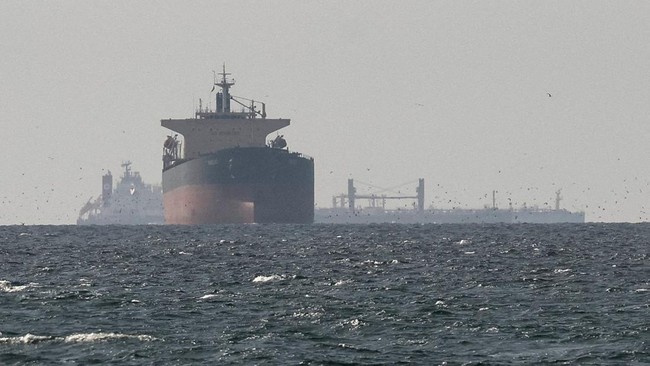
Jakarta, CNBC Indonesia - The closure of the Strait of Hormuz, a vital global oil and gas route, by Iran would trigger an energy crisis. However, the latest research proves that the Strait of Hormuz is not truly closed.
Citrini Research sent its analysts directly to the Musandam Peninsula in Oman, rather than relying solely on satellite imagery. By visiting the location and observing from a boat, it became clear that the dominant narrative gripping global markets—that “this vital oil route is essentially closed”—is incorrect.
Conversely, citing CNBC International on Tuesday (7/6/2026), an unnamed analyst from the company—due to the sensitivity of the activity—found that ships are still moving through the strait. In fact, traffic has increased in recent days to around 15 ships per day, according to the company’s report posted on Substack.
This is indeed far below normal levels. But at least, the flow indicates that the current disruption is “partial and evolving” rather than “absolute”.
“Tanker ships pass through four or five per day, completely undetected by AIS,” wrote Citrini, referring to the ship tracking system that broadcasts location, speed, identity, and route.
“The volume, they say, is higher than the data shows, and has increased in recent days through the Qeshm Strait,” it posted further.
Citrini also emphasised that the actual shipping volume is higher than reported data. Many ships turn off their transponders and are invisible on official tracking systems.
Meanwhile, based on the Substack post, interviews by the analyst with fishermen, smugglers, and regional officials reveal a system in which Iran selectively allows ships to pass. Tanker ships are required to obtain approval before crossing waters near Iranian territory, creating what the company describes as a “functional checkpoint” rather than a blockade.
“This should demonstrate that what we have described as our view of this conflict is nuanced, not aligned with ‘drastic crude oil price drops’ or ‘drastic crude oil price drops’,” the company stated.
Nevertheless, of course, these findings are based on a single field visit and anecdotal reports that are difficult to verify independently. Especially given the limited transparency in the region.
Citrini stated that it expects more prolonged disruptions that will embed a sustained risk premium into oil markets. That view underpins a preference for long-term crude oil exposure, with the company favouring December 2026 WTI contracts over next month’s contracts.
“We expect disruptions to last longer and the new normal to involve a permanent risk premium, but most likely we will see up to 50% of pre-conflict traffic in 4-6 weeks,” the company said.