
Facts About Iran's New Supreme Leader Mojtaba Khamenei: Profile and Networks
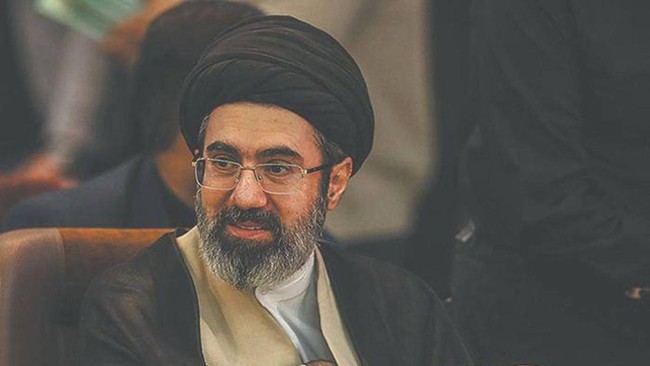
Iran’s Assembly of Experts has formally appointed Mojtaba Khamenei as the new Supreme Leader of Iran to replace his late father, Ali Khamenei. The appointment followed Ali Khamenei’s death in an attack involving the United States and Israel in late February.
Mojtaba was selected through a vote in a secret meeting held by the Assembly of Experts on Sunday (8 March 2026). This step constitutes a historic event as it is the first time since Iran’s 1979 Revolution that the nation’s highest authority has effectively transferred from father to son.
Prior to this permanent appointment, Iran experienced a leadership vacuum amid ongoing war conditions. Power was temporarily transferred to an interim council comprising three members: President Masoud Pezeshkian, Judiciary Chief Gholam-Hossein Mohseni-Ejei, and cleric Alireza Arafi, before the Assembly of Experts finally established a permanent successor.
The selection of Mojtaba reportedly received strong support from the Islamic Revolutionary Guards Corps (IRGC), Iran’s most powerful security institution. IRGC commanders reportedly made intensive contact with Assembly members, both by telephone and in person, to secure support for Mojtaba prior to the vote.
The selection has been described as irregular and conducted under pressure. Sources indicate opposition figures were given limited time to present their arguments. Some assembly members even considered boycotting the continuation of the session due to feeling heavy pressure from the IRGC during the selection process. However, once the decision was made, the Revolutionary Guards openly declared their oath of allegiance to the new leader as a symbol of regime continuity.
For the IRGC, Mojtaba Khamenei is regarded as a figure capable of guaranteeing stability, as he has built strong relationships with IRGC commanders over decades. He has served as the principal channel between the security institution and his father’s office, thus providing both the control and legitimacy required by the regime. The Revolutionary Guards reportedly required two things following Ali Khamenei’s death: control and legitimacy within the regime. Mojtaba offers both.
Notably, Mojtaba Khamenei has never held public office, not even through elections. He has primarily operated behind the scenes within Iran’s political structure. Additionally, his clerical rank is only Hojjatoleslam, which is below the level traditionally associated with qualifications to lead the Islamic Republic.
However, his political influence became clearly visible during the 2005 presidential election, when political rivals accused Mojtaba of helping engineer Mahmoud Ahmadinejad’s victory. He was also linked to security forces’ efforts in suppressing the opposition movement during the major protests following the 2009 elections. Over time, Mojtaba built strong connections with security bodies, conservative clergy, and political networks around his father’s office.
Mojtaba’s primary strength derives from the structure around the Supreme Leader’s office known as “Bayt”. This institution serves as a centre connecting all networks—security bodies, religious institutions, economic foundations, and political organisations—enabling the Supreme Leader to oversee important decisions throughout the country. This system creates a parallel structure of authority that monitors ministries, controls security forces, and influences political appointments. Having worked closely within this system for years, Mojtaba entered the succession process with solid support from insiders who wield considerable power in Iran.