
Fact Check: Was There Really a Brutal Iranian Missile Barrage Attack on Israel?
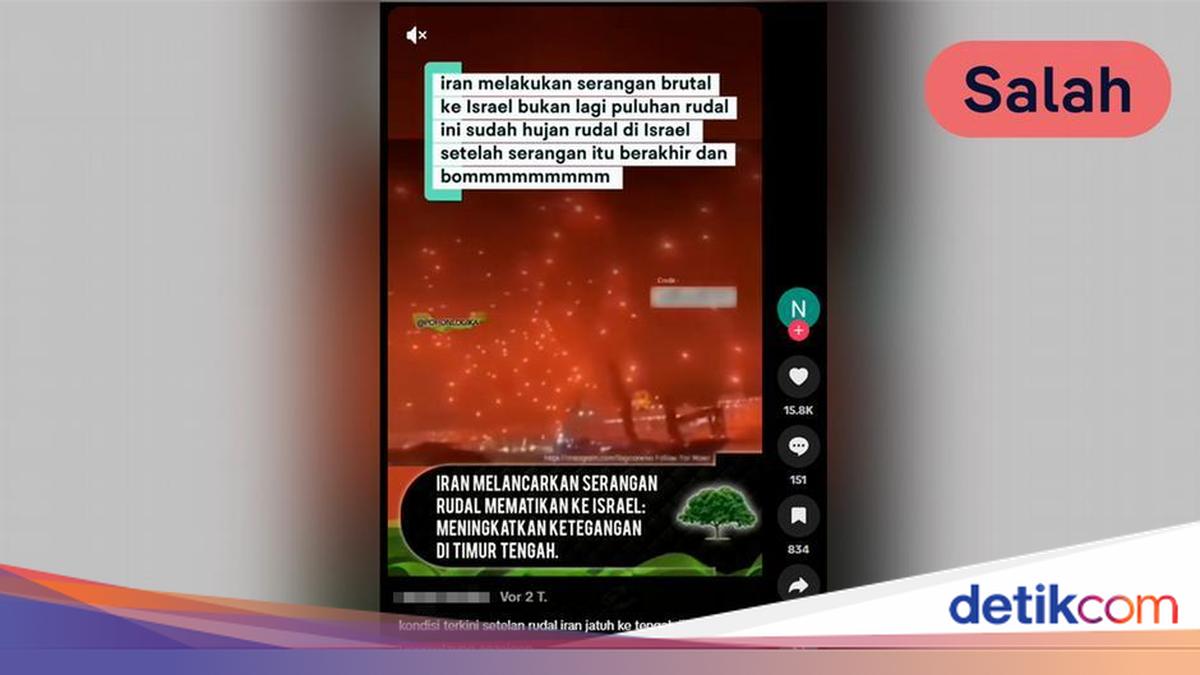
A video circulating on TikTok that has been viewed over one million times shows a night sky with red flashes of light, with claims that it depicts a “missile barrage” from Iran targeting Israel. The video’s narration states: “Iran launches deadly missile strikes on Israel,” accompanied by screams and alarming sound effects.
Deutsche Welle conducted an analysis of this claim and determined it to be false.
The viral video generated varied reactions in its comments section, with some users suspecting it was artificially generated content. To verify this suspicion, DW’s fact-checking team used the Hive Moderation AI detection tool to analyse the video. The results showed only a 19.1 per cent probability that the video was created with artificial intelligence, suggesting the video was likely not AI-generated content.
To validate the tool’s findings and uncover the true context, investigators continued their verification process using reverse image search. Using Google’s reverse image tool, DW’s fact-checking team extracted several frames from the viral video and searched them through the search engine. This revealed several other videos with similar visuals but clearer quality. The two most similar videos differed notably from the viral version, lacking the screams heard in the original.
In the descriptions and comments of these videos, it was stated that the footage was captured during celebrations marking the 103rd anniversary of Le Mouloudia Club d’Alger, a football club from Algiers, Algeria, in 2024.
Through geolocation analysis, the team identified several location markers in the viral video, including a large clock and a ship near a harbour. Using Google Street View and comparing visual markers with maps of Algerian ports, DW’s fact-checking team located the video’s origin point at Port d’Alger, a harbour in Algiers, Algeria. Crucially, the video was not recorded from Israel.
The red objects visible in the night sky were identified as fireworks from the port area during the 103rd anniversary celebration of Le Mouloudia Club d’Alger, not military strikes or missile attacks. This was confirmed by reviewing videos from the club’s official social media accounts, which featured similar footage from different angles with proper context.
The incident underscores how misinformation spreads during international conflicts. Indonesia, whilst geographically distant from the Middle East, remains deeply connected to regional politics, making such content particularly effective at garnering sympathy and engagement.
Rizal Nova Mujahid, a drone analyst, noted that whilst AI-generated content has become increasingly prevalent, the spread of false information through simpler methods remains far more significant. “The spread of hoaxes without AI assistance is greater than the spread of hoaxes using AI assistance,” Nova explained, adding that AI tools cannot be blindly trusted for fact-checking purposes.
Public figures and media experts urge greater caution when consuming social media content, particularly regarding international conflicts. Bayu Wardhana, Secretary-General of the Indonesian Journalists Alliance (AJI), emphasised the importance of verifying sources, seeking original context, and fact-checking before believing or sharing information. “The important attitude is not to share again. That’s what should be educated. If in doubt, don’t share the content,” Wardhana advised, recommending that people consume information only from trustworthy sources.