
Facing Global Turmoil: Indonesia's Stance, Diplomacy and Resilience in the Iran–US–Israel Conflict
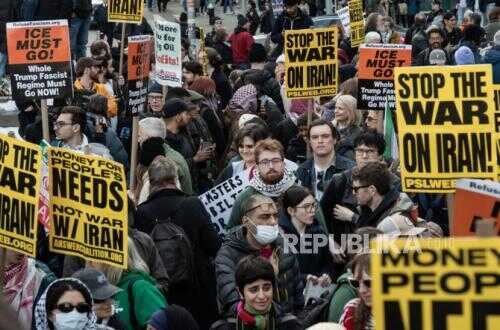
The sound of explosions echoes far from Tehran, but reverberates to Jakarta. The smoke rising over Iran is not merely a sign of military attack; it is a symbol of the fracturing of global reason. When the United States and Israel once again choose the path of gunpowder rather than diplomacy, the world is forced to witness an old chapter: great powers that feel entitled to determine the fate of other nations.
The anger is justified. For every bomb dropped in the name of stability actually plants seeds of new instability. Every security justification proclaimed often ends in civilian suffering that never enters official statistics. Behind these geopolitical manoeuvres lie children who have lost their homes, families torn apart, and futures dependent on strategic interests that they never chose.
Indonesia cannot turn away. As a nation with the world’s largest Muslim population, and with a constitutional mandate to help maintain global order, Jakarta cannot be a passive spectator in history’s stands. The President and government must read this situation not merely as a distant Middle East conflict, but as a test of moral leadership.
Active Diplomacy: A Clear Middle Path
Amid polarisation between West versus East, Shiite versus Sunni, allies versus enemies, Indonesia must stand on a clear path: the path of humanity. Initiatives at the level of the Organisation of Islamic Cooperation and the United Nations must be activated immediately. Not to sharpen power blocs, but to press for an end to military aggression and prevent the escalation of open warfare.
Indonesia’s voice must be firm—not a voice of blind rage, but a voice of conscience that rejects subjugation in any form. If stability in the Strait of Hormuz is shaken, the world will feel the impact. This global energy corridor is the lifeblood of international economics, including for Indonesia’s own energy security. Allowing escalation to continue is equivalent to risking global stability.
Anticipating Economic Waves
The reality is bitter: conflict in the Persian Gulf will almost certainly drive a spike in global crude oil prices. If reports of Iran’s supreme leader’s death do intensify the situation, then political and military turmoil will affect international energy markets.
Indonesia must be prepared. Social safety nets need to be strengthened, national energy supplies secured, and public communication managed to prevent panic. The Middle East crisis must not become a fire that burns domestic spaces. Economic pressure must not transform into social division.
This is where economic self-reliance is tested. When the world is shaken, a strong nation is one with a solid domestic foundation.
Consolidation of the Community: Exercising Restraint Against Division
In the midst of an information storm, social media easily becomes a field of heated debate. Deaths or threats to major figures often spark endless theological and political polemics. But now is the time for scholars and national leaders to close ranks.