
Facing EU Sanctions Issue on Russia, This is the Statement from Karimun Oil Terminal
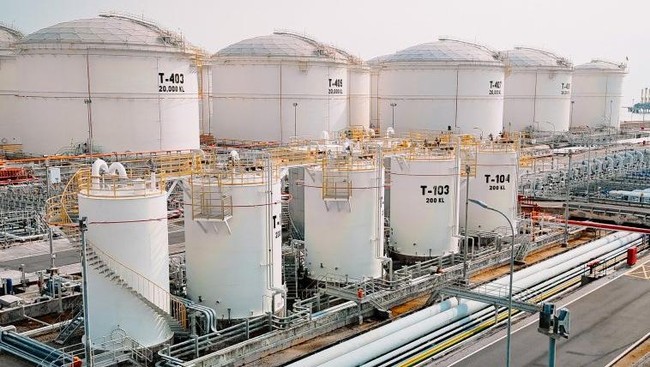
Jakarta, CNBC Indonesia - PT Oil Terminal Karimun (OTK) has spoken out regarding the mention of the Karimun Oil Terminal in the latest European Union sanctions list through Council Regulation (EU) 2026/506.
According to the company, PT OTK is not the entity targeted in the new EU sanctions package.
The company asserts that the legal status and operational facilities of their terminal in Indonesia do not fall under the category of legal entities subject to asset blocking sanctions.
PT OTK’s management explained that the reference to “Karimun Oil Terminal, Indonesia” in the regulation’s annex has caused public misunderstanding.
The company assures that its operations have always complied with the applicable regulatory and legal framework in Indonesian jurisdiction as well as international maritime standards.
“OTK clarifies from the outset that neither PT Oil Terminal Karimun nor its terminal has been designated as a legal entity subject to sanctions under this regulation; the reference in question solely pertains to a list of infrastructure or locations in the annex regarding ports and infrastructure,” stated management in an official release, quoted on Monday (27/4/2026).
The company emphasised that the name listed in the European Union document is not the registered legal name or corporate designation of PT Oil Terminal Karimun. Management views this inclusion as damaging to the company’s reputation in the eyes of international business partners due to its association with illegal activities.
“The reference has caused serious reputational concerns for OTK, its business partners, and the legitimate business conducted at the facility under applicable Indonesian jurisdiction and regulatory framework,” added management.
Management also refutes all allegations suggesting involvement in shadow fleet activities or deceptive shipping practices to evade sanctions. The company states that the terminal facility in Karimun has no capacity to accommodate crude oil.
“OTK clearly states that it does not possess crude oil tanks and does not operate crude oil storage infrastructure or handle crude oil. Any allegations implying that OTK has facilitated the storage, concealment, blending, or transshipment of Russian crude oil through crude oil infrastructure are factually untrue,” management firmly stated.
In its operations, OTK claims to have implemented strict compliance controls through screening of business partners as well as in-depth checks of cargo and vessel documents. The company asserts that responsibility for sanctions compliance, insurance, and vessel history lies entirely with the vessel owners and cargo charterers.
“OTK remains committed to lawful operations, transparency, operational integrity, environmental responsibility, and full cooperation with relevant authorities and stakeholders,” the company statement concluded.
Currently, PT Oil Terminal Karimun’s management is reviewing the European Union regulation and plans to engage in communications with stakeholders to provide clarification and correct what it deems inaccurate factual assumptions regarding the company’s facilities.
Here are the main details of the latest European Union sanctions package against Russia, released on 23 April 2026:
Energy Sector
36 new entities from Russia’s energy sector have been added to the sanctions list, covering activities from exploration, extraction, refining, to oil transportation.
The European Union has added new entities in Russia’s shadow fleet network, including companies in third countries, one major maritime insurance company, and 46 additional vessels. The total number of vessels on the list now reaches 632, which are subject to port access bans and services. However, 11 vessels were also removed from the list for returning to compliance.
Due diligence obligations have been imposed on sellers in the European Union, along with “no to Russia” clauses in sales contracts to prevent vessels from being used in illegal networks. Rules for vessel scrapping have also been introduced to reduce the shadow fleet.
Two Russian ports, Murmansk and Tuapse, have been added to the sanctions list, along with one port in a third country, namely Karimun Oil Terminal in Indonesia, due to links to evading oil price caps and Russia’s shadow fleet.
The European Union is preparing a legal basis to ban the transportation of Russian oil in the future, in collaboration with the G7 and Price Cap Coalition.
Provision of maintenance services for Russian LNG carriers and icebreakers is prohibited.
European Union operators are permitted to terminate long-term contracts with Russian parties.
Financial Sector
An additional 20 Russian banks are banned from doing business with European Union operators. The total number of affected banks now reaches 70.
Four banks in Kyrgyzstan, Laos, and Azerbaijan are subject to transaction bans for assisting Russia in evading sanctions.
A full ban on transactions with Russian crypto service providers has been imposed, including decentralised platforms.
The use of RUBx stablecoin and digital rouble is prohibited due to potential use in evading sanctions.
Cooperation with agents facilitating Russia’s international transactions to evade sanctions is banned.
Five financial entities from third countries have been removed from the list after providing compliance commitments.
Trade Sector
Goods worth more than €365 million, from rubber to tractors, are banned from export to Russia.
Restrictions on military technology, including explosives, laboratory equipment, and high-performance lubricants.
Provision of cybersecurity services to Russia is restricted.
Metals, chemicals, and minerals worth more than €530 million are subject to import bans.
An import quota for ammonia has been set to cap incoming volumes.
Russian Military Industry
- 58 companies