
Facing Energy Crisis, CELIOS Urges Government to Build Public Transportation
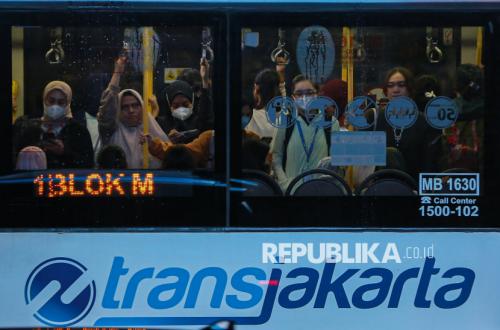
The Center of Economic and Law Studies (CELIOS) is urging the government to position public transportation as the primary response to the global energy crisis, rather than solely accelerating biofuel blends. The institution assesses that supply pressures on energy due to geopolitical conflicts must be addressed with more efficient, measured policies that do not burden the national budget.
CELIOS Executive Director Bhima Yudhistira stated that the acceleration of B50 biodiesel and E10 bioethanol requires thorough testing, as it is not necessarily the most effective path to strengthening energy resilience. According to him, a more rational step lies in bolstering public transport and electrification, particularly in high-mobility areas.
“Why isn’t the answer, for instance, during an energy crisis, to promote public transportation?” Bhima said during an online discussion with journalists in Jakarta on Tuesday (7/4/2026).
He explained that CELIOS compiled the research to address the fundamental question of whether biofuels can simultaneously resolve energy security, food security, and environmental issues. In CELIOS’s view, the push for biofuels should not divert attention from solutions that more directly reduce consumption of imported fuels.
Bhima cited Pakistan’s experience of providing free public transportation for one month to ease fuel consumption pressures during an energy crisis. According to him, such measures demonstrate policy alternatives that are closer to public needs and have a faster impact on reducing fuel consumption.
“The goal is to reduce fuel consumption,” he said.
CELIOS views a public transport-based strategy as more aligned with the direction of a cleaner energy transition. In the Indonesian context, Bhima sees the electrification of public transport, such as electric buses, as deserving higher priority in national energy policy.
He emphasised that government-driven electrification should not stop at vehicle procurement but also ensure that the electricity source increasingly relies on renewables. In this way, emission reductions and reduced dependence on fossil fuels can proceed more consistently.
“The ideal approach includes promoting electrification. So, electrification for transportation, such as electric buses,” Bhima stated.
In a report titled Why Are Food Estates Not the Answer for Food and Energy Security?, CELIOS also assesses that accelerating biofuels carries enormous cost risks. The institution estimates that the total cost of Indonesia’s bioethanol expansion programme could exceed 11 billion US dollars over 10 years, equivalent to about 89 percent of current energy subsidies.
The breakdown includes nearly 8 billion US dollars for the Merauke project, an additional 1.7 billion US dollars in capital expenditure to meet the 1.2 billion litre bioethanol production target by 2030, potential export revenue losses of 340 million US dollars up to 2035, and subsidy burdens of around 1 billion US dollars up to 2035. CELIOS believes that such a budget should be redirected to strengthen public transport modes, add fleets, and expand supporting infrastructure in the regions.
CELIOS assesses that the energy crisis needs to be addressed with policies that directly reduce fuel consumption and strengthen public mobility. Within this framework, public transportation and electrification are seen as more promising than continuously increasing biofuel blends.