
Extreme Weather Prompts East Java BPBD to Audit 71 Early Warning System Units
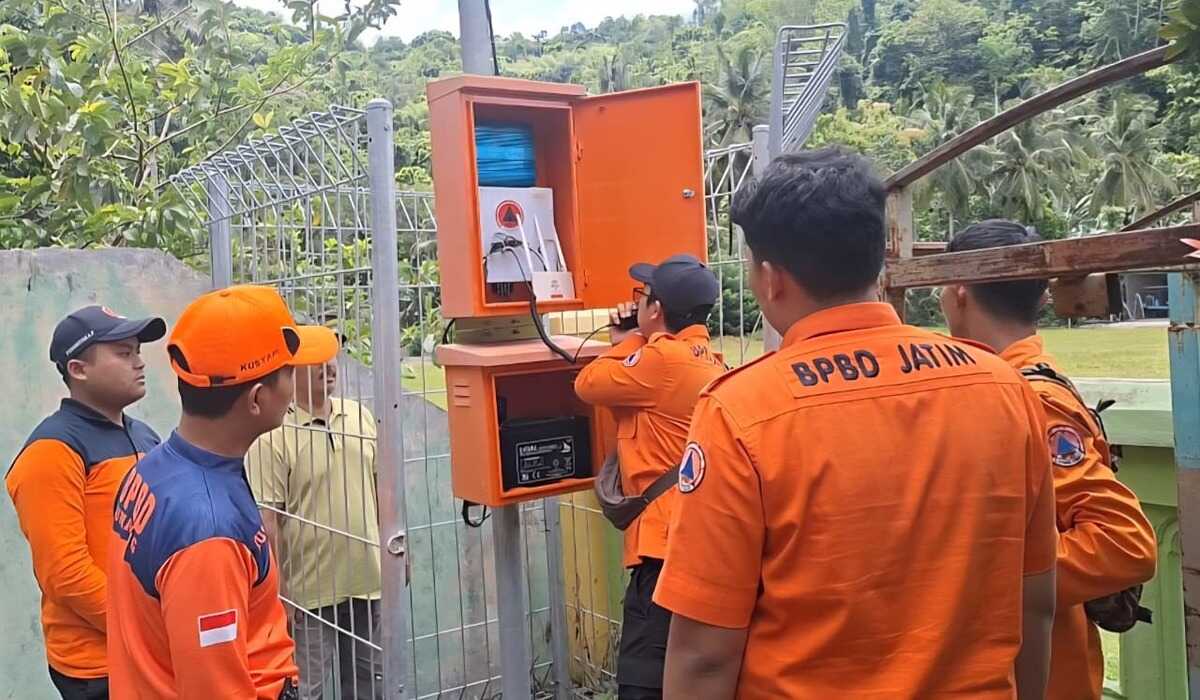
East Java’s Regional Disaster Management Agency (BPBD) has begun an audit of 71 Early Warning System (EWS) units deployed across disaster-prone areas in East Java, following recent extreme weather. Head of East Java BPBD Gatot Subroto said in Surabaya on Friday (6 March): ‘There are 71 EWS points owned by East Java BPBD placed in several areas in East Java that are prone to disasters; we are checking them one by one.’ Over the past week, inspections began at Banyuwangi Regency, specifically the tsunami siren at Rajegwesi Beach, Sarongan Village, Pesanggaran District, on Monday (2 March). The inspections then moved to Jember, Lumajang, Malang, Blitar, Tulungagung, Trenggalek, and Pacitan. The plan is to inspect all 71 EWS, comprising 27 flood EWS, 27 landslide EWS and 17 tsunami sirens, to verify their physical condition and operational status for the community early warnings. According to Gatot, amid the ongoing extreme weather in East Java, authorities are seeking support from various parties to heighten vigilance, especially in disaster-prone areas susceptible to floods, landslides, and tsunamis. ‘In addition to the public’s heightened awareness, we will also check the conditions of the EWS equipment and increase the readiness of BPBD personnel,’ he said. Gatot hopes that as long as the extreme weather continues, communities, volunteers and BPBD staff in districts and cities can continue to collaborate to enhance preparedness and reduce disaster risk that may occur. ‘Actually, the development of EWS in East Java can be monitored via the dashboard at the office. However, field checks on site are also necessary so we can know the real conditions of the EWS on location, so it can serve as an early detection tool for surrounding communities if a disaster occurs,’ he added. In a separate occasion, Abdul Ghafur, Head of Klungkung Village, Sukorambi District, Jember, told the East Java BPBD team at his office on Tuesday (3 March) that he finds the EWS for floods in his area very helpful. Around 800 households in two hamlets in his village often receive early warnings from the alarm when river water levels begin to rise. ‘Residents in our village still often bathe in rivers, even though they have their own bathrooms. They frequently receive early warnings from the alarm when the water starts to rise,’ he said. Another beneficiary, Candra Kristianto, an official in Kandangan Village, Pesanggaran, Banyuwangi, which hosts EWS for landslides, said the hill-foot EWS at Kelopo Kembar can serve as an early detection for residents nearby when a landslide is imminent. ‘The alarm sound is quite loud; it can be heard more than a kilometre away,’ he told the East Java BPBD team. Heri, a resident of Mojomulyo Village, Puger, Jember, also expressed similar appreciation for the tsunami EWS in his area. Besides the sirens, the test EWS speakers are very useful to alert beachgoers at Cemara Beach near the EWS location. ‘The speakers are used to warn visitors, especially families, to stay vigilant while watching their children on the beach,’ he said. The choice of EWS installation sites was based on the late-2025 flood incident in Lampahan Timur village.