
Exploring the Technical Advantages of BBG as a Future Energy Solution
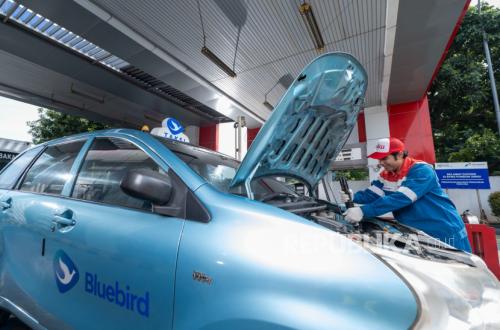
As a manifestation of safeguarding the nation’s energy resilience, PT Perusahaan Gas Negara (Persero) Tbk (PGN) through PT Gagas Energi Indonesia (Gagas) is committed to continuously optimising Bahan Bakar Gas (BBG) services for vehicles. Technically, BBG can serve as an alternative energy source while becoming a new standard that supports optimal vehicle engine performance and is environmentally friendly.
Several advantages of BBG are attracting attention in the automotive sector. BBG contains a high octane value (Research Octane Number/RON) in the range of 120 to 130. This allows engines to operate with a higher compression ratio, thereby increasing thermal efficiency optimally.
As a fuel whose main component is methane (CH4), the combustion of BBG in engines is more complete and environmentally friendly. BBG produces about 20% lower carbon emissions compared to petroleum-based fuels (BBM) and leaves no residue on engine components. With optimal benefits for the engine, the use of BBG can make engines last longer and reduce maintenance costs.
Vehicles using BBG employ special tanks that hold up to 15 litres of gas per tank. BBG tanks are designed to high safety standards. In the event of a leak, the gas will immediately rise and dissipate in the air, thus preventing explosions.
“The public need not worry about safety aspects, as the installation of every converter kit and BBG tank follows international safety standards by competent experts,” explained Gagas Operations and Commercial Director Maisalina.
The average BBG consumption for private vehicles is 10 litres equivalent to Pertalite (LSP) per day, taxis 20 LSP/day, bajaj and angkot 15–20 LSP/day. For trucks or buses, the average consumption is 125–165 LSP/day. For 1 LSP usage, it can cover up to 10 km.
“BBG prices are also stable at Rp4,500 per LSP, very affordable because the gas source comes from domestic sources. With many benefits that can be felt, we hope interest in BBG will increase further. As part of Pertamina’s Gas Subholding, we are also continuously strengthening capabilities so that BBG services become more extensive and optimal as a reliable fuel solution for the public in various regions,” Maisalina concluded.
BBG can be converted for several types of dedicated BBG fuel vehicles and vehicles using a dual fuel system, where a converter kit is installed as a switch so that vehicles can alternate between BBG and BBM. This system can also extend the vehicle’s range. Currently, BBG is widely used by conventional taxis, online taxis, bajaj, private vehicles, angkot, and TransJakarta.
Gagas has partnered with the Mobil Gas Community (Komogas), which plays an important role in building the BBG ecosystem in Indonesia. Through this partnership, Gagas also ensures that BBG infrastructure and services are relevant to the public. One concrete step is the launch of mobile BBG workshops along with education on safety and efficiency of BBG usage.
Komogas Chairman Andy Lala explained that BBG is chosen by community members due to rising BBM prices, cleaner combustion chambers, and limited budgets for purchasing new electric vehicles, making BBG an affordable and efficient solution. Therefore, Komogas hopes that support for BBG vehicles will be strengthened, including the availability of easily accessible specialised BBG workshops, such as the Mobile BBG Workshop.
“The existence of the Mobile BBG Workshop is very beneficial because it facilitates maintenance and repairs for BBG vehicles, reduces difficulties in finding specialised workshops, and helps maintain drivers’ working time,” Andy explained. According to him, this mobile workshop is expected to become the backbone of a stronger BBG ecosystem, while encouraging other users to switch from BBM to BBG.