
Exploring the Land of Disaster, Aceh (2)
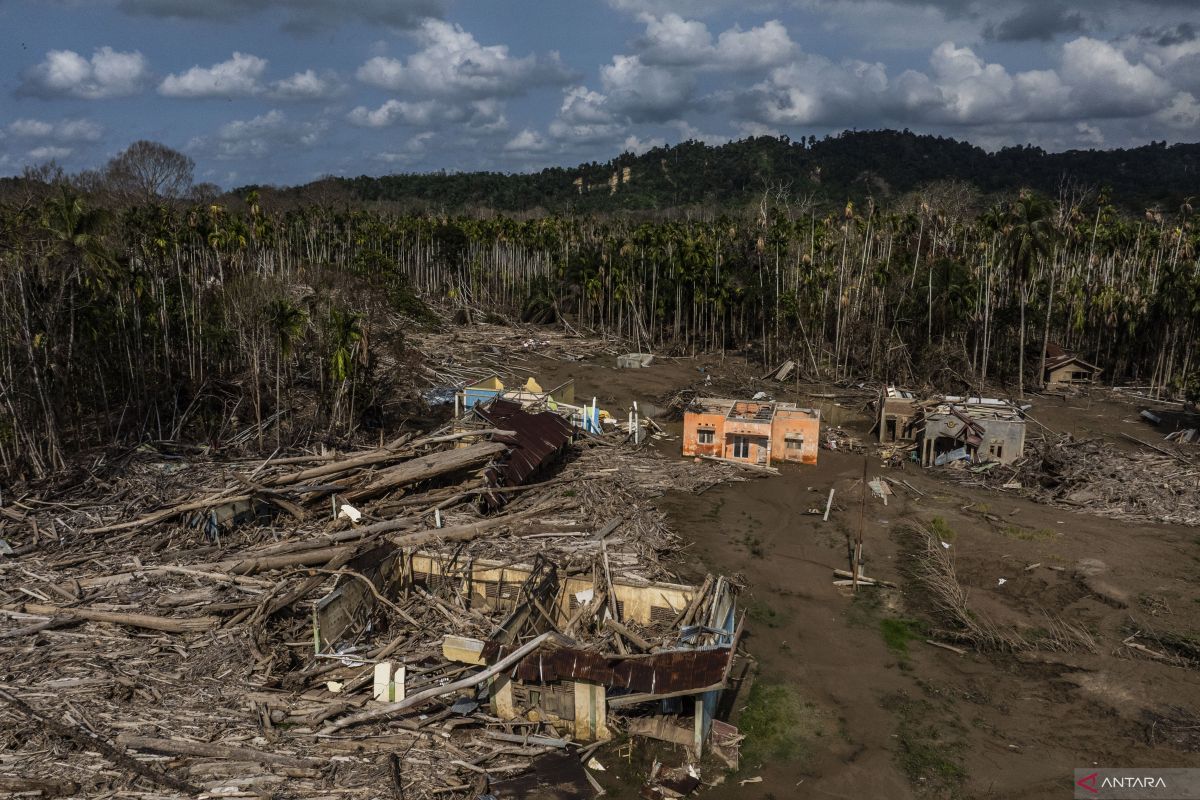
After nearly a month of evacuation, Rudi returned to the site of his home. Not to stay, but to see what remained.
Jakarta (ANTARA) - The ANTARA team’s journey to find answers about the extent of reconstruction and rehabilitation in post-disaster Aceh continues. This time, the coverage took place from 15–24 February 2026, leading up to and entering the holy month of Ramadan.
This period presented its own challenges, while also providing the team with the opportunity to witness firsthand how the people of Aceh welcome Ramadan amid limitations.
The Lost Hamlet: Lhok Pungki, North Aceh
The journey began in North Aceh Regency, traversing rugged roads to the inland hamlet of Lhok Pungki at the edge of Gunci Village, Sawang Subdistrict, bordering Bireuen and Central Aceh Regencies.
This hamlet is now known as the “lost hamlet”. Flash floods and landslides at the end of November 2025 destroyed almost all the houses that once stood there. The trip to Lhok Pungki was no easy feat.
Roads damaged by the flood are still covered in mud, and their condition often changes with every rain. Even a brief shower is enough to cut off access and isolate the area once again.
Along the way, the road was not always passable. At several points, the team had to help by filling the road with stones, just to prevent the vehicle from sinking into deep mud puddles.
Upon arrival at the site, a landscape of debris and flood remnants presented an unforgettable sight. As far as the eye could see, there were only large stones and felled logs scattered about.
The remaining materials were unusually large. The big stones resembled volcanic boulders, while massive tree trunks lay rigid.
It was hard to believe that this place was once a densely populated hamlet.
Amid the expanse of rubble, a middle-aged man stood frozen in front of a severely damaged house. He was Adi (40), gazing at the remnants of his younger sibling’s home, a victim of the disaster.
Adi is a resident of Lhok Pungki. He not only lost his home due to the disaster but also had to accept the bitter reality of losing his older and younger siblings.
The grief deepened as he recounted that the graves of his deceased parents were also swept away by the flood, along with the bodies of his siblings, which have yet to be found.
As Ramadan approaches, when many people visit graves to pay respects to loved ones, Adi could only stare at empty land without a trace. There was no tomb to visit, only memories and prayers that he held tightly.
“My parents are gone, their bodies are gone. One family is completely gone. My older and younger siblings are also gone,” he said softly.
Now, Adi is trying to rebuild his life with his wife and child in a temporary housing unit (huntara) built by the government for survivors from Gunci Village.
Before the disaster, Lhok Pungki was home to 85 households with a total of 326 souls.
The head of Gunci Village, Fazir Ramli, said that after nearly four months enduring in evacuation tents, the residents have finally begun occupying the huntara.
“Currently, 86 huntara units have been built, and all have been occupied,” he stated.
For the residents of Lhok Pungki who have lost everything, the huntara represents a ray of hope, a place to reorganise their lives after long days filled with limitations.