
Exploring Green Energy Through Makassar's "Pete-Pete" Minibuses
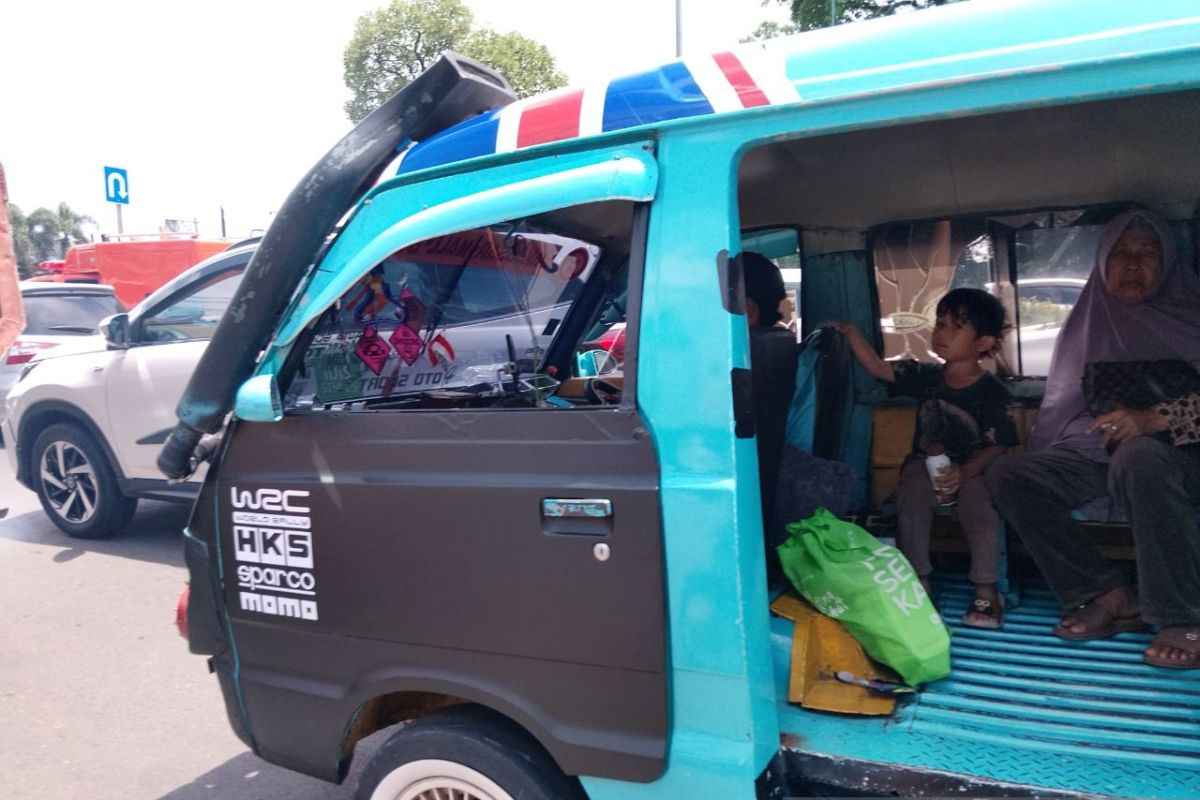
Yunus and his colleagues are not discussing carbon emissions or decarbonisation targets. They simply want to survive. They chose gas not to save the planet, but to make ends meet.
Makassar (ANTARA) - Amid the increasingly congested traffic in Makassar filled with private vehicles and ride-hailing services, the familiar pulse of the city transport known as pete-pete still lingers, albeit faintly and laboured.
Pete-pete are like remnants of an old rhythm that has not entirely faded, persisting in the gaps of a city changing faster than memory.
However, today’s story of pete-pete is no longer just about dwindling passengers. Behind the sliding doors and worn seats lies another tale, about efforts to survive by seeking cheaper energy. Unbeknownst to many, this endeavour intersects with the grand ideas often discussed in policy circles: green energy.
There was a time when pete-pete ruled the streets. From the 1980s to the late 2000s, the distinctive sound of their engines, the shouts of conductors calling passengers, and the competition among them formed the city’s daily rhythm. Pete-pete were more than just transport; they were part of the social landscape, places where people met, chatted, and shared stories.
Time, as always, does not stand still. The arrival of online motorcycles, the ease of owning private vehicles, and digital mobility patterns have slowly eroded that role. Pete-pete have begun to lose their stage, not because they have stopped running, but because the city has chosen other ways to move.
In the Sudiang area, not far from the Hajj Dormitory, traces of that glory now feel faint. The place once bustling with drivers and passengers is now often quiet. Several blue pete-pete are parked under the shade of trees. Their engines are off, doors open, waiting for something that does not come.
Yunus, one of the drivers, spends almost every day there. He sits behind the wheel, occasionally gazing at the road, hoping for a waving passenger. In an hour, sometimes only one or two people board. More often, he just waits.
Yet Yunus’s pete-pete holds a small but striking difference. Near his feet lies a 3-kilogram LPG cylinder (gas melon) typically found in household kitchens. Now, that cylinder powers his vehicle, replacing petroleum fuel.