
Experts: US-Israel War Against Iran Could Be Protracted, Indonesia Urged to Exercise Caution
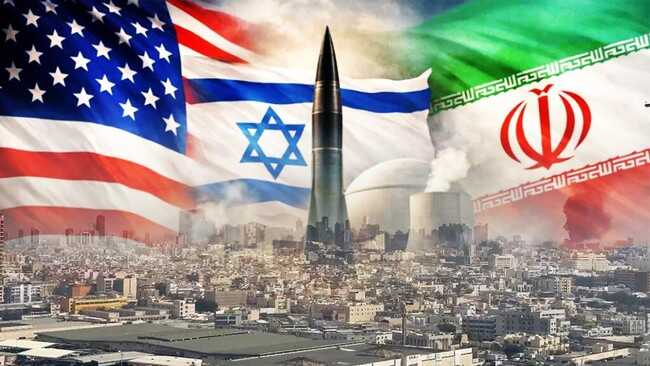
Jakarta — Armed conflict between the United States and Israel against Iran is assessed as having the potential to persist for an extended period and trigger serious global economic repercussions. Several Indonesian foreign policy experts have begun voicing their concerns regarding this situation.
Hikmahanto Juwana, Professor of International Law at the University of Indonesia, contends that conflict escalation has actually intensified following the death of Iran’s Supreme Leader Ali Khamenei. According to him, the more militant replacement leader views Khamenei as a martyr, prompting him to adopt a hardline stance.
“This is not what Donald Trump expected. Trump hoped that, as occurred in Venezuela, after removing their leader, the replacement would be willing to make peace and submit. But the opposite has happened, so the war has the potential to last a long time,” Hikmahanto told CNBC Indonesia on Monday (2 March 2026).
He explained that retaliatory strikes occur because Iran is striking back at Middle Eastern nations that host US military bases used to attack Iran. However, some missiles have gone astray and struck civilian installations such as airports and buildings.
“This is interpreted by Gulf states as an Iranian attack against them, so currently they are preparing to strike Iran,” he said.
According to Hikmahanto, Indonesia’s current strategy should focus on anticipating the consequences should the war become protracted, particularly the possibility of the Strait of Hormuz being closed.
“If the Strait of Hormuz is closed, the impact would be global economic slowdown which would affect the national economy and drive inflation,” he said.
He also raised the political implications in the United States, assessing whether this conflict could be exploited by Trump domestically. “This war issue will determine whether there is an attempt at impeachment, because there is a requirement for the government to consult with Congress if it is going to wage war,” he said.
A similar view was expressed by Dino Patti Djalal, former Deputy Foreign Minister of Indonesia and Founder of the Foreign Policy Community of Indonesia (FPCI). He stated that the world was shocked by the US and Israeli attacks on Iran, especially as they occurred during Ramadan.
“This demonstrates insensitivity to the spiritual atmosphere of the Islamic world,” said Dino.
Dino assessed that the objective of these attacks is not merely to halt Iran’s nuclear capacity, but to topple the government in Tehran. According to him, various instruments, ranging from military action, political opposition, mass mobilisation, to intelligence operations, will be deployed to achieve that objective, whilst Iran will not remain idle either.
“Iran differs from Venezuela because it possesses significant political and military networks across the Middle East. This war will almost certainly draw in other parties and spread shocks beyond the Iranian region,” he said.
He emphasised that even if the Iranian government falls, that does not automatically justify the military action taken by the United States and Israel. Dino also touched on the potential for a Third World War.
“If reckless interventions such as this are justified, the world could slide into a third world war,” he said.
Dino also stressed that in this conflict, Iran is the attacked party, not the attacker. The failure of negotiations does not justify the United States attacking Iran, especially given that, he noted, mediators such as Oman have reported significant progress in negotiations.
Regarding Indonesia’s role as a mediator, he assessed that such a step is unrealistic because the US rarely accepts third-party mediation and Indonesia-Iran relations are currently not sufficiently close. He also believed that mediation would require a meeting with Prime Minister Benjamin Netanyahu, which he deemed politically impossible and carrying great domestic risk.
“What is most important for Indonesia is not to seek a role as peacemaker in this conflict because it is unrealistic, but to affirm its position clearly and firmly. The attacks by Israel and the United States against Iran contradict the principles of international law and the values that Indonesia has consistently espoused,” said Dino.
“Disagreeing with the United States does not mean being antagonistic, and being partners does not mean being subservient,” he concluded, alluding to the doctrine of independent and active foreign policy.