
Experts urge strengthening implementation of strategies to combat El Niño
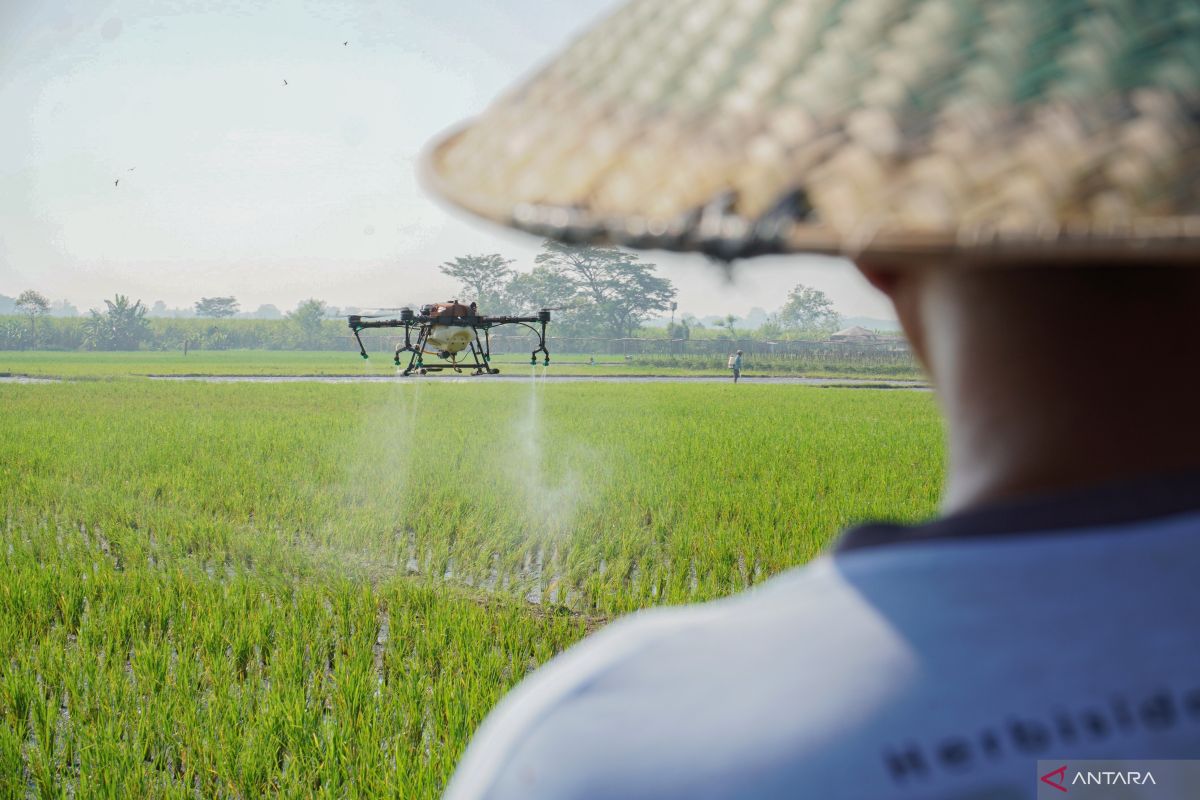
Our agricultural structure is still heavily dependent on rainfall, while the irrigation system is not yet fully capable of anticipating large-scale droughts.
Jakarta (ANTARA) - Experts are urging the strengthening of the government’s strategy implementation in facing the potential risks of the El Niño phenomenon to the food sector, particularly in terms of water management and increasing agricultural productivity.
Researcher from the Center of Reform on Economics (CORE) Eliza Mardian said that the impact of El Niño on rice production greatly depends on the government’s mitigation capacity and policy response.
“The impact of El Niño does not always drastically reduce production, but it very much depends on the mitigation capacity and policy response,” said Eliza when contacted by ANTARA in Jakarta on Friday.
She assessed that government steps such as increasing planting areas, optimising irrigation, and providing drought-resistant seeds are appropriate mitigation efforts to maintain food production.
“Our agricultural structure is still heavily dependent on rainfall, while the irrigation system is not yet fully capable of anticipating large-scale droughts,” she stated.
Eliza added that the adoption of agricultural technology and drought-resistant varieties also needs to be more evenly distributed, so the ability to increase productivity as compensation for reduced planting areas remains limited.
In addition, the relatively small scale of farming operations, dominated by smallholder farmers, is seen as a challenge in accelerating agricultural intensification.
She also mentioned the potential for a production decline in the January-May 2026 period of around 2.22% annually, mainly influenced by a reduction in harvested area at the peak harvest season from March to May.
According to her, suboptimal seasonal patterns, namely relatively high rainfall at the start of planting and decreasing in the later phase, can disrupt the planting and harvesting cycle, potentially shifting some production to the following period.
Meanwhile, Executive Director of the Institute for Development of Economics and Finance (Indef) Esther Sri Astuti assessed that the government’s steps in increasing planting areas, strengthening irrigation, and adding allocations for fertiliser and seeds are important to maintain food production.
“The (El Niño impact mitigation) steps from the government are already in place, but their effectiveness very much depends on implementation in the field,” she revealed.
She added that potential production disruptions due to El Niño still need to be anticipated because they can impact rice supplies and prices in the market.
“When production decreases due to drought, rice supply reduces and that has the potential to drive up prices,” said Esther.
Esther also highlighted several concrete government steps that she believes need to be continuously monitored, including the construction of 13 dams and the rehabilitation of irrigation networks covering more than 412,000 hectares to improve water availability for agriculture.
In addition, the government is increasing the allocation of subsidised fertiliser from around 4.7 million tonnes to 9.5 million tonnes to support productivity, as well as accelerating planting in various production centre regions.
“Efforts such as increasing planting areas and strengthening irrigation are important to maintain production amid climate change risks,” she said.