
Experts Urge Constitutional Court to Revise Military Justice Law
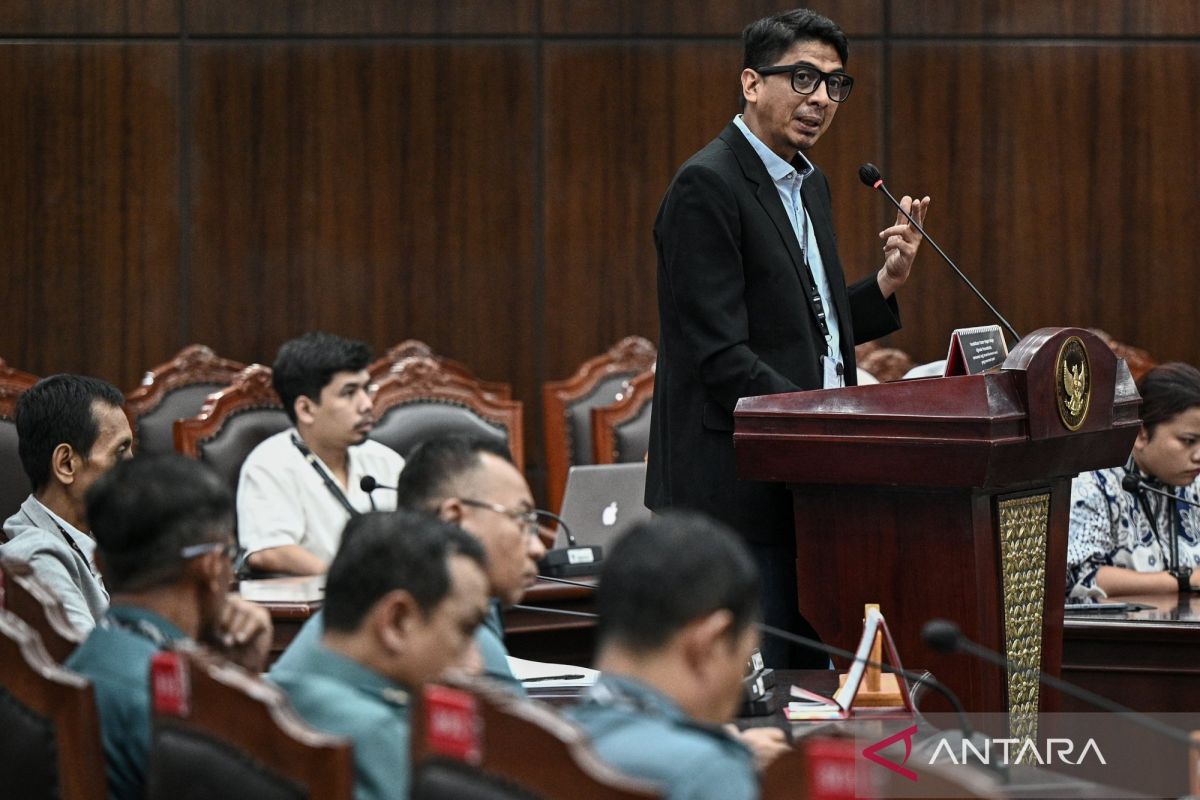
Jakarta (ANTARA) - Two constitutional law experts presented by the petitioners in the material examination hearing of Law No. 31 of 1997 on Military Justice have urged the Constitutional Court (MK) to revise the regulation. The two experts, Prof. Zainal Arifin Mochtar and Dr Al Araf, were presented by the petitioners in Case No. 260/PUU/XXIII/2025, which was filed in December 2025. In his analysis, listened to via the MK’s YouTube broadcast in Jakarta on Wednesday, Prof. Zainal Arifin Mochtar stated that there is a “tangled mess” in Indonesia’s military justice system that has been left unaddressed by the state for nearly 20 years. “I want to say that the legal politics of the Military Justice Law No. 31 of 1997 seems to have become ‘normal’ because it is the legal politics from the New Order concept that provides more protection,” he said. According to him, the problems in Law No. 31/1997 are not limited to the articles subject to judicial review by the petitioners (Articles 9, 43, 127), but include many issues related to jurisdictional dualism, resynchronisation with reforms, lack of detailed rules on connexity, independence of military courts, accountability, and other matters often discussed by society as legal exceptionalism. Post-reformasi, he continued, there have been a series of changes in legal politics, and the legal context in Law No. 31/1997 has also changed. These changes are even reinforced in the amendments to the 1945 Constitution (UUD), where the wording of the Judicial Power Law was elevated to state that there are four judiciaries: military, religious, state administrative, and general. “If you read the records, (the amendment) is not just for show. Elevating the four judiciaries in the UUD amendment is to perfect or ensure that our judicial paradigm is still under one roof,” he said. Zainal also linked this military justice issue to MPR Decree No. 7 of 2000, particularly Article 3 paragraph (4), which states that TNI soldiers are subject to military justice for military law violations and to general courts for general criminal law violations. “That is in the MPR Decree,” he said. This norm is also clearly stated in Law No. 34 of 2004 in Article 65. At a time when legal politics have changed with the amendment of the 1945 Constitution, but military justice remains unchanged, many writings have stated that Indonesia’s military justice has become outdated and no longer aligns with legal and state life, one of which is from Prof Jimly Asshiddiqie. It even does not align with the judicial system based on the 1945 Constitution. “Surprisingly, we maintain it (military justice), there is no state action to resolve it,” said Zainal. He stated that the major challenge for the MK is to carefully consider and push to resolve the unfinished homework that has been left hanging for almost 20 years. Meanwhile, Dr Al Araf stated that revising the Military Justice Law is not only for public interest but also primarily for the interest of the military members themselves. “Because, if there are cases involving military members where they feel injustice in the legal process that occurs,” he said. He revealed that within the military justice system, military members find it difficult to obtain rights as guaranteed in the general judicial mechanism based on the principles in the Criminal Procedure Code (KUHAP). Often in cases of political violence committed by the military that lead to gross human rights violations, he said, it is the subordinates who end up as victims. Whereas subordinates only carry out orders from superiors. “Therefore, reforming military justice so that the military is subject to general courts is actually a need for the military itself to ensure their rights are protected,” said Al Araf.